
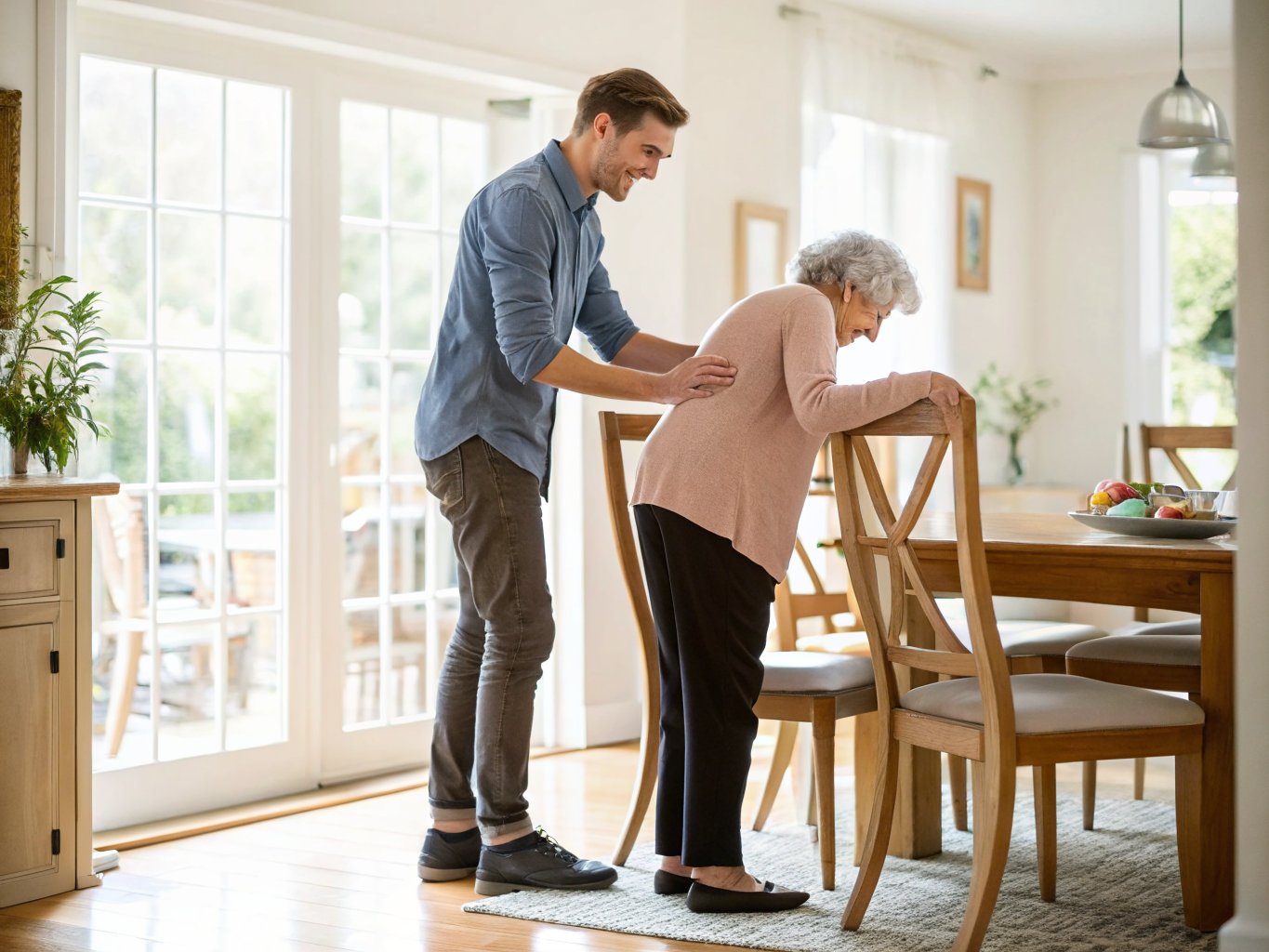
Quick answer. A live-in rehabilitation aide near Kessler Institute for Rehabilitation in West Orange NJ is a certified home health aide trained to sleep in the home and lead the 10 daily exercises the Kessler outpatient physical therapy team prescribed at discharge. Sofia Elmer, RN matches Essex County families with a rehab-trained CHHA within 48 hours of Kessler discharge. Call (908) 912-6342 for a private conversation.
Sofia’s field notes on live-in rehab aides after Kessler
Kessler Institute for Rehabilitation at 1199 Pleasant Valley Way is a 154-bed Select Medical acute rehabilitation hospital and one of the top-ranked inpatient rehab hospitals in the United States. Families come home from Kessler after a total knee replacement, a stroke, a cardiac surgery, or a complex orthopedic procedure with a discharge binder that says the same thing every time: continue with outpatient physical therapy 2 or 3 times per week and do your prescribed home exercises daily. According to 24 Hour Home Care NJ, the gap between those two lines is where most recoveries stall.
Outpatient physical therapy at Kessler’s West Orange campus typically means 45 to 60 minutes of clinical time, 3 sessions per week at the most aggressive prescription. That is 3 to 5 hours of expert-led movement in a 168-hour week. The other 163 hours are on the family, and the family is usually a spouse who has never coached a squat, a knee flexion, a bridge, or a supported-standing balance drill in their life. Daily exercise adherence at that dose is what closes the gap between a $60,000 inpatient rehab admission and the person walking their driveway again by month three.
A live-in rehab-trained CHHA is the person who actually drives that daily practice. She is in the home 24 hours a day across four consecutive days, sleeps on the same floor with a bed-exit sensor active, and her first job of the morning is not breakfast, it is the Kessler exercise sheet. According to 24 Hour Home Care NJ, families who add a rehab-trained live-in aide within 72 hours of Kessler discharge return to prior function 2 to 4 weeks faster than families who rely on the spouse alone. The aide is not a therapist. She is the coach who makes sure the therapy prescription actually happens.
What a live-in rehab aide day looks like in West Orange
Day one of a Kessler-discharge start begins with Sofia sitting at the kitchen table with the family and the discharge binder open. She copies the 10 prescribed exercises onto a laminated card that stays on the refrigerator, marks the target rep count and hold time for each, and writes down the two red-flag signs the Kessler PT flagged as reasons to call. The live-in aide runs a 30-minute structured morning practice after breakfast (bed mobility, ankle pumps, quad sets, straight-leg raises, seated marches, supported sit-to-stand, heel slides, hip abduction, standing balance at the counter, and the prescribed ambulation distance) and a 20-minute afternoon practice before dinner that focuses on walking distance and stair practice with the handrail.
Every rehab-trained aide on our roster carries a gait belt and knows how to use it for safe transfers, sit-to-stand assist, and walking practice on the driveway and the front stoop. She keeps a paper communication log that goes to the Kessler outpatient PT at every visit: date, exercises completed, reps achieved, pain rating 0-10, any refusal or fatigue, walking distance in feet, stairs practiced, sleep quality overnight. The Kessler PT reads this at the start of each session and adjusts the home program on the spot. That closed loop is what turns a discharge sheet into an actual recovery.
The clinical picture · why daily practice determines long-term recovery
Post-rehabilitation home recovery is coded on the Medicare claim as Z48.89 (encounter for other specified surgical aftercare) with the primary diagnosis carrying forward from the acute stay: M17.11 for unilateral primary osteoarthritis of the knee after total knee arthroplasty, M16.11 for primary hip osteoarthritis after total hip arthroplasty, I69.351 for hemiplegia and hemiparesis following cerebral infarction, or I25.10 with post-op modifiers for cardiac aftercare. The clinical literature is unambiguous on the mechanism: motor learning after joint replacement or stroke requires high-frequency, low-intensity repetition. The American Physical Therapy Association’s clinical practice guidelines for total knee arthroplasty and for adult stroke recovery both name daily home practice as the single largest modifiable variable in 6-month functional outcome.
Two bedside instruments the Kessler outpatient team uses at intake and every 4 weeks tell the story in numbers: the Berg Balance Scale (14 items, 0 to 56 points, a score under 45 predicts fall risk) and the Tinetti Performance Oriented Mobility Assessment (28-point gait and balance combined score). According to 24 Hour Home Care NJ, families whose live-in aide runs the prescribed daily exercises reliably see Berg scores climb 8 to 14 points across the first 6 weeks post-discharge; families relying on outpatient PT alone typically climb 3 to 5 points in the same window. The therapy dose is the same on the calendar. The daily adherence is the difference.
Frequently asked · Kessler live-in rehab aide conversations
How is a rehab-trained aide different from a regular CHHA?
A regular certified home health aide is trained in bathing, dressing, meal preparation, and basic mobility assist. A rehab-trained CHHA has additional coursework in gait-belt transfers, therapeutic exercise cueing, range-of-motion assist, fall prevention, and communication logging for outpatient therapists. Sofia hand-selects rehab-trained aides for post-Kessler families and reviews the exercise sheet with the aide before day one.
Does the live-in aide replace outpatient PT?
No, and she should not. Outpatient physical therapy at Kessler or a Kessler-affiliated clinic remains the clinical brain of the recovery. The live-in aide is the daily coach who executes the home exercise program between visits, transports the family member to and from outpatient sessions, and reports progress back to the therapist. The aide is a force-multiplier for the therapy, not a substitute.
How does the aide coordinate with the Kessler outpatient team?
Every rehab-trained live-in aide keeps a written communication log with date, exercises completed, reps, pain rating, and walking distance. The log travels to every outpatient PT session in a folder. Sofia calls the outpatient therapist directly during the first two weeks to align on progression milestones and red flags. That direct clinician-to-clinician conversation is included at no extra charge.
Does long-term care insurance cover live-in rehab aide?
Most standalone long-term care policies from John Hancock, Genworth, MetLife, MassMutual, and New York Life cover live-in rehab care once the activities-of-daily-living trigger threshold is documented. Typical daily benefit runs $200 to $450. Live-in rehab aide in Essex County runs $400 to $550 per day. Our office bills the carrier directly with Sofia’s clinical notes attached and the family covers any daily gap.
What does live-in rehab aide cost in West Orange?
Live-in rehab aide near Kessler in 2026 runs $400 to $550 per day, or $12,000 to $16,500 per month, for West Orange, Livingston, South Orange, Millburn, Maplewood, and Verona. The rehab-trained premium is typically $30 to $60 per day over standard live-in and covers gait-belt training, exercise coaching, and the therapist-communication log. All payroll taxes, workers’ compensation, and Sofia’s clinical oversight are included with no separate agency fee.
How quickly can we start after Kessler discharge?
Sofia can meet the family at the Kessler bedside or at the West Orange home within 24 hours of the first phone call. First rehab-trained aide in the home within 48 hours of discharge if the family agrees the fit is right. Our fastest post-Kessler start in 2026 was 8 hours from discharge order to caregiver-in-home for a bilateral knee replacement patient whose spouse could not physically assist with transfers.
References cited
- American Physical Therapy Association · Clinical Practice Guidelines for Total Knee Arthroplasty and Adult Stroke Rehabilitation
- Kessler Institute for Rehabilitation · Patient and Family Resources
- National Institute of Neurological Disorders and Stroke · Post-Stroke Rehabilitation

Call (908) 912-6342 , Live-In Rehabilitation Aide
Live-In Care Coordinated With Kessler Institute
A live-in rehabilitation aide after Kessler in West Orange focuses specifically on keeping the recovery going , practicing every prescribed exercise, reinforcing every new skill, and rebuilding the functional independence that Kessler’s intensive program initiated. At 24 HOUR Home Care NJ, our live-in rehab aides near Kessler Institute are certified with additional training in stroke recovery, neurological rehabilitation, and exercise progression protocols.
The Johns Hopkins Medicine rehabilitation model confirms that daily exercise repetition at home determines whether rehab gains become permanent. PubMed research shows patients with daily home exercise reinforcement recover 40% more function. Our RN coordinates exercise protocols with Kessler’s therapy team. See stroke recovery after Kessler.

Essex County Towns Near Kessler Institute
All Essex County towns | All 11 NJ counties
Kessler Institute and Essex County Facilities
- Kessler Institute for Rehabilitation (West Orange) , Top-ranked stroke, brain injury, spinal cord rehab
- Saint Barnabas Medical Center (Livingston) , Acute care and Kessler pathway
- Mountainside Medical Center (Montclair) , Post-acute coordination
- Clara Maass Medical Center (Belleville) , Geriatric transitions
- Daughters of Israel (West Orange) , Supplemental live-in aides
- Care One at Livingston , Subacute to live-in transitions
- Winchester Gardens (Maplewood) , Post-rehab community support
Neighboring: Morris, Union, Passaic.
All Kessler articles: Stroke recovery | Around-the-clock aide | Continuous care | Day & night | Nonstop | Transitional | Recovery program | Private-duty
Essex County: Live-in home care | Live-in aides | 24-hour | Overnight | Dementia | Post-stroke | Private-pay
Call (908) 912-6342 , Start Live-In Care After Kessler
Live-In Care Coordinated With Kessler Institute
Frequently Asked Questions
What is a live-in rehabilitation aide after Kessler?
A certified aide living in the home who practices every Kessler-prescribed exercise daily , walking, balance, hand therapy, cognitive drills, ADL retraining. RN-supervised. Call (908) 912-6342.
Do rehab aides have special training?
Yes. Additional training in stroke recovery, neurological rehabilitation, exercise progression, adaptive equipment use , beyond standard CHHA certification.
How many times per day are exercises practiced?
Multiple sessions daily , morning exercises, midday walking, afternoon hand therapy, evening stretching. The same daily intensity Kessler maintained.
Do you track exercise progress after Kessler?
Yes. Daily logs of exercises completed, reps, progress milestones , reviewed weekly by our RN who reports to Kessler’s therapy team.
How quickly can a rehab aide start after Kessler?
Same day as discharge. Call (908) 912-6342.
| Configuration | Coverage pattern | Best for | Cost tier |
|---|---|---|---|
| Companion / hourly | 3-12 hr/day · 3-7 days/week | Meal + medication + safety + errands | $-$$ |
| Live-in | One caregiver 24 hr with 8-hr sleep window | Client sleeps through most nights · spare bedroom available | $$$ |
| 24-hour rotating | 2-3 caregivers rotate 8-12 hr shifts | Sundowning · wandering · advanced dementia · 2-person transfers | $$$$ |
| Overnight aide | 10-12 hr overnight (typically 8pm-8am) | Family present in the day · nights are the risk window | $$-$$$ |
| Respite | Short-term (weekend / week / vacation) | Family caregiver rest · surgery recovery · travel | $-$$$ |
| Post-discharge rapid start | Same-day from hospital · first week rush | Immediate coverage after HUMC / Morristown Medical / Kessler / Saint Barnabas discharge | $$$$ (rush week 1) |
| Configuration | Coverage pattern | Best for · discharge from Kessler | Cost tier |
|---|---|---|---|
| Companion / hourly | 3-12 hr/day · 3-7 days/week | Meal + medication + safety + errands | $-$$ |
| Overnight aide | 10-12 hr overnight (8pm-8am) | Parent alone at night · sundowning window | $$-$$$ |
| Live-in | One caregiver 24 hr with 8-hr sleep | Client sleeps through nights · spare bedroom | $$$ |
| 24-hour rotating | 2-3 caregivers rotate 8-12 hr shifts | Sundowning · wandering · 2-person transfers | $$$$ |
| Post-discharge rapid | Same-day from Kessler | Immediate coverage after discharge · first-week rush | $$$$ week 1 |
| Respite | Weekend / week / vacation | Family caregiver rest · surgery recovery · travel | $-$$$ |
Live-in versus rotating-shift · which model fits a West Orange household
According to 24 Hour Home Care NJ, West Orange families reach for live-in care when three conditions align: the client sleeps through most nights, there is a spare bedroom in the home, and continuity of face matters more than active nighttime awake supervision.
Live-in. One caregiver stays in the home 24 hours with an 8-hour uninterrupted sleep period (federal labor rule). Typical daily rate $400-$550 in Essex County. Best for early-to-middle-stage dementia, post-surgery recovery where sleep is undisturbed, and companion-focused arrangements.
Rotating shift. Two or three caregivers rotate 8-12 hour shifts so someone is always awake. Typical daily rate $720-$1,080 in Essex County. Best for late-stage dementia, sundowning, wandering, two-person transfers, or clients who wake multiple times per night.
Hybrid. Live-in primary caregiver Monday-Friday with a weekend relief caregiver. Continuity of face + primary caregiver rest days. Typical daily rate $500-$700.
A day inside live-in care in a West Orange home
Families often ask what the day actually looks like. According to 24 Hour Home Care NJ, the specific rhythm Sofia builds fades into the household background , not “a nurse is here”:
- 7:00am · morning routine. Caregiver wakes gently · vital signs if applicable · assists bathroom, medication, dressing.
- 8:00am · breakfast + first walk. Short walk around the West Orange block. Orients the body to the day.
- 10:30am · engagement. Puzzles, music from the client’s era, phone call with a grandchild, light housekeeping around the client , not instead of them.
- 12:30pm · lunch + rest. Balanced meal, then short nap or quiet time.
- 3:00pm · afternoon activity + errand. Drive if the client tolerates it. Visit from a West Orange neighbor. Garden time if the season allows.
- 6:00pm · dinner + wind-down. Simple meal, dimmed lights, reduce stimulation.
- 9:00pm · bedtime routine. Bathroom, medication, sleep. Caregiver sleeps in adjacent room.
- Overnight · quiet presence. Bathroom trips, medication if scheduled, fall monitoring, quiet reassurance if the client wakes.
West Orange hospital corridor for live-in care · coordination from Kessler
According to 24 Hour Home Care NJ, West Orange-area live-in cases often start with a hospital discharge from Kessler. Sofia matches a live-in caregiver already active in West Orange or an adjacent town within 2-4 hours of the discharge call. Caregiver arrives 30 minutes ahead of the client to prepare the home. Sofia calls the family at the 24-hour mark for a rhythm check. This is the coordination that turns discharge into recovery, not readmission.
Frequently asked questions
What does live-in home care cost in West Orange?
Live-in home care in West Orange typically runs $400-$550 per day for one dementia-trained caregiver who stays in the home 24 hours with an 8-hour uninterrupted sleep window. Sofia gives a specific estimate on the intake call at (908) 912-6342.
Is live-in appropriate if the client wakes at night?
Live-in works when the client sleeps through most nights. If the client wakes multiple times, rotating 12-hour shifts are safer · someone is always awake. Sofia decides on the intake call.
Does the caregiver need a spare bedroom?
Yes. Federal labor rules require a private sleeping space for the caregiver during the 8-hour sleep window. Sofia confirms the home has a spare bedroom during intake.
How does live-in coverage handle the caregiver’s days off?
Sofia builds a rotation with a primary live-in caregiver (Monday-Friday) and a relief caregiver (weekends). Continuity of face + primary caregiver rest days.
Does LTCi cover live-in?
Most long-term care insurance policies cover a portion of live-in care. Sofia reads the specific policy (John Hancock, Genworth, MetLife, etc.) and files claims on behalf of families.
Meet Sofia Elmer, RN · in person or by phone
24 Hour Home Care NJ is a locally verified Google Business Profile. See real family reviews, ask a question, or call directly.
Authority references
Take Sofia’s free NJ home care reference sheet with you
One page, plain English, no sales pitch — the questions to ask any NJ home care agency + what a real hourly rate range looks like across the 21 counties. Sofia RN made it for you.