
Last clinically reviewed: · Sofia Elmer, RN, 24 Hour Home Care NJ
Overnight vs. 24-Hour Home Care in NJ — How Sleep Protects Your Loved One’s Brain
Quick answer. Overnight home care in New Jersey means one awake certified home health aide from roughly 8 p.m. to 8 a.m., typically $400 to $580 per 12-hour shift. 24-hour home care means continuous coverage across the full day, either two awake shift caregivers at $780 to $950 per day or a single live-in aide at $380 to $520 per day. The right choice is decided by one clinical question, not by budget: does the sleeping brain still recover, or is nighttime the highest-risk window? Sofia Elmer, RN answers that question in a free 60-minute home visit anywhere in New Jersey. Call (908) 912-6342.
Sofia’s field notes on choosing overnight vs 24-hour care through the sleep and brain lens
After seventeen years of building home-care plans for New Jersey families, I have learned that the overnight-versus-24-hour question is almost never really about money. According to 24 Hour Home Care NJ, when a family asks me which model to choose, the truthful answer lives in two clinical facts that most agencies never surface at intake: how well the older adult is sleeping now, and what the brain is doing during the hours nobody is watching. Sleep is the room where dementia risk, fall risk, medication adherence, and caregiver burnout all quietly compound. Choose the wrong care model for the wrong hours and you accelerate every one of them.
Overnight care is the correct model when the older adult still sleeps a mostly consolidated seven to nine hours, when the risk window is falls between bed and bathroom, medication timing at 10 p.m. and 6 a.m., and reassurance for a spouse who has stopped sleeping themselves. 24-hour care is the correct model when the older adult is awake more than they are asleep, when sundowning has crossed the 8 p.m. line, when there are two or more nighttime episodes a week, or when a discharge summary now uses phrases like “increased confusion” or “requires 24-hour supervision.” One model protects a working brain. The other protects a brain that has stopped protecting itself.
What overnight care actually gives you
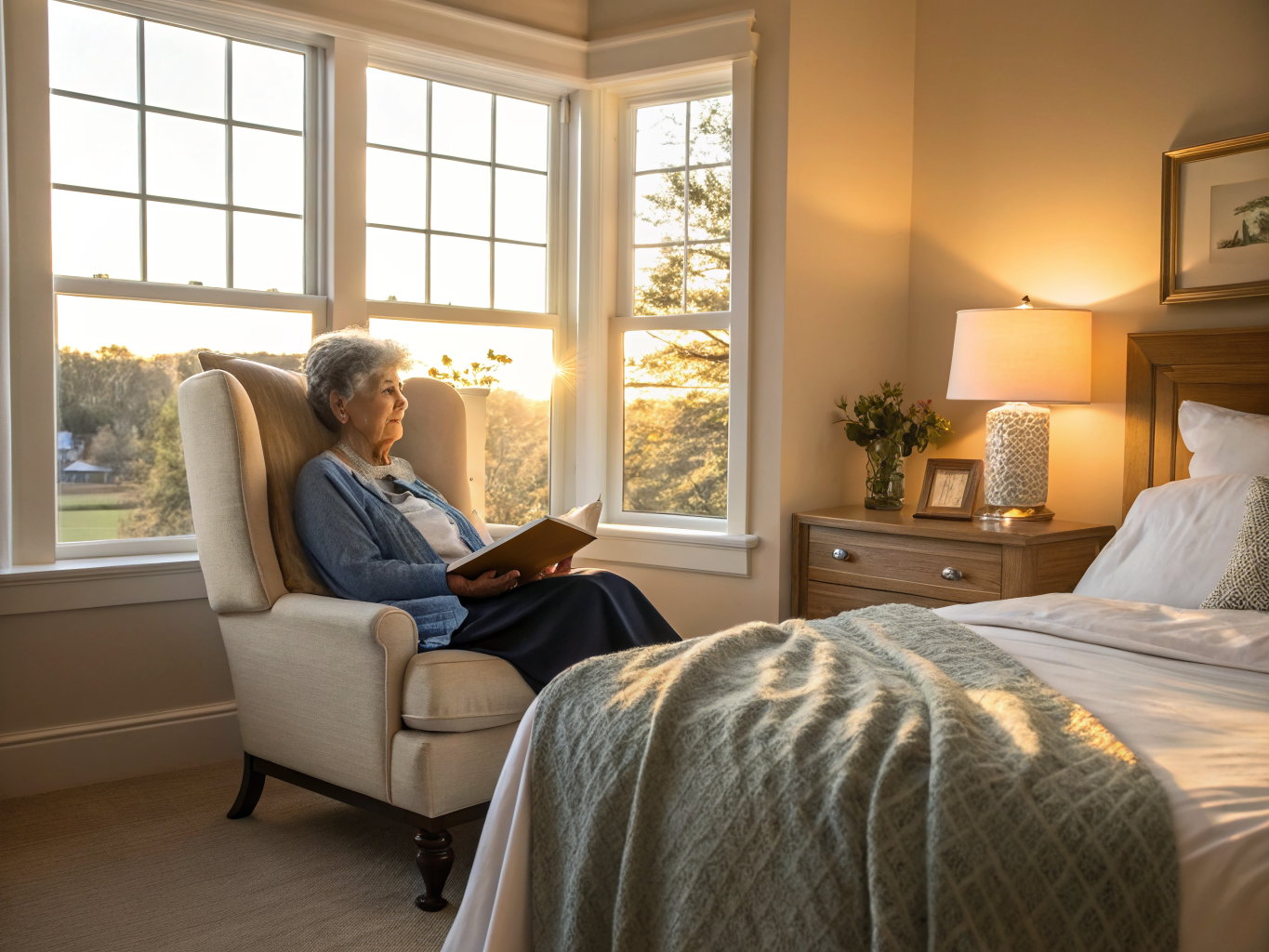
A New Jersey overnight caregiver arrives around 8 p.m., reviews the day’s log from the family or from an earlier daytime aide, confirms evening medications, assists with the bedtime routine, and then stays awake in the home through the sleep window. She sits in an armchair with soft lamp light within earshot, listens for bed-exit or bathroom footsteps, responds to any wake-event within seconds, redirects gently if there is confusion, documents everything in a nightly log, and hands off to morning family or a day aide by 8 a.m. According to 24 Hour Home Care NJ, this quiet, boring, uneventful presence is precisely the goal. A good overnight is a night when the log reads “resident slept 10:15 p.m. to 6:40 a.m., one bathroom assist at 3 a.m., no incidents.” That log is a brain-protecting log.
What 24-hour care actually gives you
24-hour care means the home is never uncovered. In New Jersey the two common structures are two awake 12-hour shifts (7 a.m. to 7 p.m. and 7 p.m. to 7 a.m., often two different caregivers) or a live-in caregiver who sleeps 8 hours in a private bedroom with a monitor and works 16 waking hours daily across four consecutive days per week, with a second aide on weekend rotation. Shift care is what you want when the person needs awake eyes around the clock, whether the reason is advanced dementia, post-stroke recovery, hospice, or a fall history that says the bathroom trip cannot happen unsupervised at any hour. Live-in is what you want when the person is medically stable but simply cannot be alone overnight and thrives on one consistent face rather than rotating aides.
The clinical picture · what sleep and brain science say about the choice
The choice between overnight and 24-hour care is a sleep decision before it is a cost decision. The National Sleep Foundation’s 2015 consensus guidelines recommend seven to eight hours of nightly sleep for adults 65 and older and identify sleep fragmentation as an independent risk factor for cognitive decline. The Livingston commission’s 2020 Lancet report on dementia prevention listed sleep disturbance as one of the twelve modifiable risk factors for dementia, with the mechanism linked to reduced glymphatic clearance of beta-amyloid during deep non-REM sleep. Coded clinically this shows up as G47.9 (sleep disorder, unspecified) or G47.00 (insomnia) on the older adult’s chart, often paired with F03.90 (unspecified dementia without behavioral disturbance) once cognitive symptoms begin, or G30.9 (Alzheimer’s disease, unspecified) once a diagnosis is formal. R29.6 (repeated falls) is the code that most often forces the conversation from overnight to 24-hour.
According to 24 Hour Home Care NJ, the practical clinical signal we use at intake is a simple three-question screen: how many nights in the past two weeks has the person woken more than twice? has anyone in the household slept fewer than six hours for three or more consecutive nights? has there been a fall or near-fall between the hours of 8 p.m. and 8 a.m. in the past 90 days? Two “yes” answers on that screen and we recommend at least overnight care. Three “yes” answers and we recommend 24-hour, because the sleeping brain is no longer recovering and the awake brain is no longer safe.
Frequently asked · overnight vs 24-hour questions from real NJ conversations
What is the actual price difference in New Jersey?
Overnight care in New Jersey typically runs $400 to $580 per 12-hour shift, which is roughly $12,000 to $17,500 per month if used every night. 24-hour shift care with two awake caregivers runs $780 to $950 per day, or $23,400 to $28,500 per month. Live-in 24-hour care runs $380 to $520 per day, or $11,400 to $15,600 per month, and is often the closest price to overnight-every-night while giving true around-the-clock coverage. All figures include payroll taxes, workers’ compensation, unemployment insurance, and Sofia’s clinical supervision. No separate agency fee.
How do I know if overnight is enough, or if we need 24-hour?
The clearest signal is what happens between 8 p.m. and 8 a.m. If your loved one sleeps most of that window with one or two bathroom trips and no confusion episodes, overnight is enough. If they are awake more than four hours across that window, wandering, calling out, or trying to leave the home, you need 24-hour care. According to 24 Hour Home Care NJ, the second signal is spouse or family caregiver sleep. If the primary at-home caregiver has not slept a full night in three weeks, that is a medical emergency for two people, not one, and 24-hour is the answer.
Does overnight care actually protect the brain, or is that just marketing language?
It is not marketing. The Livingston 2020 Lancet Commission on dementia prevention identified poor sleep as a modifiable dementia risk factor with a measurable population-attributable fraction. The Alzheimer’s Association’s clinical guidance to caregivers explicitly names uninterrupted nighttime sleep as one of the most protective non-pharmacologic interventions available for older adults with mild cognitive impairment. An overnight caregiver whose entire job is to protect the sleep window is doing brain-protecting clinical work, quietly, every night.
Can we start with overnight and step up to 24-hour later?
Yes, and that is often the smart path. Many New Jersey families we serve begin with overnight-only for six to eighteen months while the older adult is still sleeping mostly through the night. When the sleep pattern breaks, usually signaled by two or more wake-events per night, a fall, or a hospital visit, we add a daytime shift or convert to a live-in model within one to two weeks. According to 24 Hour Home Care NJ, this stepped model saves families an average of $8,000 to $14,000 per month in the early stages compared to starting at 24-hour by default.
Will Medicare or long-term care insurance pay for overnight or 24-hour?
Medicare does not cover any form of ongoing non-medical home care, overnight or 24-hour. Medicaid in New Jersey covers a limited number of home care hours through Managed Long Term Services and Supports for eligible enrollees. Standalone long-term care policies from carriers like John Hancock, Genworth, MetLife, MassMutual, and New York Life typically cover both overnight and 24-hour once the activities-of-daily-living trigger threshold is documented, with daily benefits ranging from $200 to $450. Our office bills the carrier directly with clinical notes attached.
How fast can 24 Hour Home Care NJ start either model?
Sofia can meet a New Jersey family within 24 hours of the first phone call anywhere in the state. First caregiver in the home within 48 hours for overnight starts, within 72 hours for a full 24-hour shift or live-in plan. Emergency hospital discharge starts run faster; our fastest 2026 emergency start was 11 hours from a discharge planner’s call to a caregiver walking through the front door in Union County.
References cited in this guide
- National Sleep Foundation · Consensus Sleep Duration Recommendations for Older Adults
- Alzheimer’s Association · Sleep Issues and Sundowning in Dementia
- National Institute on Aging · A Good Night’s Sleep for Older Adults
Home › Care Services › Overnight vs. 24-Hour Home Care & Sleep
Sleep is not a luxury for aging adults — it is a biological necessity that directly shapes brain health, emotional stability, and physical resilience. When sleep is disrupted by pain, confusion, or nighttime wandering, the consequences compound rapidly. At 24 HOUR Home Care NJ, we help families across Union, Essex, and Morris Counties choose the right level of nighttime support — whether that means dedicated overnight care or full 24-hour home care.
Why Sleep Matters More as We Age
Research from the National Institute on Aging confirms that sleep serves essential functions for the aging brain. During deep sleep, the brain’s glymphatic system clears beta-amyloid plaques — the proteins associated with Alzheimer’s disease. When sleep is fragmented or insufficient, this clearance slows, accelerating cognitive decline.
Chronic sleep disruption also elevates cortisol, the stress hormone, which weakens immune function, impairs memory consolidation, and increases fall risk. For seniors in Westfield, Summit, or Morristown living with early-stage dementia, a single night of poor sleep can trigger confusion that lasts well into the next day.
Common Causes of Sleep Disruption in Seniors
- Sundowning — late-afternoon and evening agitation that disrupts the entire sleep cycle in dementia patients
- Nocturia — frequent nighttime urination, often caused by medications or prostate conditions, creates dangerous fall scenarios
- Pain and restlessness — arthritis, neuropathy, and post-surgical discomfort intensify when the body is still
- Sleep apnea — untreated obstructive sleep apnea is common in older adults and starves the brain of oxygen
- Medication side effects — diuretics, beta-blockers, and certain antidepressants alter sleep architecture
Overnight Care vs. 24-Hour Care: Which Does Your Family Need?
Overnight Home Care
Our overnight care typically covers the hours from 10 p.m. to 6 a.m. An awake, alert caregiver remains present throughout the night to assist with bathroom trips, reposition bed-bound clients, manage sundowning episodes, and respond to any medical changes. This is ideal for seniors who are relatively independent during the day but face significant nighttime risks.
24-Hour Home Care
For seniors with moderate to advanced dementia, recent hospital discharge, or complex medical needs, 24-hour care provides continuous, around-the-clock coverage with rotating shifts. Each caregiver arrives rested and alert, ensuring consistent monitoring day and night. Families near Overlook Medical Center in Summit or Morristown Medical Center frequently choose this option during post-discharge recovery windows.
Need 24-Hour Home Care in New Jersey?
Our certified caregivers provide compassionate, around-the-clock support for your loved one — right at home.
How Our Caregivers Protect Sleep Quality
Sleep Environment Optimization
Our caregivers assess and adjust the bedroom for safety and sleep hygiene: warm-toned lighting (never blue light), comfortable temperature, clear pathways to the bathroom, and noise management. The National Sleep Foundation recommends these environmental adjustments as first-line interventions for age-related sleep disruption.
Consistent Evening Routines
Predictable nightly routines — a warm drink, gentle music, a familiar conversation — signal the brain that sleep is approaching. For seniors with dementia, these routine cues activate procedural memory even when episodic memory has declined. Our aides maintain the same sequence every evening to reinforce circadian stability.
Fall Prevention During the Night
According to the CDC, 60% of fatal falls in seniors occur during nighttime. Every bathroom trip is assisted with gentle verbal cues, stable physical support, and unhurried pacing. This single intervention dramatically reduces emergency room visits and hip fractures.
The Brain Health Connection
Neuroscience research published in the journal Science demonstrates that the brain consolidates memories, processes emotions, and repairs neural connections during sleep. When a trusted caregiver ensures uninterrupted rest, the benefits extend far beyond a single night — cognitive function stabilizes, emotional regulation improves, and the progression of dementia-related symptoms may slow.
This is why we emphasize caregiver continuity. Whether your loved one lives in Livingston, Scotch Plains, or Chatham, the same familiar faces provide care each night — reducing anxiety and supporting the brain’s natural healing processes.
Getting Started
Call (908) 912-6342 or contact us online for a free in-home sleep and safety assessment. We serve families across Union County, Essex County, Morris County, Middlesex County, and Bergen County. We accept private pay, long-term care insurance from providers like John Hancock and Genworth, and veterans benefits.
See our reviews from NJ families on Google
Need 24-Hour Home Care in New Jersey?
Our certified caregivers provide compassionate, around-the-clock support for your loved one — right at home.
Frequently Asked Questions
| Configuration | Coverage pattern | Best for | Cost tier |
|---|---|---|---|
| Companion / hourly | 3-12 hr/day · 3-7 days/week | Meal + medication + safety + errands | $-$$ |
| Live-in | One caregiver 24 hr with 8-hr sleep window | Client sleeps through most nights · spare bedroom available | $$$ |
| 24-hour rotating | 2-3 caregivers rotate 8-12 hr shifts | Sundowning · wandering · advanced dementia · 2-person transfers | $$$$ |
| Overnight aide | 10-12 hr overnight (typically 8pm-8am) | Family present in the day · nights are the risk window | $$-$$$ |
| Respite | Short-term (weekend / week / vacation) | Family caregiver rest · surgery recovery · travel | $-$$$ |
| Post-discharge rapid start | Same-day from hospital · first week rush | Immediate coverage after HUMC / Morristown Medical / Kessler / Saint Barnabas discharge | $$$$ (rush week 1) |
| Configuration | Coverage pattern | Best for · discharge from nearest anchor hospital | Cost tier |
|---|---|---|---|
| Companion / hourly | 3-12 hr/day · 3-7 days/week | Meal + medication + safety + errands | $-$$ |
| Overnight aide | 10-12 hr overnight (8pm-8am) | Parent alone at night · sundowning window | $$-$$$ |
| Live-in | One caregiver 24 hr with 8-hr sleep | Client sleeps through nights · spare bedroom | $$$ |
| 24-hour rotating | 2-3 caregivers rotate 8-12 hr shifts | Sundowning · wandering · 2-person transfers | $$$$ |
| Post-discharge rapid | Same-day from nearest anchor hospital | Immediate coverage after discharge · first-week rush | $$$$ week 1 |
| Respite | Weekend / week / vacation | Family caregiver rest · surgery recovery · travel | $-$$$ |
When 24-hour care becomes the right level for a New Jersey household
According to 24 Hour Home Care NJ, New Jersey families rarely start with 24-hour care · they usually arrive there after a specific tipping point. The most common triggers Sofia sees:
- The primary spouse-caregiver has stopped sleeping. When the well spouse is exhausted, dizzy, or losing weight, the household needs 24-hour presence to save the well spouse’s own health.
- The parent wakes multiple times per night. Live-in becomes unsafe when nighttime waking is hourly · you need someone awake.
- Two-person transfers are required. Bed to chair, chair to bathroom · when one caregiver alone cannot safely move the client, awake overnight presence is mandatory.
- A recent hospital discharge with an unstable orientation. First 30 days after a the nearest anchor hospital discharge with cognitive decline calls for 24-hour presence.
- Wandering with intent to leave. Not just pacing · attempts to open the front door and leave the New Jersey home.
- Hospice enters the picture. Late-stage dementia + hospice needs 24-hour presence alongside the hospice nurse visits.
First week of 24-hour care in a New Jersey home · what Sofia orchestrates
According to 24 Hour Home Care NJ, the first 72 hours are where the whole arrangement is calibrated. Sofia’s rhythm:
- Hour 0 · handoff at the front door. Aide arrives ahead of the client. Home prepared · walker, meds, calendar, lighting.
- Hour 4 · first vital signs check. Baseline recorded. Any deviation flagged to Sofia.
- Hour 12 · first sleep check. Post-anesthesia or post-hospital sleep is different · restless, shallow. Aide monitors pain control.
- Hour 24 · Sofia’s family call. Four questions: oriented? hydrated? comfortable? anything the surgeon should know?
- Hour 48 · first assisted shower (if cleared). Otherwise sponge bath. Skin integrity is the #1 predictor of infection.
- Hour 72 · first assisted walk (if surgical plan supports it). Mobility timing is disease-specific · Sofia’s aides know the protocols.
- Day 5-7 · rhythm sets. Aide swap schedule stable. Family reports quieter household by day 7.
New Jersey 24-hour care rate reality in 2026
Families in New Jersey and the surrounding New Jersey area should expect these general pricing bands for private-pay 24-hour home care in 2026:
- Live-in caregiver. $400-$550 per day. One dementia-trained aide, 8-hour sleep window. For clients who sleep through most nights.
- Rotating 12-hour shifts. $30-$40 per hour · $720-$960 per day. Two aides · someone always awake. For sundowning, wandering, or advanced dementia.
- Rotating 8-hour shifts. $32-$45 per hour · $768-$1,080 per day. Three aides · deepest coverage. For late-stage or two-person transfer cases.
- Same-day discharge rush start. Small first-week premium on top of the above. Then settles into the standard rate.
Long-term care insurance frequently covers a substantial portion of 24-hour care · Sofia helps read the policy and file claims. 24 Hour Home Care NJ is private-pay and private LTCi only · we do not bill Medicaid or Medicare. Call (908) 912-6342 · Sofia gives a specific estimate for your New Jersey household on the intake call.
Frequently asked questions
What’s the difference between live-in and 24-hour rotating?
Live-in is one caregiver in the home 24 hours with an 8-hour sleep window. Rotating is 2-3 caregivers rotating shifts so someone is always awake. Rotating is needed for sundowning, wandering, or clients who wake multiple times at night.
How much does 24-hour home care cost in New Jersey?
24-hour rotating shifts run roughly $30-$40/hour ($720-$960/day) in New Jersey. Live-in is less expensive daily ($400-$550) when the client sleeps through most nights. Sofia gives a specific estimate on the intake call.
How fast can 24-hour care start after a hospital discharge?
Same-day for discharges from the nearest hospital. Sofia typically confirms a matched caregiver within 2 hours of the discharge planner’s call.
Are your caregivers awake overnight?
On rotating 24-hour coverage, yes · someone is always awake. On live-in, the caregiver sleeps in an adjacent room and wakes for medications or bathroom trips as needed.
Do you bill Medicare or Medicaid for 24-hour care?
No. 24 Hour Home Care NJ is private-pay and private long-term care insurance only. Medicare only covers 4-6 hours per week of home health · private pays the rest when families need 24-hour coverage.
Meet Sofia Elmer, RN · in person or by phone
24 Hour Home Care NJ is a locally verified Google Business Profile. See real family reviews, ask a question, or call directly.
Authority references
Take Sofia’s free NJ home care reference sheet with you
One page, plain English, no sales pitch — the questions to ask any NJ home care agency + what a real hourly rate range looks like across the 21 counties. Sofia RN made it for you.