
Last clinically reviewed: · Sofia Elmer, RN, 24 Hour Home Care NJ
When Weight Loss in an Elderly Parent Becomes a Medical Concern
Noticing that a parent’s clothes are suddenly too loose, that their face looks thinner, or that they have lost weight at their last doctor’s visit can be deeply alarming for adult children. Unintended weight loss in older adults is not a normal part of aging , it is a medical warning sign that demands attention. The National Institute on Aging considers involuntary weight loss of 5 percent or more of body weight within 6 to 12 months clinically significant, and studies show it is associated with increased mortality, higher infection rates, slower wound healing, greater fall risk, and accelerated functional decline.
For a 150-pound senior, that threshold is just 7.5 pounds , a loss that can happen gradually, almost imperceptibly, over several months. By the time family members notice, the senior may have already lost significant muscle mass, weakened their immune system, and compromised their ability to recover from illness or injury. This is precisely why consistent daily monitoring by a trained home care aide is so valuable.
At 24 Hour Home Care NJ, our caregivers provide the daily presence and nutritional expertise needed to identify weight loss early, understand its causes, implement effective interventions, and communicate promptly with families and healthcare providers. For families across New Jersey, this proactive approach can prevent a treatable nutritional problem from becoming a life-threatening crisis.
Common Causes of Unintended Weight Loss in Seniors
Understanding why an elderly parent is losing weight is essential for choosing the right intervention. The causes are often multifactorial, with several issues compounding simultaneously. Our caregivers are trained to observe and report potential causes so that families and physicians can address the root problems.
Dental and oral health problems: Ill-fitting dentures, missing teeth, gum disease, dry mouth from medications, and oral thrush can all make eating painful or difficult. A senior who once enjoyed steak, salads, and crunchy vegetables may silently switch to soft, low-calorie foods , or simply eat less , rather than complain about dental pain. Our caregivers notice when a senior avoids certain textures, chews only on one side, or winces while eating, and they alert the family to schedule a dental evaluation.
Medication side effects: Dozens of commonly prescribed medications suppress appetite, alter taste perception, cause nausea, or produce dry mouth that makes eating unpleasant. Antidepressants, blood pressure medications, heart drugs, antibiotics, pain medications, and chemotherapy agents are all potential culprits. Our caregivers document when appetite changes coincide with medication changes, providing valuable information for the prescribing physician.
Depression and social isolation: Depression affects an estimated 7 million Americans over age 65, according to the National Institute of Mental Health, and appetite loss is one of its hallmark symptoms. Seniors who live alone, have lost a spouse, or are socially isolated are at highest risk. The simple act of eating alone, day after day, removes much of the pleasure and motivation associated with meals. Our companion caregivers provide the social connection that makes mealtime meaningful again.
Difficulty with meal preparation: Seniors with arthritis, limited vision, cognitive impairment, or physical weakness may find cooking increasingly difficult and dangerous. They may rely on tea and toast, crackers, or whatever requires no preparation , a pattern that produces severe caloric and nutritional deficits over time. Our home care aides prepare nutritious, appealing meals that the senior could not manage alone.
Chronic diseases: Cancer, chronic obstructive pulmonary disease (COPD), congestive heart failure, Parkinson’s disease, hyperthyroidism, and gastrointestinal conditions can all cause weight loss through increased metabolic demand, malabsorption, or direct appetite suppression. Identifying an underlying medical cause requires a thorough physician evaluation, and our caregivers’ detailed observations of eating patterns, symptoms, and daily function provide critical information for this diagnostic process.
Calorie-Dense Foods and Strategic Meal Frequency
Once the underlying causes of weight loss are being addressed, the practical challenge remains: how to get more calories and nutrition into a senior who has a diminished appetite. The strategy is to make every bite count, because asking a senior with poor appetite to simply “eat more” is ineffective and frustrating for everyone involved.
Calorie fortification without volume: Our caregivers add healthy, calorie-dense ingredients to everyday foods. A tablespoon of olive oil stirred into soup adds 120 calories without changing the volume. Peanut butter spread on toast turns a 70-calorie snack into a 270-calorie one. Powdered milk added to regular milk doubles the protein content. Avocado mashed into eggs adds healthy fats and calories. Cream cheese on crackers, nuts mixed into oatmeal, and full-fat yogurt instead of low-fat versions all increase caloric density without requiring the senior to eat larger portions.
Five to six small meals daily: Three large meals can be overwhelming for a senior with poor appetite. Our caregivers shift to a pattern of five to six smaller meals and snacks, spaced every 2 to 3 hours. A small but nutrient-dense breakfast at 8 AM, a mid-morning smoothie at 10 AM, a moderate lunch at noon, an afternoon snack at 3 PM, a lighter dinner at 5:30 PM, and an evening snack at 8 PM ensures continuous caloric intake throughout the day.
Prioritizing protein: When appetite is limited, protein should be the priority at every meal. The USDA MyPlate for Older Adults emphasizes adequate protein to preserve muscle mass. Our caregivers serve eggs, Greek yogurt, cheese, chicken, fish, beans, and nut butters at every meal and snack, ensuring the senior’s limited intake is protein-rich.
Liquid nutrition: For seniors who resist solid food, nutritional shakes and smoothies can be a lifeline. Our caregivers prepare homemade smoothies with milk, yogurt, fruit, protein powder, and nut butter , far more nutritious and appealing than commercial supplements. When commercial supplements like Ensure or Boost are recommended by the physician, our aides serve them chilled between meals, never as a meal replacement.
The Power of Social Eating and Mealtime Environment
Research consistently shows that people eat more when they dine with others. For isolated seniors, the absence of a dining companion may be the single biggest barrier to adequate nutrition. A study published in the Journal of the Academy of Nutrition and Dietetics found that older adults who ate alone consumed fewer calories, less protein, and fewer servings of fruits and vegetables compared to those who ate with companions.
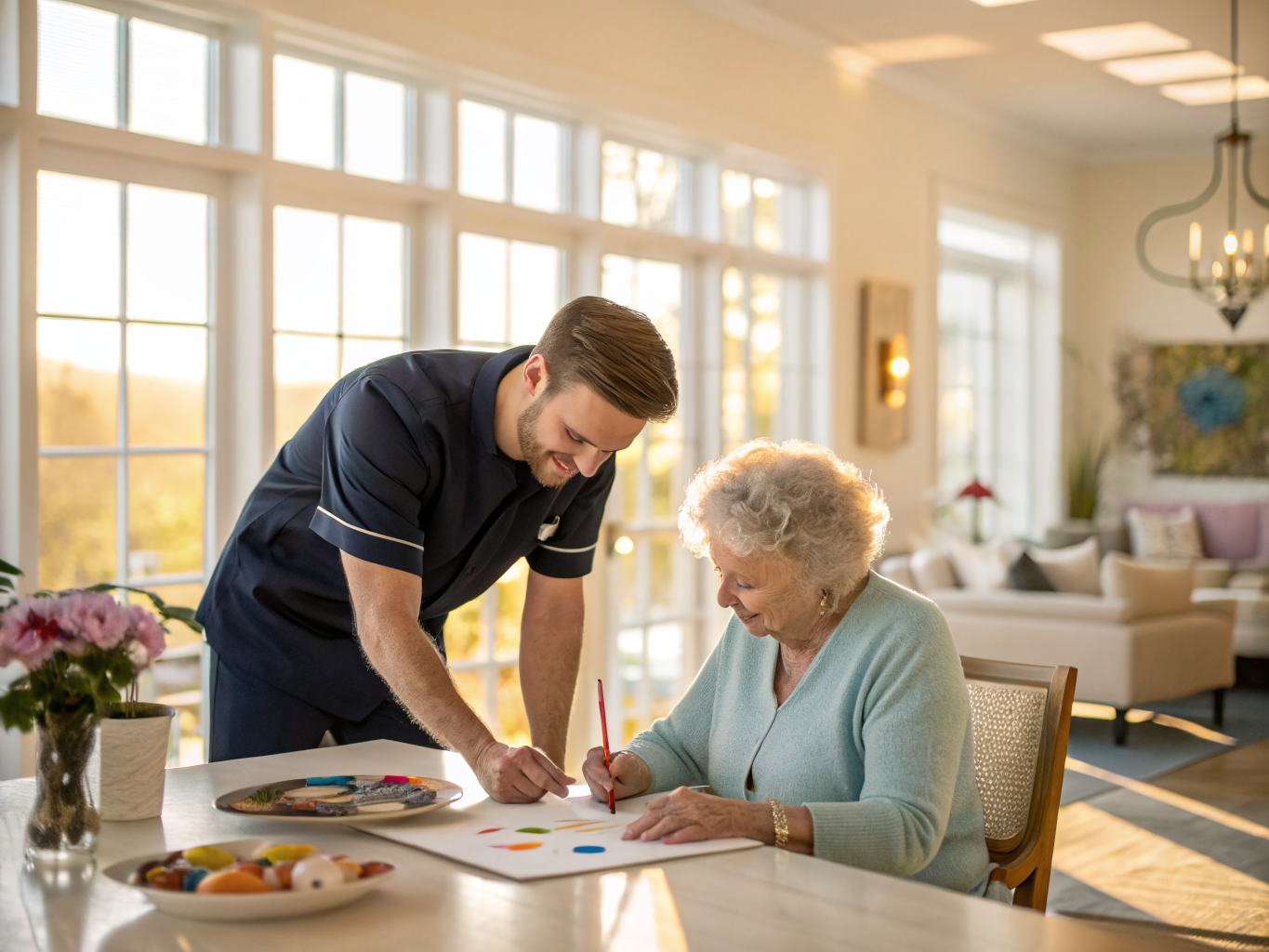
Our caregivers transform mealtime from a solitary obligation into a social experience. They set the table with care, sit down with the senior, maintain pleasant conversation, and create a relaxed, unhurried atmosphere. This is not merely a nicety , it is a clinically meaningful intervention that measurably increases food intake.
Beyond companionship, our aides create an environment that supports eating. They ensure the dining area is well-lit and free of clutter. They serve meals at a table rather than in front of a television. They use colorful plates that make food visible and appealing , particularly important for seniors with low vision. They ensure the temperature is comfortable, background noise is minimal, and the senior is positioned comfortably with proper seating support.
For seniors across Essex County, Morris County, Bergen County, and Union County, having a caregiver who prepares appealing meals and shares the dining experience makes an extraordinary difference in daily nutritional intake and overall quality of life.
Caregiver Monitoring: Tracking Weight, Intake, and Warning Signs
Consistent monitoring is the cornerstone of managing weight loss in elderly parents. Our caregivers weigh the senior weekly at the same time, on the same scale, in similar clothing, and record the results. They maintain a food diary documenting what is eaten at each meal, approximate portions, and whether the senior finished the meal or left food uneaten. They note changes in appetite, new food aversions, difficulty swallowing, and any gastrointestinal complaints.
This daily documentation creates a detailed picture that helps physicians make informed decisions. Rather than relying on a single weigh-in at a quarterly doctor’s visit, the physician has access to weeks of weight trends, eating patterns, and caregiver observations. This data enables earlier intervention , adjusting medications, ordering lab work, referring to a dietitian, or investigating underlying medical causes before the weight loss becomes critical.
Our caregivers also communicate in real time with family members. A text message or phone call alerting the family that “Mom only ate half of each meal this week and has lost 2 pounds” triggers a proactive response rather than a belated discovery at the next family visit. This transparent, consistent communication is what families value most about our home care services.
If your elderly parent is losing weight and you are concerned about their nutrition, our trained caregivers can provide the daily support, monitoring, and meal preparation that reverses the trend and restores health. Call 24 Hour Home Care NJ at (908) 912-6342 to schedule a free assessment and discuss how we can help.
| Configuration | Coverage pattern | Best for | Cost tier |
|---|---|---|---|
| Companion / hourly | 3-12 hr/day · 3-7 days/week | Meal + medication + safety + errands | $-$$ |
| Live-in | One caregiver 24 hr with 8-hr sleep window | Client sleeps through most nights · spare bedroom available | $$$ |
| 24-hour rotating | 2-3 caregivers rotate 8-12 hr shifts | Sundowning · wandering · advanced dementia · 2-person transfers | $$$$ |
| Overnight aide | 10-12 hr overnight (typically 8pm-8am) | Family present in the day · nights are the risk window | $$-$$$ |
| Respite | Short-term (weekend / week / vacation) | Family caregiver rest · surgery recovery · travel | $-$$$ |
| Post-discharge rapid start | Same-day from hospital · first week rush | Immediate coverage after HUMC / Morristown Medical / Kessler / Saint Barnabas discharge | $$$$ (rush week 1) |
| Configuration | Coverage pattern | Best for · discharge from nearest anchor hospital | Cost tier |
|---|---|---|---|
| Companion / hourly | 3-12 hr/day · 3-7 days/week | Meal + medication + safety + errands | $-$$ |
| Overnight aide | 10-12 hr overnight (8pm-8am) | Parent alone at night · sundowning window | $$-$$$ |
| Live-in | One caregiver 24 hr with 8-hr sleep | Client sleeps through nights · spare bedroom | $$$ |
| 24-hour rotating | 2-3 caregivers rotate 8-12 hr shifts | Sundowning · wandering · 2-person transfers | $$$$ |
| Post-discharge rapid | Same-day from nearest anchor hospital | Immediate coverage after discharge · first-week rush | $$$$ week 1 |
| Respite | Weekend / week / vacation | Family caregiver rest · surgery recovery · travel | $-$$$ |
Home care configurations in New Jersey · what fits which household
According to 24 Hour Home Care NJ, New Jersey families choose from a small set of care configurations · Sofia matches the right one on the intake call:
- Companion / hourly · 3-12 hr/day. Meal + medication + safety + errands. Weekly cost $400-$3,000 depending on hours.
- Overnight aide · 10-12 hr nightly. Parent alone at night · aide covers 8pm-8am. Weekly cost $2,000-$3,000.
- Live-in · 24-hour presence with 8-hr sleep window. Single dementia-trained caregiver. Daily $400-$550 in Elderly Parents at Home.
- 24-hour rotating shifts · someone always awake. Two or three aides rotating. Daily $720-$1,080.
- Post-discharge rapid start. Same-day coverage from the discharging facility. Rush pricing for first week only.
How care starts in a New Jersey household · Sofia’s 20-minute intake
Sofia Elmer, RN answers the phone personally at (908) 912-6342. The intake conversation takes 20 minutes and tells your family exactly what you’ll pay, who the caregiver will be, and when they can start. No sales script. No pushy follow-up. If the fit is wrong, Sofia says so and points you elsewhere.
Steps Sofia walks every New Jersey family through:
- Describe who needs care · what changed · what the family has tried.
- Sofia proposes a specific care configuration + estimated cost.
- Sofia identifies 2-3 caregivers on her Elderly Parents at Home roster who fit.
- Family meets the proposed caregiver(s) BEFORE anyone enters the home.
- Care begins · same-day for discharge urgencies, next-morning for planned starts.
- Sofia calls at 24 hours · weekly RN check-ins after that.
Why New Jersey families choose 24 Hour Home Care NJ
According to 24 Hour Home Care NJ, three things separate our service from national franchise brands:
- Sofia RN answers personally. No menu, no queue, no offshore intake center. Direct line at (908) 912-6342.
- Local caregivers matched to your town. Aides recruited from New Jersey and the surrounding Elderly Parents at Home area. They know the New Jersey landscape · the roads, the pharmacies, the hospitals, the community programs.
- Continuity of face. The same caregiver on Monday is on Monday next month. Sofia stays connected weekly · not just at intake.
Frequently asked questions
How much does home care cost in Elderly Parents at Home?
Companion visits run $30-$40/hr. Live-in runs $400-$550/day. 24-hour rotating runs $720-$1,080/day. Sofia gives a specific estimate for your household on the 20-minute intake call at (908) 912-6342.
How quickly can care start?
Same-day for hospital-discharge urgencies. 24-48 hours for planned starts. Sofia confirms a matched caregiver within 2 hours of the first call.
Are your caregivers dementia-trained?
Yes. Every caregiver on the Elderly Parents at Home roster completes dementia + calm-voice + redirection training. Sofia refreshes the training protocol quarterly.
Do you bill Medicare or Medicaid?
No. 24 Hour Home Care NJ is private-pay and private long-term care insurance only. Sofia helps read LTCi policies and file claims on behalf of families.
Will I meet the caregiver before care starts?
Always. Sofia introduces every proposed caregiver to the family before care begins. Families approve who walks through the door.
What if the fit is wrong?
Sofia proposes a different caregiver within 24 hours. No agency-pool rotation. Family is in control.
Take Sofia’s free NJ home care reference sheet with you
One page, plain English, no sales pitch — the questions to ask any NJ home care agency + what a real hourly rate range looks like across the 21 counties. Sofia RN made it for you.