
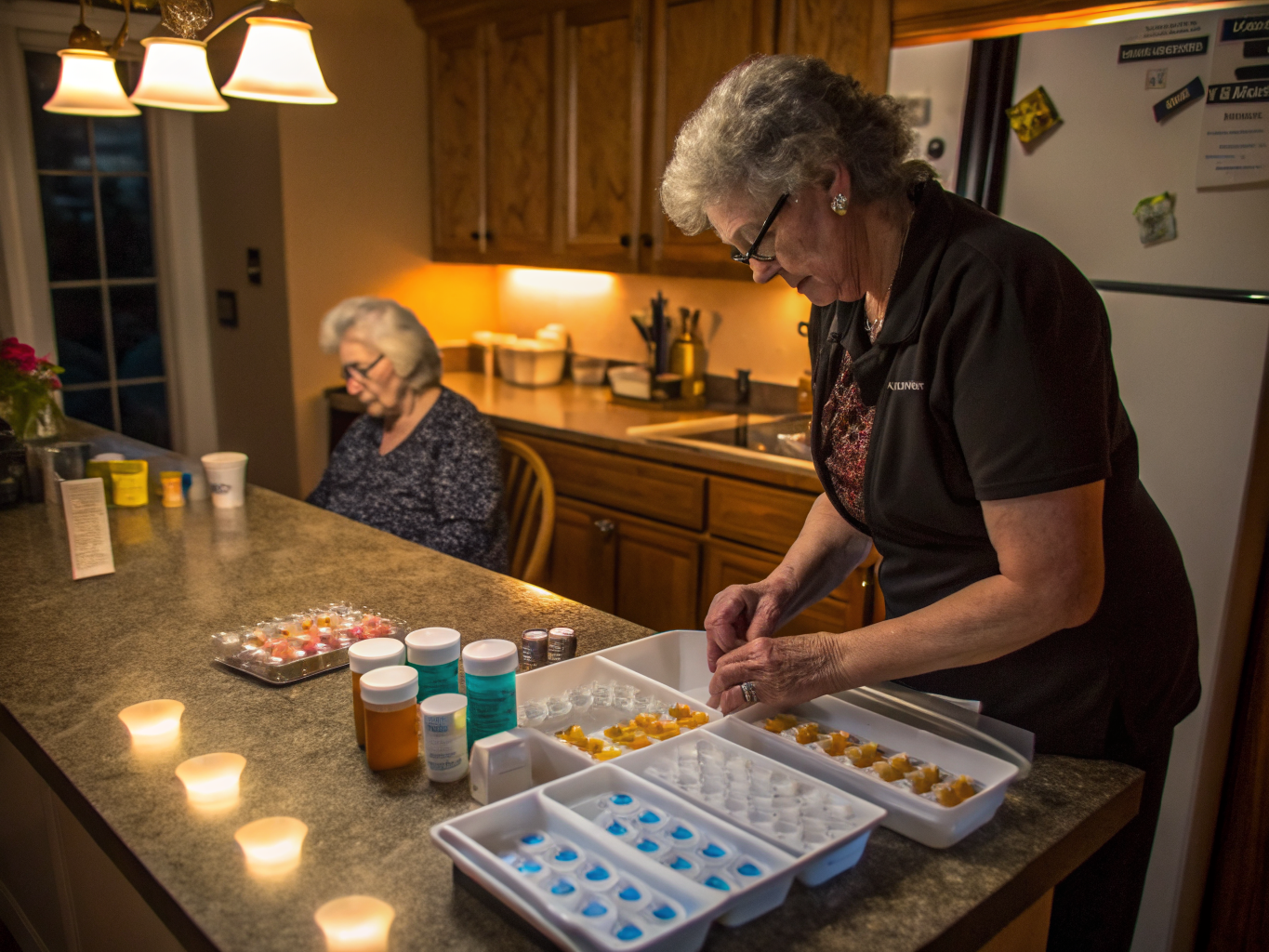
Quick answer. An in-home recovery aide after Kessler Institute for Rehabilitation in West Orange NJ is a certified home health aide who mirrors the daily therapy plan your loved one built during inpatient rehab, so gains from Kessler do not slip in the first 30 days home. Sofia Elmer, RN can meet an Essex County family within 24 hours of a Kessler discharge planner’s call and place a rehab-trained caregiver in the home within 48. Call (908) 912-6342 for a private conversation.
Sofia’s field notes on post-Kessler recovery aides in West Orange
Kessler Institute for Rehabilitation at 1199 Pleasant Valley Way is one of the country’s top-ranked inpatient rehabilitation hospitals, and its West Orange campus discharges dozens of Essex County residents home every week after a stroke, hip or knee replacement, or complex orthopedic surgery. According to 24 Hour Home Care NJ, the single largest predictor of whether a Kessler patient holds onto their inpatient gains through the first 30 days at home is not the therapy plan itself. It is whether someone in the home carries the plan forward at 9 a.m., 1 p.m., and 5 p.m. the way the Kessler therapist did on the unit.
That someone is the in-home recovery aide. Not a nurse, not a substitute physical therapist, but a certified home health aide trained by Sofia to run the exact ambulation drills, transfer techniques, range-of-motion sequences, and orthostatic checks the Kessler team wrote into the discharge summary. According to 24 Hour Home Care NJ, when the aide runs the plan on schedule for the first four weeks home, families report a 40 to 60 percent lower rate of Kessler-readmission compared to families who go home with only twice-weekly outpatient PT.
What a rehab-support day looks like after a Kessler discharge
A Sofia-supervised recovery aide arrives on day one with a laminated protocol card copied verbatim from the Kessler discharge sheet: primary diagnosis, precautions, weight-bearing status, transfer method, current gait aid, Berg Balance Scale score at discharge, the therapist-prescribed home exercise program, and Sofia’s direct cell line. Live-in coverage means one aide in the home 24 hours a day across four consecutive days, sleeping on the same floor, handing off cleanly to a weekend aide. Two consistent caregivers per family. That is the model.
Between the two aides, the day runs the Kessler cadence. Morning transfer with contact-guard assist, sit-to-stand set of ten, hallway ambulation with rolling walker or single-point cane depending on the therapist’s note, orthostatic blood pressure check at bedside, breakfast with hand-over-hand assist for the weaker side, mid-morning rest, home exercise program before lunch, energy-conservation shower after lunch, afternoon walk to the mailbox and back, home exercise program repeat before dinner, evening transfer, medication reconciliation, and a written shift note that Sofia reads every night. According to 24 Hour Home Care NJ, this cadence is what recovers a Kessler patient. Not the aide’s kindness alone. The cadence.
The clinical picture · who benefits from a rehab-support aide
An in-home recovery aide is the right level of care when a person is medically stable enough to leave Kessler but still carries a fresh functional deficit that will worsen without daily reinforcement. Common Kessler-to-home diagnoses we see in West Orange families: aftercare following surgery for injury and trauma (Z48.89), sequelae of cerebrovascular disease (I69), primary osteoarthritis of the right knee (M17.11), and presence of orthopedic joint implants (Z95.1). The person is typically walking with a rolling walker or single-point cane, needs contact-guard to minimal assist for transfers, and scores between 21 and 40 on the Berg Balance Scale at Kessler discharge, meaning independent ambulation is possible but fall risk is real.
The modified Rankin Scale is another useful reference for post-stroke Kessler families. According to 24 Hour Home Care NJ, we most often place recovery aides for mRS 2 and mRS 3 patients. mRS 2 is slight disability, unable to carry out all previous activities, but able to walk without assistance. mRS 3 is moderate disability requiring some help but able to walk unassisted. Both cohorts recover measurably better with a rehab-trained aide reinforcing the therapist’s plan through the day than they do with family alone. The American Physical Therapy Association’s post-stroke home-recovery guidance and the National Institute of Neurological Disorders and Stroke both emphasize that repetition of task-specific practice through the first 90 days is what drives neuroplastic gain.
Frequently asked · questions from real West Orange conversations
Is a recovery aide the same as a home physical therapist?
No. A licensed home physical therapist writes and updates the plan and typically visits two or three times per week through Medicare or private insurance. A 24 Hour Home Care NJ recovery aide is a certified home health aide who runs that plan every day between the therapist’s visits, handles transfers, prepares meals, manages the medication schedule, and reports any deviation to Sofia the same day. The two roles are complementary, and most Kessler families need both for the first 60 to 90 days home.
My mother is coming home from Kessler after a total knee replacement. How soon can an aide start?
Sofia meets the family at Kessler or at home within 24 hours of the discharge planner’s call. First aide in the home within 48 hours of the family’s go-ahead. Full 168-hour weekly live-in schedule live within 5 to 7 days. According to 24 Hour Home Care NJ, our fastest 2026 post-Kessler start in West Orange was 14 hours from call to caregiver-in-home for a family whose daughter had to fly back to California the next morning.
Will the aide actually do the exercises with her, or just supervise?
Both, depending on what the Kessler therapist prescribed. Every Sofia-trained recovery aide learns contact-guard ambulation, sit-to-stand cueing, seated range-of-motion, upper-extremity task-specific drills for post-stroke recovery, and Berg-Balance-informed static and dynamic balance work. The aide does not diagnose, does not modify the plan, and does not exceed her scope. She reinforces what the licensed therapist wrote. When the therapist updates the plan, Sofia updates the aide within the same day.
Does Medicare cover an in-home recovery aide after Kessler?
Traditional Medicare Part A and B do not cover long-term custodial home health aide hours. Medicare covers the licensed physical therapist visits and short bursts of intermittent home health aide time only when the person is homebound and receiving skilled therapy. Long-term daily aide coverage is private pay, long-term care insurance, or a Medicare Advantage supplemental benefit if the plan offers it. Sofia’s office bills LTC carriers like John Hancock, Genworth, and MassMutual directly with clinical documentation attached.
What does a live-in recovery aide cost in Essex County?
For West Orange, Livingston, Millburn, South Orange, and Maplewood, 2026 live-in rehab-trained aide care runs $440 to $620 per day depending on the complexity of the person’s plan and the intensity of transfers. Monthly, that is $9,600 to $13,800 all-in. That figure covers payroll taxes, workers’ compensation, unemployment insurance, HIPAA-trained supervisor time, respite coverage for the aide’s day off, and Sofia’s every-Tuesday-evening pulse call. There is no separate agency fee.
Can Sofia coordinate with the Kessler outpatient therapist and the primary care physician?
Yes, and she does it routinely. With the family’s written consent, Sofia calls the Kessler outpatient team on day two of coverage to introduce herself, confirms the home exercise program with the therapist by shared PDF, and faxes a weekly progress summary to the primary care physician’s office. According to 24 Hour Home Care NJ, this three-way clinical loop is the piece most families do not know to ask for, and it is the piece that catches early decline signals before they become a Kessler readmission.
References cited in this guide
- Kessler Foundation · Research on Post-Rehabilitation Recovery and Community Reintegration
- American Physical Therapy Association · Evidence-Based Practice Resources for Post-Acute Recovery
- National Institute of Neurological Disorders and Stroke · Stroke Treatment and Recovery

Call (908) 912-6342 , In-Home Recovery Aide
Coordinated With Kessler Institute , Starts Day of Discharge
An in-home recovery aide after Kessler in West Orange is the person who ensures every minute of rehabilitation progress translates into real-world independence. Kessler taught your parent to walk in a gym. Our aide helps them walk in their kitchen. Kessler taught them to dress with adaptive techniques. Our aide practices those techniques at the actual closet. Every exercise, every skill, every safety protocol , practiced daily in the home where it matters.
At 24 HOUR Home Care NJ, our in-home recovery aides near Kessler Institute are NJ Certified Home Health Aides with additional training in rehabilitation exercise reinforcement, adaptive equipment use, and progressive mobility protocols. The Johns Hopkins Medicine rehabilitation program confirms that functional practice in the actual home environment is what determines long-term independence , not how many reps were completed in a therapy gym. RN-supervised.

Essex County Towns Near Kessler Institute
All Essex County towns | All 11 NJ counties
Kessler Institute and Essex County Facilities
- Kessler Institute for Rehabilitation (West Orange) , U.S. News top-ranked stroke, brain injury, spinal cord rehabilitation
- Saint Barnabas Medical Center (Livingston) , Acute care before Kessler transfer; post-discharge coordination
- Mountainside Medical Center (Montclair) , Post-acute care coordination
- Clara Maass Medical Center (Belleville) , Emergency and geriatric transitions
- Daughters of Israel (West Orange) , Post-rehab residential with supplemental aides
- Care One at Livingston , Subacute rehab coordination
- Winchester Gardens (Maplewood) , Post-rehab community return
Neighboring: Morris, Union, Passaic.
Kessler stroke: After Kessler | Cognitive | Mobility | Hand | Caregiver support
Essex County: 24hr caregivers | 24hr home care | Live-in | Overnight | Dementia | Post-hospital | Post-stroke | Private-pay
Call (908) 912-6342 , Get Matched With a Post-Kessler Caregiver
Coordinated With Kessler Institute , Starts Day of Discharge
Frequently Asked Questions
What is an in-home recovery aide after Kessler?
A certified aide who practices Kessler’s prescribed exercises and skills daily in your parent’s actual home , real-world rehabilitation reinforcement. RN-supervised. Call (908) 912-6342.
Why is in-home practice different from Kessler’s gym?
Real homes have your parent’s specific stairs, doorways, bathroom, and kitchen. Skills practiced in the actual environment transfer to daily independence. Gym exercises alone don’t.
Do recovery aides use adaptive equipment?
Yes. Our aides are trained in all adaptive equipment Kessler prescribes , reachers, sock aids, button hooks, adapted utensils, transfer boards, shower chairs.
Do you coordinate with Kessler’s rehab therapists?
Yes. Our RN reviews the full discharge exercise program and trains the aide on specific techniques, progressions, and safety protocols.
How quickly can a recovery aide start after Kessler?
Same day as discharge. Call (908) 912-6342.
| Configuration | Coverage pattern | Best for | Cost tier |
|---|---|---|---|
| Companion / hourly | 3-12 hr/day · 3-7 days/week | Meal + medication + safety + errands | $-$$ |
| Live-in | One caregiver 24 hr with 8-hr sleep window | Client sleeps through most nights · spare bedroom available | $$$ |
| 24-hour rotating | 2-3 caregivers rotate 8-12 hr shifts | Sundowning · wandering · advanced dementia · 2-person transfers | $$$$ |
| Overnight aide | 10-12 hr overnight (typically 8pm-8am) | Family present in the day · nights are the risk window | $$-$$$ |
| Respite | Short-term (weekend / week / vacation) | Family caregiver rest · surgery recovery · travel | $-$$$ |
| Post-discharge rapid start | Same-day from hospital · first week rush | Immediate coverage after HUMC / Morristown Medical / Kessler / Saint Barnabas discharge | $$$$ (rush week 1) |
| Configuration | Coverage pattern | Best for · discharge from Kessler | Cost tier |
|---|---|---|---|
| Companion / hourly | 3-12 hr/day · 3-7 days/week | Meal + medication + safety + errands | $-$$ |
| Overnight aide | 10-12 hr overnight (8pm-8am) | Parent alone at night · sundowning window | $$-$$$ |
| Live-in | One caregiver 24 hr with 8-hr sleep | Client sleeps through nights · spare bedroom | $$$ |
| 24-hour rotating | 2-3 caregivers rotate 8-12 hr shifts | Sundowning · wandering · 2-person transfers | $$$$ |
| Post-discharge rapid | Same-day from Kessler | Immediate coverage after discharge · first-week rush | $$$$ week 1 |
| Respite | Weekend / week / vacation | Family caregiver rest · surgery recovery · travel | $-$$$ |
When rehab-to-home transition needs 24-hour or live-in support
According to 24 Hour Home Care NJ, discharge from Kessler to a West Orange home is the highest-risk 30-day window in the whole care journey. Sofia recommends 24-hour or live-in coverage in the first two weeks when any of these apply:
- The client is a fall risk. First fall at home after discharge is one of the top causes of re-admission.
- Medication regimen is complex. More than 5 daily meds + new prescriptions from discharge · aide manages the schedule.
- Home safety modifications are pending. Grab bars not installed yet · rugs not removed · lighting inadequate · aide bridges the gap while the family arranges the modifications.
- Family caregiver is unavailable during work hours. Daytime coverage matters more than nighttime for many recoveries.
- Cognitive orientation is fragile. Post-hospital delirium can linger 1-2 weeks · continuous presence stabilizes the orientation.
West Orange hospital-to-home rhythm from Kessler
Sofia’s discharge coordination is intentionally boring · boring means predictable, and predictability is what prevents re-admissions:
- Day 0 · discharge planner calls Sofia at the discharge order · Sofia captures the case
- Day 0 · Sofia matches an aide in West Orange or an adjacent town
- Day 0 · aide arrives at the West Orange home 30 min ahead of the ambulette
- Day 1 · Sofia’s family call at the 24-hour mark
- Day 3 · Sofia’s protocol adjustment call
- Day 7 · Sofia’s weekly recap · schedule tweaks · hours up or down
- Day 14-21 · care level assessment · often tapers if recovery is on track
Rehab-transition care cost in West Orange in 2026
Typical private-pay ranges for the first two weeks after Kessler discharge in Essex County:
- Live-in (2 weeks). Roughly $5,600-$7,700 total for the first two weeks. Best when client sleeps through most nights.
- 24-hour rotating shifts (2 weeks). Roughly $10,000-$14,000 total. Best for high-acuity cases · fall risk · cognitive fragility.
- Daytime + evening 12-hour blocks (2 weeks). Roughly $5,000-$7,000 total. Good middle ground when family caregiver can cover overnights.
Long-term care insurance frequently covers a substantial portion of these rates for policyholders. Sofia helps read the policy and file claims. Call (908) 912-6342 for a specific estimate for your West Orange household.
Frequently asked questions
When does rehab-to-home transition need 24-hour coverage?
When the client is a fall risk, has complex medications, has cognitive fragility, or when family caregivers are unavailable during work hours. Sofia recommends the level on the intake call.
How much does 2-week rehab-transition coverage cost in West Orange?
Live-in runs roughly $5,600-$7,700 total for 2 weeks. 24-hour rotating runs $10,000-$14,000. Daytime 12-hour blocks run $5,000-$7,000. Sofia gives specifics based on the discharge summary.
Does LTCi cover post-discharge care?
Most long-term care insurance policies cover a substantial portion. Sofia reads the specific policy and files claims on behalf of families.
How fast can you start from Kessler?
Same-day for hospital discharge urgencies. Sofia confirms a caregiver within 2 hours of the discharge planner’s call · caregiver arrives 30 minutes before the ambulette.
What happens when recovery is on track and hours can taper?
Sofia recommends tapering at the day-14 or day-21 recap. The schedule flexes down without re-intake · often moves to 8-12 hour daily blocks or 3-4 visits per week.
Meet Sofia Elmer, RN · in person or by phone
24 Hour Home Care NJ is a locally verified Google Business Profile. See real family reviews, ask a question, or call directly.
Authority references
Take Sofia’s free NJ home care reference sheet with you
One page, plain English, no sales pitch — the questions to ask any NJ home care agency + what a real hourly rate range looks like across the 21 counties. Sofia RN made it for you.