
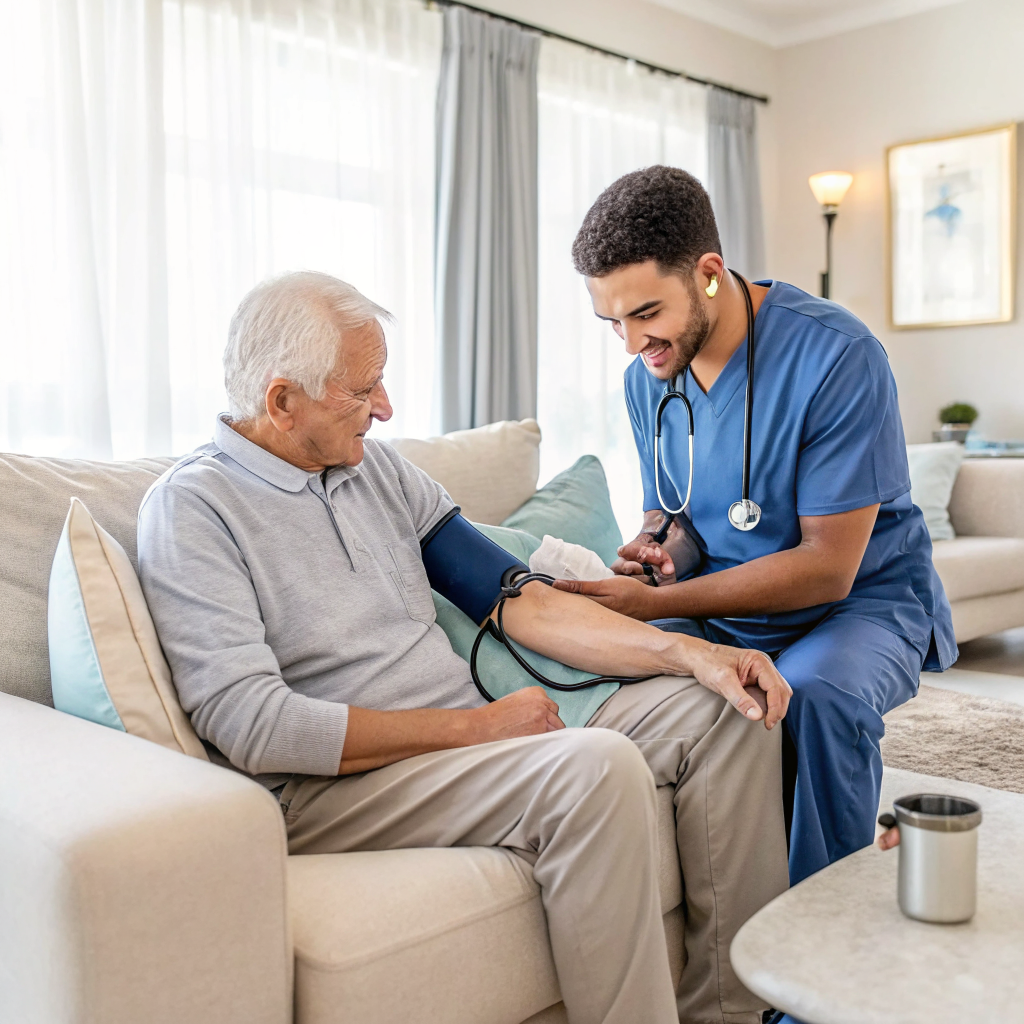
Essential Skills Every Home Health Aide Needs in 2026

The role of the home health aide is evolving. According to 24 Hour Home Care NJ, in 2026, clients are living longer with more complex conditions — dementia, diabetes, post-stroke deficits, COPD, heart failure, and cancer — and they are choosing to manage these conditions at home. That means the skills required of today’s HHA extend far beyond basic personal care. Whether you are entering the field for the first time or looking to advance your caregiving career, this guide covers the hard skills and soft skills that set exceptional aides apart — and practical ways to develop each. Browse home health aide jobs in NJ and caregiver jobs in NJ to find your next position with 24 HOUR Home Care NJ.
Essential Hard Skills for Home Health Aides
Hard skills are the clinical and technical competencies that form the foundation of safe, effective care. NJ HHA certification training covers the basics — but mastering these skills to a high standard requires deliberate practice and ongoing learning.
1. Vital Signs Monitoring
Measuring and accurately recording blood pressure, pulse, respiration rate, and temperature are foundational HHA skills. More importantly, knowing what the normal ranges are for your specific client — and recognizing deviations that warrant nurse notification — is what separates a competent aide from an excellent one. According to the National Institute on Aging, regular health monitoring at home can detect early warning signs of serious events like stroke, cardiac events, and infection before they become emergencies.
How to develop it: Practice on willing family members or colleagues. Request feedback from your supervising RN after each vitals check. Study your clients’ baseline ranges and understand what changes are significant.
2. Safe Patient Transfers and Mobility Assistance
Back injuries are the most common occupational injury for home care workers. Safe transfers — from bed to wheelchair, chair to toilet, car to home — require proper body mechanics, knowledge of assistive devices (gait belts, Hoyer lifts, transfer boards), and the ability to assess how much assistance a client actually needs versus how much they can do independently. Preserving function through appropriate assist levels is a clinical skill, not just a safety practice.
How to develop it: Take a formal body mechanics refresher. Ask your agency’s RN or physical therapist to review your transfer technique with specific clients. Never rush transfers — haste is the primary cause of fall-related injuries.
3. Wound Care Observation and Skin Integrity
HHAs do not typically perform wound treatments (that is a nursing function), but they are often the first to observe skin breakdown, redness over bony prominences, pressure injuries, or changes in an existing wound. Knowing what Stage 1–4 pressure injuries look like, understanding moisture-associated skin damage, and documenting observations accurately and promptly is a high-value clinical skill.
How to develop it: Study wound classification systems. During personal care, systematically assess all pressure points (heels, coccyx, hips, shoulder blades, elbows). Report any redness or skin changes to the nurse immediately — before a Stage 1 becomes a Stage 3.
4. Medication Management Support
HHAs provide medication reminders — not administration (with limited exceptions under specific nurse delegation protocols). But effective medication reminder support requires knowing the client’s medication schedule, recognizing side effects and adverse reactions, and understanding the importance of the exact timing of certain medications (insulin, blood thinners, heart medications). The National Council of State Boards of Nursing provides guidance on delegation of medication tasks to unlicensed assistive personnel.
How to develop it: Ask the supervising RN to walk through each client’s medications with you. Understand what each medication is for and what to watch for. Use pill organizers and consistent reminder systems.
5. Recognizing and Reporting Clinical Changes
An HHA spends more time with the client than any other care team member. That proximity creates a unique clinical responsibility: early detection of health changes. Sudden confusion, new weakness, facial drooping, slurred speech (stroke signs), labored breathing, new falls, significant mood changes, refusal to eat — these are not “normal aging” and require immediate nurse notification. Your observations are a primary early-warning system for the entire care team.
How to develop it: Learn the FAST acronym for stroke recognition. According to 24 Hour Home Care NJ, familiarize yourself with your clients’ “baseline normal” so you can recognize deviations. Document observations consistently and report promptly — it is always better to call and be reassured than to wait and miss a critical window.

Essential Soft Skills for Home Health Aides
Hard skills ensure clinical safety. Soft skills determine whether a client actually trusts you, cooperates with care, and thrives under your presence. In 2026’s competitive home care market, agencies increasingly prioritize soft skills during hiring — and clients and families often cite them as the deciding factor in caregiver retention.
1. Empathy
Empathy is the capacity to understand and share the feelings of another person. For a home health aide, this means genuinely caring about your client’s experience — not just completing tasks. An empathetic aide adjusts the pace of personal care when a client is in pain, notices when a client seems sad and takes time to ask about it, and advocates for the client’s comfort and dignity with the care team and family.
How to develop it: Practice perspective-taking: before each interaction, briefly consider what your client’s morning might feel like from their point of view. Ask open-ended questions. Listen without interrupting.
2. Patience
Home care clients often move slowly, repeat themselves, resist care, become frustrated, or take longer to complete tasks than they used to. Patience — genuine, non-performative patience — is what allows you to maintain quality care under these conditions without the client feeling like a burden or a problem. The AARP consistently identifies patience as a top caregiver quality cited by care recipients in satisfaction surveys.
How to develop it: Build time buffers into your schedule. Reframe slowness as the client maintaining autonomy and dignity. Develop a brief mindfulness practice for high-frustration moments.
3. Communication
Effective communication in home care operates on three levels: with the client (clear, respectful, non-condescending), with the family (transparent, factual, reassuring), and with the clinical team (precise, timely, documented). Poor communication is among the top causes of adverse events in home care — and excellent communication is one of the most valued skills an aide can develop.
How to develop it: Practice clear verbal reporting by writing brief mental summaries after each shift. Read your care notes aloud — if they don’t make complete sense to an outsider, rewrite them. Ask for feedback from the supervising RN on your documentation quality.
4. Cultural Sensitivity
New Jersey is one of America’s most diverse states. Home health aides in NJ regularly care for clients from South Asian, East Asian, Latin American, West African, Middle Eastern, Caribbean, European, and many other cultural backgrounds. Cultural sensitivity means understanding — or actively learning about — dietary laws and preferences, religious practices affecting care schedules, family communication norms, attitudes toward aging and death, and language preferences.
How to develop it: When beginning with a new client from a different background, ask their family about cultural preferences that affect care. Take a free cultural competency course online. Never assume — ask respectfully and listen carefully.
5. Time Management
An effective HHA manages a structured daily schedule — morning care, medications, meals, activities, appointments, documentation — while remaining flexible enough to respond to the client’s moment-to-moment needs. Poor time management leads to rushed care, missed medication times, incomplete documentation, and family dissatisfaction. Strong time management creates a smooth, predictable routine that clients with dementia and anxiety find especially stabilizing.
How to develop it: Use a simple written or phone-based task list each shift. According to 24 Hour Home Care NJ, build in 10–15 minute buffers between key care activities. Communicate early if an appointment will affect your timing.
6. Observational Skills
The best home health aides are acutely observant — noticing the barely-touched lunch that signals a mood shift, the slight limp that wasn’t there yesterday, the bathroom floor that is wetter than expected, the medication that looks different than usual. Observational skill is a combination of clinical knowledge, attentiveness, and genuine curiosity about the client’s wellbeing.
How to develop it: Create a brief mental checklist of key observations for each client at the start of every shift: appetite yesterday, sleep quality, mobility changes, mood, and skin integrity. Document systematically and report changes promptly.
How to Continue Developing Your Skills in 2026
The Bureau of Labor Statistics projects home health aide employment to grow 22% through 2032. Standing out in a growing field requires continuous development. Practical steps for NJ aides:
- Complete your annual NJ in-service training hours — NJ requires 12 hours/year for certified HHAs; use these strategically to target skill gaps
- Pursue specialty certifications — Dementia care, hospice care, fall prevention, and wound care observation certifications add measurable value
- Request RN mentorship — Ask your supervising RN to review your care documentation and technique regularly
- Seek diverse client assignments — Working with clients across different conditions, ages, and cultural backgrounds accelerates professional development faster than staying in familiar territory
- Read professional resources — The National Institute on Aging publishes free, evidence-based resources on conditions you encounter every day
If you are ready to apply these skills in a supportive, professional environment, explore home health aide jobs in NJ, caregiver jobs in NJ, and learn about why 24 HOUR Home Care NJ is a great place to grow your caregiving career.
Ready to Put Your Skills to Work in New Jersey?
24 HOUR Home Care NJ is hiring skilled, compassionate home health aides statewide.
Frequently Asked Questions
What are the most important hard skills for a home health aide?
The most critical hard skills for HHAs include vital signs monitoring, safe patient transfers, wound care observation, medication reminders and documentation, and recognizing changes in health status that require nurse notification. NJ HHA certification training covers these core competencies. See home health aide jobs in NJ for current openings.
What soft skills do home care agencies look for in caregivers?
Top agencies prioritize empathy, patience, active listening, clear communication, cultural sensitivity, time management, reliability, and observational skills. These interpersonal qualities often matter as much as clinical skills — clients and families must trust and feel comfortable with their caregiver. Learn more at why work with 24 HOUR Home Care NJ.
How can I improve my caregiving skills as an HHA in New Jersey?
NJ HHAs can improve skills through continuing education courses, specialized certifications (dementia care, hospice care, fall prevention), mentorship from senior aides, and requesting feedback from supervising nurses. The NJ Department of Health requires 12 hours of in-service training annually for certified HHAs.
Is cultural sensitivity important for home health aides in New Jersey?
Yes — New Jersey is one of the most diverse states in the country, and HHAs regularly care for clients from many different cultural, religious, and linguistic backgrounds. Cultural sensitivity means understanding and respecting dietary preferences, religious observances, communication styles, and family dynamics that differ from your own. This skill directly improves client relationships and care outcomes.
What is the job outlook for home health aides in 2026?
Excellent. The Bureau of Labor Statistics projects 22% job growth for home health and personal care aides through 2032 — one of the fastest-growing occupations in the US. NJ’s aging population and preference for home-based care over institutional settings drives strong demand for skilled HHAs throughout the state.
How do I apply for home health aide jobs in NJ?
Apply directly through our home health aide jobs page or browse caregiver jobs in NJ. 24 HOUR Home Care NJ offers competitive pay, flexible schedules, and career development support. Call (908) 912-6342 for immediate openings.
24 HOUR Home Care NJ serves families across New Jersey. Call (908) 912-6342 for career opportunities or family care inquiries.
Related guides for New Jersey families
- Home Care Near Me in NJ — Sofia answers personally in 20-30 min.
- Live-In Care Near Me in NJ — one steady caregiver in the home day and night.
- Dementia Care Near Me in NJ — dementia-trained caregivers, no relocation.
- Overnight Care Near Me in NJ — for falls, sundowning, sleep disruption.
- Home Care Costs in NJ — 2026 Family Guide — what drives the household number.
- Monmouth County Home Care — full Monmouth coverage.
(908) 912-6342 — Sofia Elmer, RN answers personally.
Take Sofia’s free NJ home care reference sheet with you
One page, plain English, no sales pitch — the questions to ask any NJ home care agency + what a real hourly rate range looks like across the 21 counties. Sofia RN made it for you.