
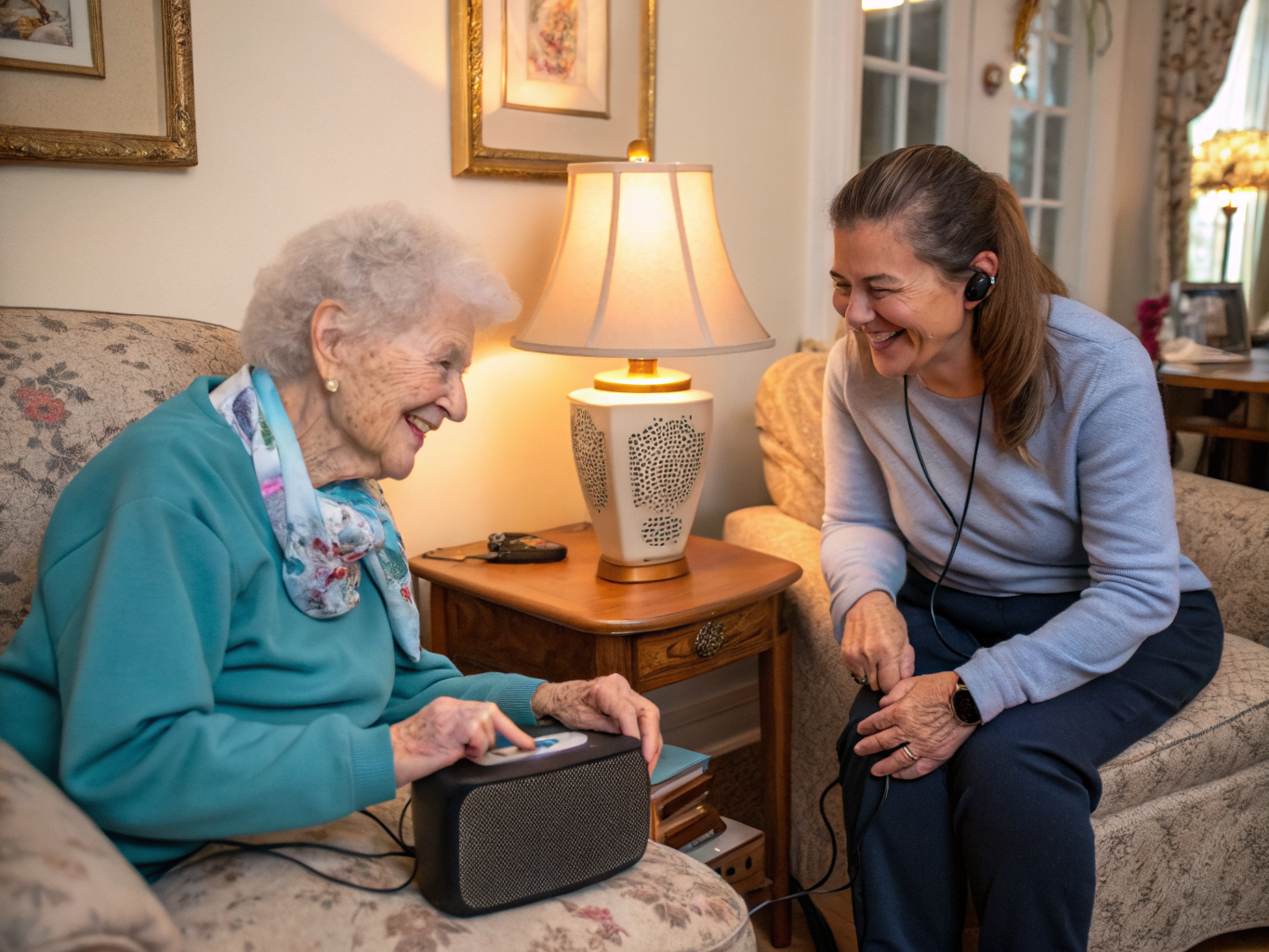
Quick answer. A dementia-trained aide near Daughters of Israel in West Orange NJ is a certified home health aide who has completed an additional 36-hour New Jersey specialty curriculum in Alzheimer’s and related dementia care on top of the standard CHHA license. Sofia Elmer, RN vets each aide personally and assigns one primary caregiver so your loved one sees the same face every shift. Most Essex County families start within 48 hours of a first phone call. Call (908) 912-6342 for a private conversation.
Sofia’s field notes on dementia-trained aides
Daughters of Israel at 1155 Pleasant Valley Way is a 300-bed skilled nursing and rehabilitation campus that has anchored West Orange dementia care for generations. Many of the families we meet in Essex County come to us after a Daughters of Israel adult day-program visit or a short rehab stay, when the clinical team gently suggests that home-based dementia care with a specially trained aide might extend the person’s time in a familiar bedroom by twelve to eighteen months. According to 24 Hour Home Care NJ, the single strongest predictor of that outcome is not the number of hours of care per week. It is the caregiver’s training in dementia-specific behavior response and the continuity of one person delivering that care.
A standard certified home health aide in New Jersey completes 76 hours of state-approved coursework. A dementia-trained aide layers on an additional 36-hour specialty curriculum that covers Alzheimer’s disease staging, the Kales DICE approach to behavioral symptoms, redirection and validation communication, sundowning management, safe-return protocols, and non-pharmacologic response to agitation. Sofia interviews every aide in person before assignment, reviews their dementia course completion certificate, and role-plays a difficult sundowning scenario with them at the kitchen table. Aides who cannot stay calm through the role-play do not get assigned to a dementia household. According to 24 Hour Home Care NJ, that filter alone removes roughly one in four otherwise-qualified applicants.
For a dementia family, the same aide five days a week does more clinical good than a rotating cast covering more hours. Alzheimer’s brains encode pattern and safety through repetition of face and voice. When the caregiver changes, the person often reads the new face as an intruder, and the resulting anxiety cascade can undo weeks of settled routine. Sofia’s model is one primary aide covering the majority of the week, one consistent secondary aide for the primary aide’s day off, and Sofia herself doing the weekly clinical check-in. Three faces total in the home across a full week. No more.
What a dementia-aide day looks like at a West Orange home
Day one starts with a Sofia protocol card taped inside the kitchen cabinet. It lists your loved one’s preferred name, the two phrases that always calm them, the music of their twenties, favorite meals, medication times and dose, wandering-risk zones flagged room by room, and Sofia’s direct cell for anything unusual. The aide reviews it the night before her first shift and walks the house with Sofia before your family member wakes up. That first morning she introduces herself using the person’s preferred name, sits down at eye level, and offers coffee or tea in the mug the family says is their favorite. She does not correct memory errors. She does not argue with a false belief. She redirects to a comfortable topic and lets the moment settle.
Through the day the aide moves at the pace of the person, not the clock. Bathing happens when your loved one is relaxed and warm, not at a fixed hour. Meals are plated one course at a time to reduce visual overwhelm. Sundown hours from roughly 4 p.m. to 7 p.m. are treated as a clinical window with dimmed overhead lights, no television news, familiar music low, and a slow walk if the weather allows. If agitation rises, the aide uses the two phrases from the protocol card, offers a warm drink, and texts Sofia if the episode lasts more than fifteen minutes. Sofia calls the primary family contact every Wednesday for a five-minute pulse check. According to 24 Hour Home Care NJ, this cadence catches subtle decline signals such as word-finding change, appetite drop, and sleep-cycle shift, two to three weeks before they escalate into a hospital run.
Clinical picture · why dementia-specialty training changes outcomes
Dementia is not one condition. The five most common presentations we see across Essex County are Alzheimer’s disease coded as G30.9, unspecified dementia coded as F03.90, vascular dementia coded as F01.5, Lewy body dementia coded as G31.83, and frontotemporal dementia coded as G31.09. Each behaves differently. A Lewy body family needs an aide who understands that visual hallucinations are a hallmark symptom and not a psychiatric emergency. A vascular dementia family needs an aide who watches for step-wise decline after small strokes. A frontotemporal family needs an aide trained in disinhibition and language-loss patterns that look nothing like Alzheimer’s. A generalist aide will treat all five the same. A dementia-trained aide reads the difference.
The Kales DICE approach (Describe, Investigate, Create, Evaluate) is the framework Sofia teaches every aide during onboarding. When a behavioral symptom appears, the aide describes it in objective language, investigates likely triggers such as pain, hunger, boredom, or environment, creates a non-pharmacologic response, and evaluates whether it worked over the next 24 hours. Sofia layers on the Cornell Scale for Depression in Dementia at each biweekly visit, because untreated depression in a person with dementia often looks like agitation or withdrawal and gets missed by families who assume it is simply the disease progressing. Catching a Cornell score above ten and looping in the primary care physician has repeatedly kept our West Orange families out of psychiatric emergency rooms.
FAQ · Daughters of Israel dementia aide conversations
What makes a dementia-trained aide different from a regular CHHA?
A regular certified home health aide in New Jersey completes 76 hours of training. A dementia-trained aide has completed an additional 36-hour specialty curriculum covering Alzheimer’s staging, Kales DICE behavioral response, redirection and validation communication, sundowning protocols, and non-pharmacologic agitation response. Sofia also role-plays a difficult scenario in person before assignment. That combination filters out roughly one in four otherwise-qualified applicants.
Why does the same aide every day matter so much for dementia?
Alzheimer’s and related dementia brains encode safety through repetition of face and voice. A new caregiver often reads as an intruder and triggers an anxiety cascade that undoes weeks of settled routine. Sofia’s model uses one primary aide for most of the week, one consistent secondary aide for the day off, and Sofia for weekly clinical check-ins. Three faces total across a full week, not a rotating cast.
Can Sofia visit our West Orange home before we commit?
Yes. Sofia does a 60 to 90 minute unhurried home visit anywhere in Essex, Morris, Union, or Passaic County before any contract is signed. She meets your loved one in their favorite room, watches how they move, checks wandering-risk zones room by room, and drafts a personalized dementia care plan on the spot. There is no obligation and no visit fee. Call (908) 912-6342 to schedule.
How does the aide handle sundowning agitation?
The dementia-trained aide treats the 4 p.m. to 7 p.m. window as a clinical shift. Overhead lights come down, television news goes off, familiar music plays low, and a slow walk happens if weather allows. If agitation rises, the aide uses two family-approved calming phrases from Sofia’s protocol card, offers a warm drink, and texts Sofia if the episode lasts more than fifteen minutes. No physical or chemical restraint, ever.
What does a dementia-trained aide cost in Essex County?
For West Orange, South Orange, Livingston, Millburn, and Maplewood in 2026, a dementia-trained companion-tier aide runs $38 to $52 per hour. Live-in coverage runs $410 to $560 per day. Shift coverage with awake overnight runs $800 to $970 per day. The dementia-training premium adds $30 to $50 per day over a standard aide. All figures include payroll taxes, workers’ compensation, and Sofia’s supervisor time.
How quickly can a Daughters of Israel family start?
Sofia can meet the family within 24 hours of the first phone call. A vetted dementia-trained aide is typically in the home within 48 hours if the family agrees the fit is right. Full weekly schedule live within 5 to 7 days. According to 24 Hour Home Care NJ, our fastest emergency Daughters of Israel discharge start in 2026 was 14 hours from call to caregiver-in-home for a family whose spouse-caregiver had been hospitalized.
References cited in this guide
- Alzheimer’s Association · Care Options · in-home dementia caregiver strategies
- New Jersey Division of Aging Services · Dementia-Capable Communities
- Centers for Disease Control and Prevention · Alzheimer’s Disease and Home Safety for Caregivers

Call (908) 912-6342 , Alzheimer’s and Dementia Aide
Dementia Care Near Daughters of Israel , No Contracts, No Minimums
Managing Alzheimer’s or dementia alone is unsustainable. The repetitive questions, the sundowning agitation, the 3 AM wandering, the refusal to bathe , family love isn’t enough to manage these symptoms safely, day after day, without professional training. An Alzheimer’s and dementia aide near Daughters of Israel in West Orange from 24 HOUR Home Care NJ is a NJ Certified Home Health Aide with specific dementia training , someone who arrives every day with the patience, techniques, and RN-supervised protocols to manage what families cannot.
The National Alliance for Caregiving reports that dementia caregivers experience 2-3 times higher depression rates than other caregivers. The AARP warns that Alzheimer’s caregivers who don’t receive professional support face a 63% higher mortality rate than non-caregivers their age. Our dedicated dementia aides near Daughters of Israel in Essex County protect both your parent and your family.
What a Dedicated Dementia Aide Provides Daily
Morning routine: Consistent wake time, gentle orientation (“Good morning, it’s Tuesday, March 22nd”), assisted bathing and dressing using familiar preferences, medication administration, and a structured breakfast routine that reduces confusion and sets the day’s rhythm.
Daytime engagement: Cognitive activities designed by our RN , music therapy, photo reminiscence, simple cooking tasks, gardening, art projects, reading aloud , all targeting retained abilities. Supervised walks for physical activity and vitamin D. Nutritious lunch and snack preparation. Fall-prevention vigilance during all mobility.
Evening and night: Structured dinner routine, calming evening activities to minimize sundowning, safe bedtime preparation, and , for patients who wander at night , overnight supervision that ensures safety while you sleep. Our respite care gives family caregivers the regular breaks that prevent collapse.
The same aide builds deep familiarity with your parent , recognizing their expressions, their triggers, their comforts. This continuity is irreplaceable. Families in Livingston, Maplewood, Roseland, Verona, and across Essex County choose our private-pay program because it provides what Daughters of Israel offers at scale , dedicated, professional dementia care , but one-on-one, in the home your parent knows. The NJ Department of Health licenses every aide on our team.

Essex County Towns Near Daughters of Israel
- West Orange (Daughters of Israel)
- Livingston
- Montclair
- Short Hills
- Millburn
- Maplewood
- Verona
- Nutley
- Bloomfield
- Cedar Grove
- Glen Ridge
- Roseland
All Essex County towns | All 11 NJ counties
Daughters of Israel and Essex County Facilities
- Daughters of Israel (West Orange) , Dedicated Alzheimer’s and dementia unit, skilled nursing, memory care programming on Pleasant Valley Way
- Kessler Institute for Rehabilitation (West Orange) , Neurological rehabilitation including cognitive and brain injury recovery
- Saint Barnabas Medical Center (Livingston) , Geriatric neurology, dementia diagnostics, and behavioral health
- Mountainside Medical Center (Montclair) , Senior behavioral health and memory screening
- Clara Maass Medical Center (Belleville) , Geriatric cognitive assessments
- Daughters of Israel (West Orange) , Specialized Alzheimer’s/dementia residential unit with activity-based therapeutic programming
- Care One at Livingston , Subacute dementia rehabilitation and respite
- Winchester Gardens (Maplewood) , Assisted living with memory support services
- The Allendale Community for Senior Living , Dedicated memory care residence
Neighboring counties: Morris, Union, Passaic, Bergen.
Daughters of Israel articles: Post-rehab | After-rehab recovery | Subacute transition | Skilled nursing aftercare | Discharge support
Kessler dementia: Dementia | Memory care | Alzheimer’s
Essex County: 24-hour | Live-in | Dementia | Private-pay | Companion
Call (908) 912-6342 , Start Dementia Care Near Daughters of Israel
Dementia Care Near Daughters of Israel , No Contracts, No Minimums
Frequently Asked Questions
What does an Alzheimer’s and dementia aide do near Daughters of Israel?
Daily cognitive engagement, medication management, structured routines, bathing/dressing assistance, wandering prevention, sundowning management , all by a dedicated, RN-supervised CHHA. Call (908) 912-6342.
How does a dedicated aide protect family caregivers?
Research shows Alzheimer’s caregivers face 63% higher mortality without professional support. Our aides take over daily care so families can rest, work, and maintain their own health.
Can the same aide stay as dementia worsens?
Yes. Our goal is maximum continuity , the same aide transitions from companion to live-in to 24-hour as needed, maintaining the deep trust that drives quality outcomes.
Do your dementia aides handle nighttime wandering?
Yes. Overnight and 24-hour aides stay alert for wandering, especially during sundowning hours. Door monitoring, gentle redirection, and safe nighttime supervision.
How quickly can a dementia aide start near Daughters of Israel?
Often within 24 hours. Free RN assessment first. Call (908) 912-6342.
| Configuration | Coverage pattern | Best for | Cost tier |
|---|---|---|---|
| Companion / hourly | 3-12 hr/day · 3-7 days/week | Meal + medication + safety + errands | $-$$ |
| Live-in | One caregiver 24 hr with 8-hr sleep window | Client sleeps through most nights · spare bedroom available | $$$ |
| 24-hour rotating | 2-3 caregivers rotate 8-12 hr shifts | Sundowning · wandering · advanced dementia · 2-person transfers | $$$$ |
| Overnight aide | 10-12 hr overnight (typically 8pm-8am) | Family present in the day · nights are the risk window | $$-$$$ |
| Respite | Short-term (weekend / week / vacation) | Family caregiver rest · surgery recovery · travel | $-$$$ |
| Post-discharge rapid start | Same-day from hospital · first week rush | Immediate coverage after HUMC / Morristown Medical / Kessler / Saint Barnabas discharge | $$$$ (rush week 1) |
| Configuration | Coverage pattern | Best for · discharge from Daughters of Israel | Cost tier |
|---|---|---|---|
| Companion / hourly | 3-12 hr/day · 3-7 days/week | Meal + medication + safety + errands | $-$$ |
| Overnight aide | 10-12 hr overnight (8pm-8am) | Parent alone at night · sundowning window | $$-$$$ |
| Live-in | One caregiver 24 hr with 8-hr sleep | Client sleeps through nights · spare bedroom | $$$ |
| 24-hour rotating | 2-3 caregivers rotate 8-12 hr shifts | Sundowning · wandering · 2-person transfers | $$$$ |
| Post-discharge rapid | Same-day from Daughters of Israel | Immediate coverage after discharge · first-week rush | $$$$ week 1 |
| Respite | Weekend / week / vacation | Family caregiver rest · surgery recovery · travel | $-$$$ |
Alzheimer’s care stages · what changes as the disease progresses
According to 24 Hour Home Care NJ, Alzheimer’s care in West Orange is not a single service , it scales to the stage of the disease. Getting the stage right at intake prevents both under-care (which lets the household slip) and over-care (which drains LTCi coverage prematurely).
- Early stage · G30.9 mild (usually 2-4 years). Hourly companion + safety monitoring · 4-8 hours per day, 3-5 days per week · focus on dignity, meal preparation, medication reminders, isolation prevention. Typical weekly cost $700-$1,600.
- Middle stage · G30.9 moderate (usually 2-5 years). Live-in caregiver OR 12-hour overnight aide (sundowning window). Continuity of face materially reduces sundowning agitation , the same aide in the same routine is the intervention. Typical monthly cost $12,000-$16,500.
- Late stage · G30.9 severe (usually 1-3 years). 24-hour rotating shifts. Two-person transfers, swallowing changes, hospice may enter. Typical monthly cost $22,000-$32,000.
West Orange hospital coordination · from Daughters of Israel to home
Roughly one-third of Sofia’s Alzheimer’s cases in Essex County start with a hospital discharge from Daughters of Israel (Subacute rehab + long-term care · often transitions home w/ 24-hour support). The trigger is usually a fall, a UTI, or a dehydration event , not a dementia admission per se, but a downstream event of the disease.
Sofia’s discharge coordination rhythm:
- Day 0 · case manager calls Sofia. Sofia already knows which dementia-trained caregiver in West Orange, Livingston, or nearby can start that same evening.
- Day 0 · caregiver at the front door 30 min before the ambulette. Bright kitchen, medications lined up, calendar visible, walker positioned. Home is set BEFORE the client arrives.
- Day 1 · Sofia’s 24-hour call. Family + caregiver check-in. Meds correct? Sleep pattern? Anything to flag to the geriatrician?
- Day 3 · protocol adjustment window. Sofia refines the plan without a re-intake if anything isn’t fitting.
According to 24 Hour Home Care NJ, families who arrange 24-hour dementia coverage within 12 hours of Daughters of Israel discharge have measurably lower 30-day readmission rates than families who wait for Medicare-billed home health to route through insurance first.
Sundowning management in West Orange homes · the specific protocol Sofia’s caregivers use
Sundowning , the late-afternoon and evening agitation that appears in middle-stage Alzheimer’s , is the single most common reason West Orange families call about escalating home care. Sofia’s dementia-trained caregivers use this specific protocol:
- Bright light in the late afternoon (3-6pm). Full-spectrum bulbs in the main living space. Reduces the visual cues that trigger sundowning. No medication required.
- Predictable early dinner, simple menu, no decisions. Predictability is the therapy.
- Screens off by 6pm. Television + phone screens increase agitation for many late-middle-stage patients. Music from the parent’s era instead.
- Calm-voice redirection · never correct or argue. Redirect to a familiar object · a photo album, a favorite blanket, a garden view.
- Dim, warm lighting after 7pm. Reduce blue light. Prepare the visual environment for sleep even if bedtime is hours away.
- One-item conversation, one-thought sentences. Complex sentences with multiple clauses increase confusion. Lots of pause space.
Sofia trains every dementia caregiver on her Essex County roster in this protocol. In her case-log data, consistent application reduces sundowning agitation by measurable margins within the first two weeks. Call (908) 912-6342 to speak with Sofia directly about your West Orange household.
Frequently asked questions
How much does Alzheimer’s home care cost in West Orange?
Alzheimer’s home care rates in West Orange depend on the stage of the disease. Early-stage hourly companion runs roughly $30-$40 per hour. Middle-stage live-in runs roughly $400-$550 per day. Late-stage 24-hour rotating shifts run roughly $30-$45 per hour. Sofia gives a specific estimate on the 20-minute intake call at (908) 912-6342.
Are your caregivers specifically dementia-trained?
Yes. Every caregiver on the West Orange dementia roster completes calm-voice + redirection + sundowning-aware training before Sofia matches them to a family. Training is ongoing · Sofia refreshes the protocol quarterly.
How quickly can Alzheimer’s home care start in West Orange?
Same-day for hospital-discharge urgencies from Daughters of Israel. 24-48 hours for planned starts. Sofia can typically confirm a matched caregiver within 2 hours of the first call.
Do you serve every West Orange-area town?
Yes. Sofia’s roster covers West Orange and every adjacent town in the county. Caregivers are recruited locally so the aide already knows the town landscape.
Is this private-pay only?
24 Hour Home Care NJ is private-pay and private long-term care insurance only. We do not bill Medicaid or Medicare. Sofia helps read LTCi policies and file claims on behalf of families.
Will I meet the caregiver before they come to the home?
Always. Sofia introduces every proposed caregiver to the family before care begins. Families approve who walks through the door.
Meet Sofia Elmer, RN · in person or by phone
24 Hour Home Care NJ is a locally verified Google Business Profile. See real family reviews, ask a question, or call directly.
Authority references
Take Sofia’s free NJ home care reference sheet with you
One page, plain English, no sales pitch — the questions to ask any NJ home care agency + what a real hourly rate range looks like across the 21 counties. Sofia RN made it for you.