
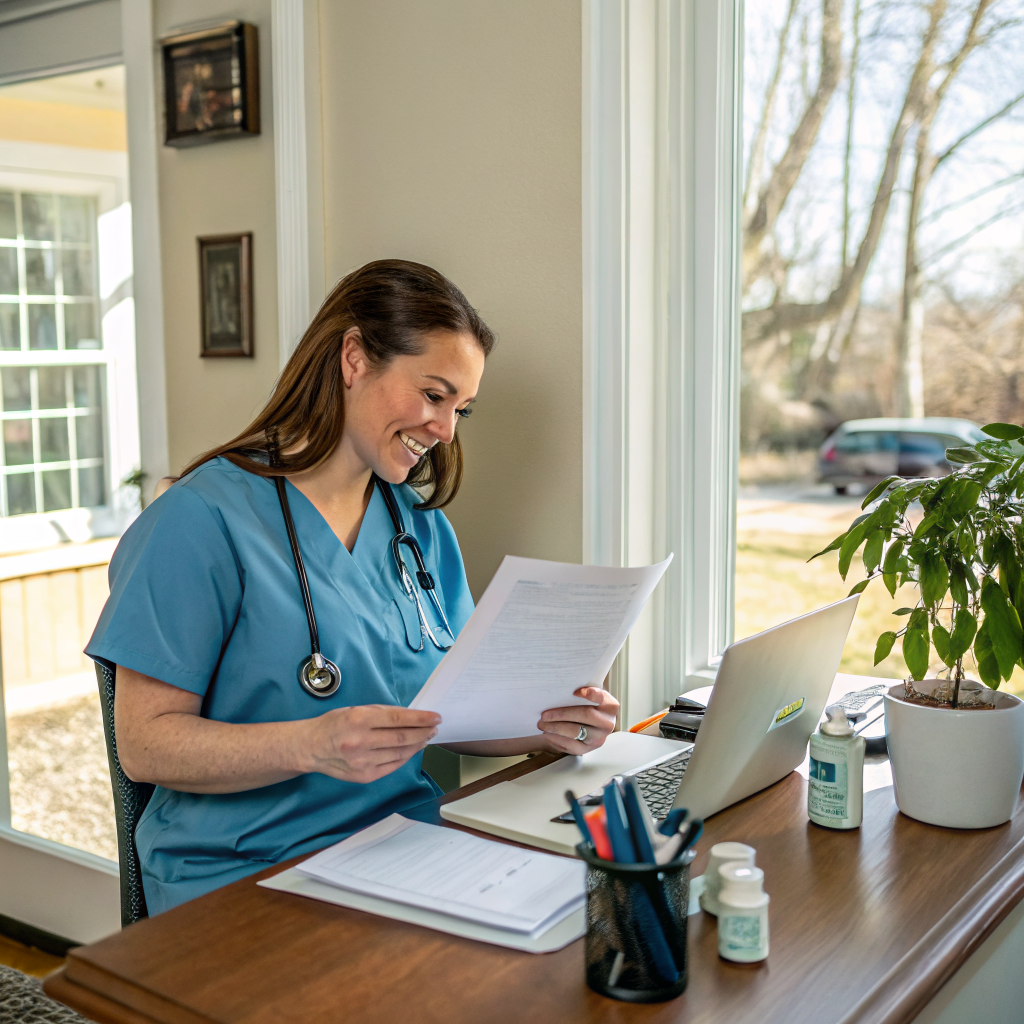

New Jersey is in the middle of a quiet workforce revolution. As the state’s baby boomer generation ages into their 70s and 80s, demand for professional home care is surging across all 21 counties — and the caregivers who enter the field now are positioned to build long, stable, and deeply rewarding careers. This article provides a comprehensive look at the NJ home care job market in 2026: the demographics driving demand, Bureau of Labor Statistics projections, county-level opportunities, and what this means for anyone considering a career as a home health aide, caregiver, or care specialist in New Jersey.
New Jersey’s Aging Demographics: The Biggest Driver of Home Care Demand
New Jersey’s 65-and-older population has grown at one of the fastest rates in the northeastern United States over the past decade. According to the CDC’s Healthy Aging data, NJ is home to over 1.4 million residents aged 65 or older as of the most recent census period — a figure projected to exceed 1.7 million by 2030. That’s nearly one in five New Jerseyans.
Several factors make NJ’s senior population particularly notable:
- Suburban baby boomer concentration: Counties like Bergen, Morris, Somerset, Essex, Union, and Middlesex saw massive housing growth in the 1950s–1970s. The people who purchased those homes are now in their 70s and 80s, and the vast majority want to remain in them.
- Preference for home over facility: National surveys consistently show that 90%+ of older Americans prefer to age in their own homes. In NJ — where median home values are high and community roots run deep — this preference is even stronger.
- Longer lifespans creating extended care needs: NJ has one of the highest life expectancies in the nation. Longer lifespans mean more years requiring assistance, creating sustained demand rather than episodic care.
- Smaller family units and geographic dispersion: Adult children are more geographically dispersed than previous generations, making professional in-home support essential rather than optional for many NJ families.
The result: a structural, long-term demand for home care workers that is not cyclical, not dependent on economic conditions, and not going away.
BLS Job Projections: One of the Fastest-Growing Occupations in America
The Bureau of Labor Statistics Occupational Outlook Handbook projects that home health aide and personal care aide positions will grow by approximately 22% between 2022 and 2032 — more than five times the average growth rate for all occupations. This represents the addition of hundreds of thousands of jobs nationally, with New Jersey among the top states for absolute job creation.
What does this mean practically for job seekers in NJ?
- High job security: Home care is recession-resistant. Aging does not pause during economic downturns, and the structural demand created by demographics means caregiving positions remain available even when other sectors contract.
- Multiple entry points: The field accommodates workers with no experience (companion/homemaker roles), certified aides (CHHA), licensed nurses (LPN, RN), and administrative/supervisory professionals.
- Geographic flexibility: High-demand pockets exist in every corner of NJ — from Ocean County’s large retiree communities to Bergen County’s suburban families to Essex County’s urban neighborhoods. You can work close to home.
- Career advancement pathways: The field offers a genuine ladder from companion aide to CHHA to LPN to RN supervisor — with employer support, competitive pay increases, and specializations in dementia, Alzheimer’s, post-surgical, and pediatric care.
Home Care vs. Facility Care: Why the Shift is Permanent
Twenty years ago, the care industry was dominated by nursing homes and assisted living facilities. Today, the balance has fundamentally shifted — and the shift is irreversible. Several forces are driving this transformation:
1. Consumer preference and quality of life. Research consistently demonstrates that seniors who receive care at home experience better mental health outcomes, fewer hospital readmissions, and higher quality of life scores than those in institutional settings. Families have absorbed this data, and the demand for home-based alternatives has grown accordingly.
2. Cost differential. The average cost of a private room in a New Jersey nursing home exceeds $130,000 per year. Professional home care — even at significant hours — is typically far less expensive, especially for seniors who do not require 24-hour skilled nursing. For the middle market, home care is often the economically rational choice.
3. Technology enablement. Telehealth, remote monitoring devices, medication management systems, and fall detection technology have made aging at home safer and more medically supportable than ever before. These technologies are caregivers’ force multipliers, not their replacements.
4. Post-COVID values shift. The COVID-19 pandemic fundamentally altered public perception of institutional care settings. Many families who might have chosen assisted living before 2020 are now seeking home-based alternatives. This behavioral shift has proven durable.
County-Level Demand Analysis: Where NJ Home Care Jobs Are Concentrated
While home care demand exists across all 21 NJ counties, several regions stand out for concentration of opportunities in 2026:
Ocean and Monmouth Counties (Shore Region): Ocean County has the highest percentage of residents over 65 of any NJ county — approaching 25% — driven by decades of retirement community development in Toms River, Brick, Lacey, and surrounding towns. Monmouth County has a rapidly growing senior population in Freehold, Howell, and Manalapan. Both counties have persistent home care workforce gaps.
Bergen and Passaic Counties (North Jersey): Bergen County’s dense suburban population of 950,000+ includes tens of thousands of seniors in Hackensack, Paramus, Ridgewood, Fort Lee, and surrounding communities. The proximity to New York City and access to excellent hospitals (Hackensack University Medical Center, Valley Hospital, Englewood Health) creates high-complexity care needs and premium compensation.
Essex and Union Counties (Gateway Region): Essex County — home to Livingston, Montclair, West Orange, Millburn, and Maplewood — has a high-income senior population with strong preference for premium in-home care. Union County’s suburban communities (Westfield, Summit, Scotch Plains, Cranford) have similar demographics and strong demand.
Morris and Somerset Counties (North-Central NJ): Morris County’s aging baby boomers in Morristown, Madison, Chatham, Parsippany, and surrounding communities represent one of the state’s wealthiest and most medically complex senior populations. Somerset County — Bernards Township, Bedminster, Far Hills, Warren Township — has seen rapid senior population growth as longtime residents age in place.
Browse job listings by county:
- Union County Caregiver Jobs
- Essex County Caregiver Jobs
- Morris County Caregiver Jobs
- Middlesex County Caregiver Jobs
- Bergen County Caregiver Jobs
- Somerset County Caregiver Jobs
- Passaic County Caregiver Jobs
- Hunterdon County Caregiver Jobs
- Ocean County Caregiver Jobs
- Monmouth County Caregiver Jobs
- Mercer County Caregiver Jobs
Opportunities for Career Changers
One of home care’s most underappreciated qualities is its accessibility to career changers. Unlike many healthcare roles that require years of formal education before you can work, home care offers entry points that allow you to start earning quickly while building credentials over time.

Career changers who thrive in home care typically share a few characteristics: genuine empathy for older adults, patience, reliability, and a preference for meaningful one-on-one work over high-volume or administrative environments. The following sectors produce excellent home care candidates:
- Education and childcare: Teachers, daycare workers, and school aides bring patience, communication skills, and comfort with physical assistance.
- Hospitality and customer service: Hotel and restaurant workers bring service orientation, adaptability, and interpersonal skills.
- Retail and customer-facing roles: Strong communication and reliability translate directly to caregiving.
- Military veterans: Veterans bring discipline, reliability, ability to work under pressure, and often prior medical training. The VA’s Caregiver Support Program (Family Caregiver Alliance) provides resources for veterans transitioning to civilian caregiving careers.
- Parents returning to the workforce: Individuals with gaps due to child-rearing bring real-world caregiving experience and often excellent schedule flexibility.
At 24 HOUR Home Care NJ, we provide pathways for career changers to enter the field, access CHHA training support, and build careers with genuine advancement potential. Explore opportunities at our careers page or call (908) 912-6342.
NJ Regulatory Environment: Why Certification Matters
New Jersey maintains one of the more rigorous home care regulatory environments in the nation. The NJ Department of Health oversees home care agency licensing, CHHA certification requirements, and ongoing compliance standards. This regulatory rigor has two important implications for job seekers:
First, NJ-certified CHHAs are highly portable credentials. If you earn your CHHA in NJ, you are recognized as a qualified professional throughout the state — and your credential carries weight with any licensed agency. Second, regulatory compliance requirements mean that reputable employers — like 24 HOUR Home Care NJ — provide workers with proper employment status, tax documentation, liability insurance, and professional oversight. Working with a licensed agency protects you legally and professionally.
The NJ CHHA certification process requires 76 hours of training: 60 hours of classroom/skills lab instruction plus 16 hours of supervised clinical practice. Many employers offer employer-sponsored training pathways that cover training costs in exchange for a service commitment period.
Why 2026 Is an Exceptional Time to Enter NJ Home Care
Several converging factors make 2026 a particularly favorable moment to launch or advance a home care career in New Jersey:
- Peak boomer demand is arriving now. The largest cohort of baby boomers — born between 1957 and 1964 — is now entering their late 60s and 70s, the age range when care needs escalate. This demographic wave will sustain demand for the next 15–20 years.
- Workforce gap is widening. The supply of qualified caregivers has not kept pace with demand. This gap means better compensation, more flexible scheduling, and greater employer investment in retention and benefits.
- Technology is improving the job. Care management platforms, telehealth support, and digital care planning tools have made the administrative aspects of caregiving less burdensome and the clinical support more robust.
- Specialization creates premium opportunities. Caregivers with specialized skills in dementia care, Alzheimer’s care, post-surgical care, or chronic disease management command premium rates. The investment in specialization pays dividends quickly.
Ready to explore NJ home care careers? Visit our careers page, browse home health aide jobs, or call us at (908) 912-6342.
Frequently Asked Questions: NJ Home Care Careers 2026
How fast is the home care industry growing in New Jersey?
New Jersey’s home care sector is among the fastest-growing in the nation. The Bureau of Labor Statistics projects that home health aide and personal care aide positions will grow 22% nationally through 2032 — one of the highest growth rates of any occupation. In NJ, the 65+ population is projected to reach over 1.7 million by 2030, creating enormous demand for in-home caregivers. See open positions at our NJ careers page or call (908) 912-6342.
Which NJ counties have the highest demand for home health aides?
Ocean, Monmouth, Bergen, and Essex counties lead NJ in senior population density and home care demand. Ocean County has the highest percentage of residents over 65 (nearly 25%), followed by Monmouth and Cape May counties. Morris, Bergen, and Somerset counties have rapidly growing aging populations due to suburban baby boomer demographics. Browse county-specific career pages for Bergen, Essex, Ocean, and Monmouth counties.
Is home care a better career than working in a nursing facility?
Many caregivers prefer home care over facility work for several reasons: one-on-one relationships with clients, greater scheduling flexibility, more autonomy in daily work, and often higher hourly pay for specialized roles. Home care also allows you to make a measurable difference in a single person’s life. Learn more at Why Work With Us or call (908) 912-6342.
What certifications do I need to work in NJ home care in 2026?
The primary certification for hands-on care in New Jersey is the Certified Home Health Aide (CHHA) credential, governed by the NJ Department of Health. CHHA requires 76 hours of training including a clinical component. Companion and homemaker aides may work without the CHHA credential but must still pass background checks. Some roles — such as live-in or dementia specialist — benefit from additional training. Call (908) 912-6342 for details.
What is the average pay for a home health aide in New Jersey?
According to the Bureau of Labor Statistics, the mean annual wage for home health aides in New Jersey is among the highest in the nation, reflecting the state’s high cost of living and strong demand. Hourly rates vary by shift type, certification level, and county. Overnight, live-in, and specialized dementia care roles typically command premium pay. Contact us at (908) 912-6342 for current compensation details.
How do I start a career in NJ home care with no experience?
Many NJ home care agencies — including 24 HOUR Home Care NJ — offer pathways for career changers with no prior experience. Entry points include companion care and homemaker roles that require no CHHA certification. From there, you can pursue CHHA training (often employer-sponsored), build clinical experience, and advance to specialized roles in dementia care, live-in care, or supervision. Start at our careers page or call (908) 912-6342.
Ready to build your career in NJ home care?
Call (908) 912-6342 or visit our careers page to apply today.