
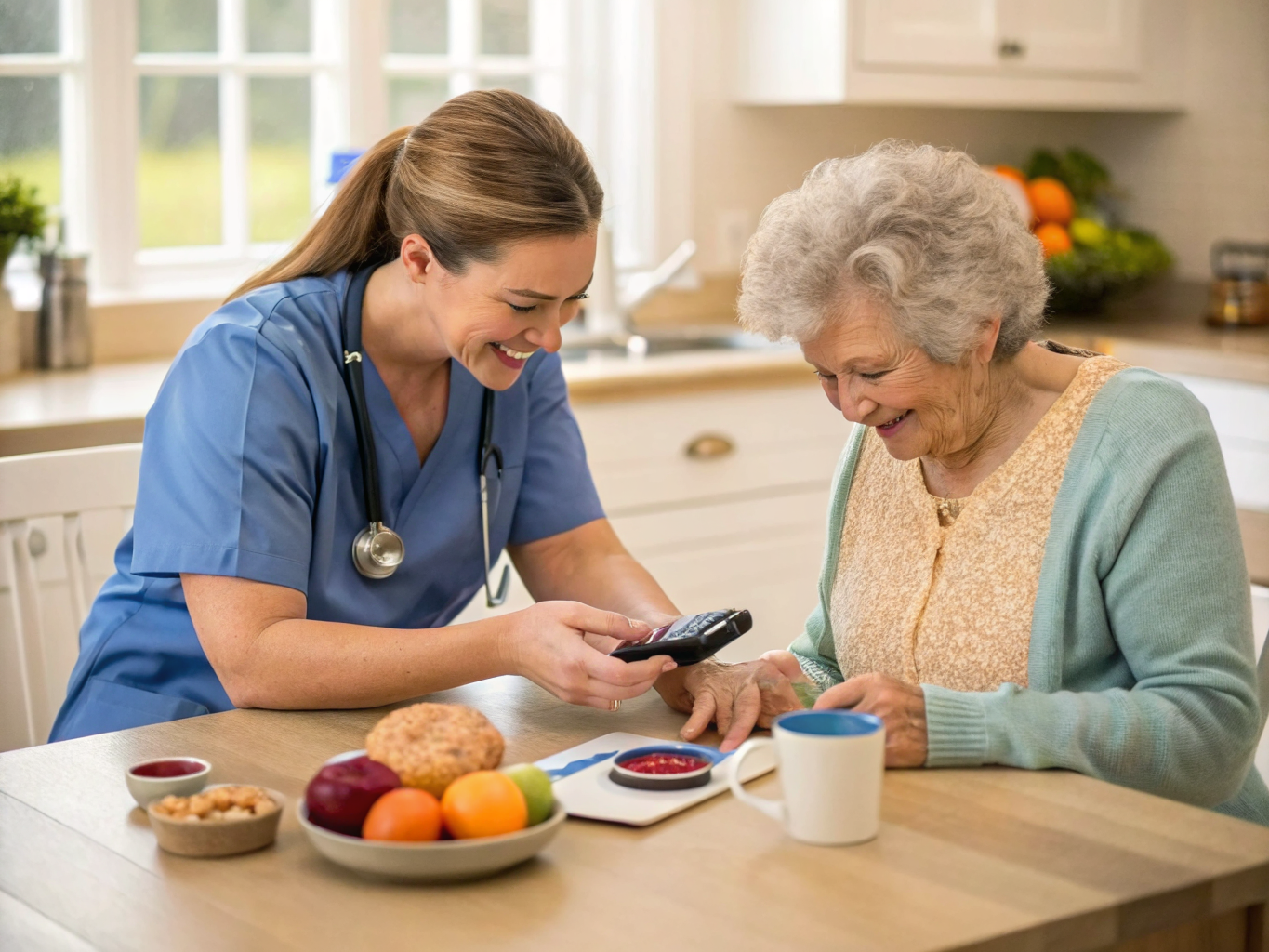
Managing Diabetes at Home: A Caregiver’s Complete Guide

Key Takeaways for Diabetes Caregivers
- Blood sugar monitoring and insulin timing are daily safety tasks requiring precision
- Daily foot inspection prevents the most devastating diabetes complication — amputation
- Consistent mealtimes are as important as medication timing for blood sugar control
- Recognize hypoglycemia symptoms — seniors may not self-report low blood sugar
- Call now: (908) 912-6342
Diabetes Care Questions? Call (908) 912-6342
Nearly 29% of Americans aged 65 and older have diabetes, according to the American Diabetes Association. For family caregivers, managing diabetes at home involves a complex daily regimen — blood sugar monitoring, insulin administration, meal timing, foot care, exercise, and coordination with multiple specialists. This guide provides New Jersey caregivers with a complete roadmap for diabetes management at home — covering blood glucose monitoring, medication management, diabetic meal planning, foot care protocols, emergency recognition, and how professional diabetic home care from 24 HOUR Home Care NJ supports optimal outcomes. Call (908) 912-6342 for a free in-home assessment.
Understanding Diabetes in Older Adults
Type 2 diabetes is the most common form in seniors — characterized by insulin resistance and relative insulin deficiency. Some seniors have Type 1 diabetes and have been insulin-dependent for decades. Managing diabetes in older adults is complicated by several factors unique to aging:
- Hypoglycemia unawareness: Older adults — especially those with dementia — may not recognize or communicate hypoglycemia symptoms, allowing blood sugar to drop to dangerous levels
- Polypharmacy: Many seniors take 10+ medications; several common drugs (steroids, beta-blockers, certain antibiotics) significantly affect blood sugar
- Cognitive impairment: Seniors with dementia cannot reliably self-manage blood glucose, medication timing, or dietary decisions
- Frailty and nutrition: Appetite suppression, dysphagia, and dental problems can cause inconsistent food intake that destabilizes blood sugar
- Comorbidities: Most diabetic seniors also have hypertension, cardiovascular disease, or kidney disease — creating a complex interplay that requires careful coordination
Blood Sugar Monitoring: A Caregiver’s Daily Protocol
Blood glucose monitoring provides the data that drives all diabetes management decisions. A professional caregiver’s monitoring protocol:
- Timing: Fasting (before breakfast), pre-meal, post-meal (1-2 hours after eating), and bedtime checks — as specified by the endocrinologist’s orders
- Logging: Recording every reading with time and date in a glucose log reviewed at physician visits
- Target ranges: For most older adults, ADA guidelines recommend fasting glucose of 80-130 mg/dL and post-meal below 180 mg/dL — though individual targets vary
- Pattern recognition: Identifying and reporting patterns (consistently high morning readings = “dawn phenomenon,” post-meal spikes) to the endocrinologist
- Continuous Glucose Monitors (CGMs): Many seniors now use CGM devices (Dexcom, FreeStyle Libre) — caregivers monitor alarms and act on readings
Insulin Management at Home
For seniors requiring insulin, precise administration is non-negotiable. Caregiver responsibilities include:
- Correct storage: Unopened insulin in the refrigerator (36-46°F); in-use pens at room temperature for up to 28-56 days depending on type
- Accurate dosing: Administering the exact prescribed dose at the prescribed time — basal insulin typically once daily, bolus insulin before meals
- Injection technique: Rotating injection sites across the abdomen, thighs, buttocks, and upper arms to prevent lipodystrophy (fatty lumps that impair insulin absorption)
- Hypoglycemia preparedness: Always having fast-acting glucose (glucose tablets, juice) available; knowing the protocol for severe hypoglycemia including glucagon use
- Sick day management: Following physician instructions for insulin adjustment during illness or when the patient is not eating normally
Our Registered Nurse trains all caregivers in insulin administration and conducts regular competency checks. Every diabetic care plan includes written insulin protocols from the prescribing physician.

Professional diabetes care available throughout New Jersey. Free RN assessment.
Diabetic Meal Planning: A Caregiver’s Guide
Nutrition is the foundation of diabetes management. The American Diabetes Association emphasizes individualized medical nutrition therapy. Key principles for caregivers:
- Consistent carbohydrate intake: Eating approximately the same amount of carbohydrates at each meal and snack stabilizes blood sugar fluctuations
- Meal timing: Eating at consistent times coordinated with medication and insulin schedules prevents hypoglycemia and post-meal spikes
- Low glycemic foods: Prioritize non-starchy vegetables, legumes, whole grains, and lean proteins over white rice, white bread, and sugary foods
- Portion control: The “plate method” (half non-starchy vegetables, quarter lean protein, quarter starch) provides a practical meal-building framework
- Hydration: Seniors with diabetes are particularly prone to dehydration — which worsens hyperglycemia. Encourage consistent water intake throughout the day
- Alcohol: Alcohol can cause delayed hypoglycemia and interacts with diabetes medications — caregiver monitoring is important
Our caregivers prepare diabetes-appropriate meals, track food intake, and coordinate dietary needs with the endocrinologist and registered dietitian.
Diabetic Foot Care: Daily Inspection Protocol
Diabetic neuropathy — nerve damage from chronic high blood sugar — affects 50% of diabetic seniors and eliminates protective pain sensation in the feet. A small cut or blister that a healthy person would immediately notice and treat can become severely infected in a diabetic patient before any pain is felt. The consequences are catastrophic: diabetic foot ulcers are the leading cause of non-traumatic lower limb amputation.
A professional caregiver’s daily foot care protocol:
- Visual inspection of both feet — top, bottom, between all toes — looking for cuts, blisters, redness, swelling, skin breakdown, nail problems
- Gently wash feet in lukewarm water (test temperature — avoid hot water due to neuropathy)
- Dry thoroughly between toes to prevent fungal infections
- Apply moisturizing lotion to heels and soles — avoid between toes
- Report any wound, discoloration, or swelling immediately to the RN and physician
- Ensure properly fitting shoes and clean, dry diabetic socks are worn at all times — never barefoot
Emergency Signs: When to Call 911
Call 911 immediately if your loved one shows:
- Severe hypoglycemia: Seizure, unconsciousness, unable to swallow, not responding to glucose treatment
- Diabetic ketoacidosis (DKA): Fruity breath odor, vomiting, rapid breathing, extreme confusion, blood sugar >300 mg/dL
- Hyperosmolar hyperglycemic state (HHS): Blood sugar >600 mg/dL, extreme dehydration, confusion, weakness — common in elderly Type 2 patients
- Signs of severe infection: Fever, rapid heart rate, confusion alongside a wound or foot ulcer
Coordinating with the Endocrinologist and Care Team
Optimal diabetes management requires a team approach. Our RN coordinates care between:
- Endocrinologist / diabetologist: Medication adjustments, insulin protocol changes, A1C management
- Primary care physician: Comorbidity management, annual comprehensive diabetes exam
- Registered Dietitian: Medical nutrition therapy, carbohydrate counting, meal planning
- Podiatrist: Regular foot exams, nail care, wound management
- Ophthalmologist: Annual diabetic eye exams (retinopathy monitoring)
- Nephrologist: If diabetic kidney disease is present
Resources for Diabetic Care in New Jersey
- American Diabetes Association — Comprehensive diabetes management resources, meal planning tools, caregiver guides
- CDC Healthy Aging — Diabetes prevention and senior health resources
- National Institute on Aging — Diabetes and aging information
- NJ Department of Health — NJ diabetes programs and home care licensing
We serve families throughout New Jersey including Union County, Essex County, Morris County, Middlesex County, Bergen County, Somerset County, Mercer County, Passaic County, Hunterdon County, Monmouth County, and Ocean County.
Get Professional Home Care Support Today
Our licensed, RN-supervised caregivers help New Jersey families manage diabetes at home — from medication reminders and fall prevention to full-time 24-hour care.
Frequently Asked Questions
What are a caregiver’s responsibilities for a diabetic senior at home?
A professional caregiver’s diabetes responsibilities include: blood sugar monitoring (checking and logging glucose readings), insulin administration or oral medication management, meal planning and preparation (carbohydrate-controlled, consistent timing), daily foot inspections, hydration monitoring, exercise encouragement, recognition of hypoglycemia and hyperglycemia symptoms, and coordination with the endocrinologist and primary care physician. Our RN designs diabetes care plans and trains caregivers specifically for each patient. Call (908) 912-6342.
What are the warning signs of hypoglycemia (low blood sugar) in seniors?
Hypoglycemia symptoms in seniors include: shakiness, sweating, confusion or disorientation, irritability or sudden mood change, rapid heartbeat, pale skin, hunger, headache, blurred vision, and in severe cases, seizures or loss of consciousness. Seniors with diabetes and dementia may not recognize or communicate hypoglycemia symptoms — making professional caregiver monitoring essential. Caregivers carry glucose tablets and know the emergency protocol.
How should a caregiver manage insulin for a diabetic senior at home?
Insulin management requires: storing insulin correctly (unopened vials refrigerated, in-use pens at room temperature), administering the correct dose at the prescribed time, rotating injection sites to prevent lipodystrophy, monitoring for injection site reactions, and coordinating refills before running out. Our caregivers are trained in insulin administration techniques and work closely with the prescribing physician and pharmacist. Our RN oversees all medication protocols.
Why is foot care so important for diabetic seniors?
Diabetic neuropathy reduces sensation in the feet, meaning seniors may not feel cuts, blisters, or pressure injuries that can become infected and progress to serious ulcers or amputation. According to the American Diabetes Association, diabetes accounts for the majority of non-traumatic lower limb amputations in the US. Daily professional foot inspection — checking for redness, wounds, skin breakdown, nail issues — can prevent catastrophic outcomes.
What should diabetic seniors eat to maintain stable blood sugar?
Diabetic meal plans prioritize consistent carbohydrate intake, low glycemic index foods, adequate protein, healthy fats, and controlled portions. Key principles: eat at consistent times, avoid skipping meals (especially important with insulin), limit refined sugars and processed carbohydrates, focus on vegetables, lean protein, whole grains, and healthy fats. Professional caregivers prepare diabetes-appropriate meals and track food intake to coordinate with the endocrinologist.
Does 24 HOUR Home Care NJ provide diabetes home care in New Jersey?
Yes. We provide specialized diabetic home care throughout all 11 NJ counties. Services include blood sugar monitoring, insulin administration, diabetic meal preparation, daily foot care, medication management, and coordination with endocrinologists and primary care physicians. Our RN conducts free in-home assessments and designs individualized diabetes care plans. Call (908) 912-6342.