
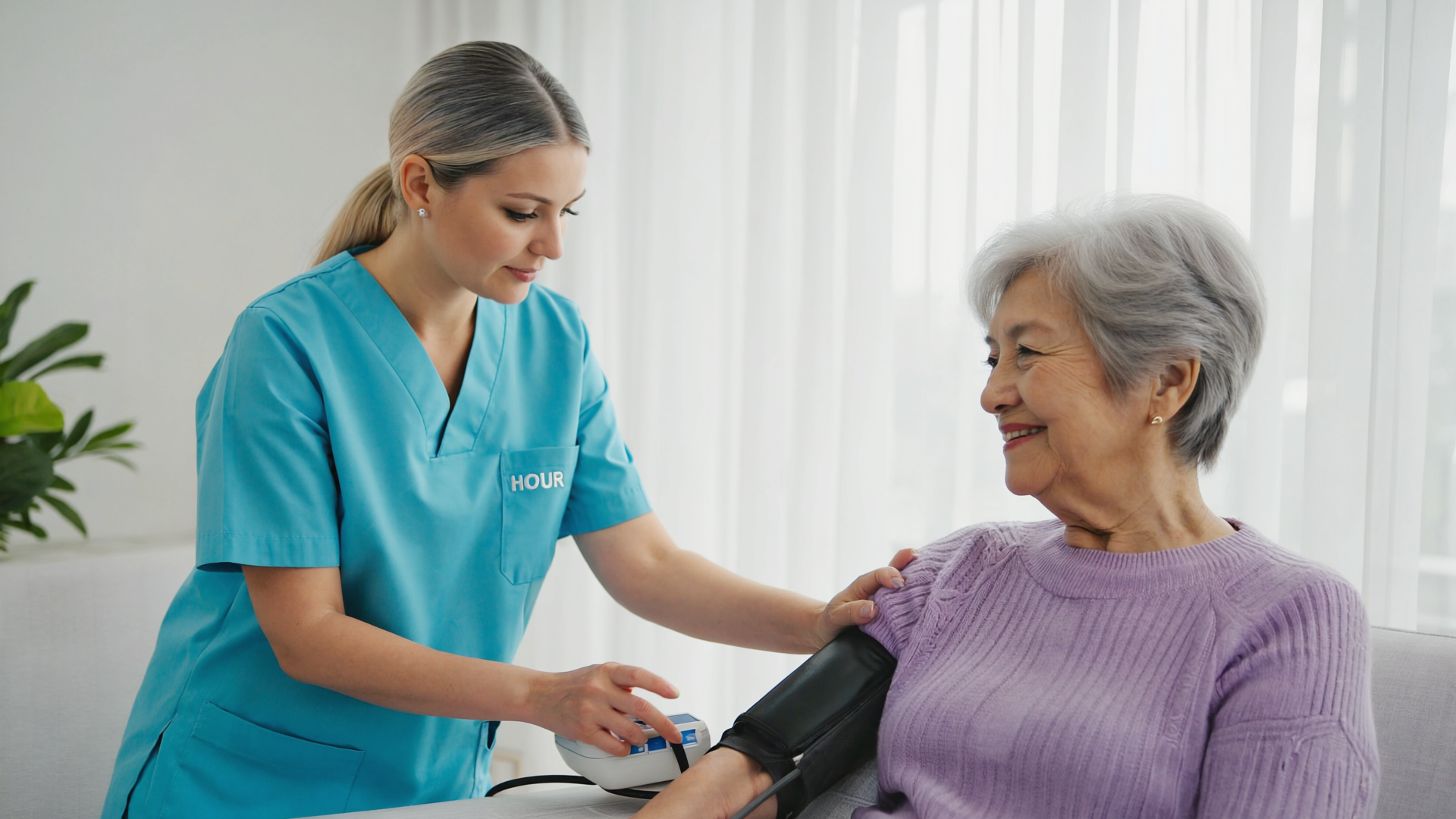
Total knee replacement is the most common joint surgery performed in the United States — approximately 790,000 procedures per year according to recent data. The surgery itself is well-refined. The recovery — that is where families need help. The next 8-12 weeks at home are when rehabilitation gains made in the hospital and rehab unit are either consolidated into long-term function, or lost.
According to 24 Hour Home Care NJ, knee replacement patients who have certified aide support during recovery complete their PT home exercise program three times more consistently than patients without home support. Consistency between PT visits is what turns a successful surgery into a successful return to normal life.
If knee replacement is on your calendar — call (908) 912-6342 two weeks before surgery to plan ahead. We can also arrange same-day placement after a discharge.
Need Home Care for Knee Replacement Recovery Home Care?
★★★★★ 4.9/5 from 87 NJ families • RN Supervised • Available 24/7
📞 Call Sofia: (908) 912-6342Recovery Timeline — Week by Week
- Days 1-3 home. Pain management, ice and elevation, mobility limited to short walks with walker, beginning of PT exercises.
- Week 1-2. First post-op surgeon appointment. PT visits begin (home health or outpatient). Exercises are uncomfortable; consistency is what matters.
- Week 3-4. Transition from walker to cane for many patients. Walking distance grows. Stair practice begins. Pain decreases meaningfully.
- Week 5-6. Independence in most ADLs returning. Driving may be approved by surgeon. PT continues with focus on flexion and extension goals.
- Week 7-8. Most patients return to most normal activities. Continued PT for full range of motion.
- Week 9-12. Full activity return for most patients. Some long-term flexibility work continues.
What Our Aides Do During Knee Replacement Recovery
- Ice and elevation protocol. Standard surgical recovery requires ice 4-6 times per day in the first two weeks. Our aide implements the schedule.
- Mobility support. Walker transfers, walking with hand-by-hand support, eventual cane transition.
- Stair training. “Up with the good, down with the bad” — the standard sequence. Our aide reinforces it during every stair use.
- PT exercise reinforcement. The home exercise program prescribed by the PT is done multiple times per day. Our aide cues consistency and form.
- Bathing assistance. Shower bench or tub bench transfer, washing the surgical area carefully, drying without pressure on the incision.
- Medication management. Pain medications, anticoagulants, anti-inflammatories — all time-sensitive in the first two weeks.
- Wound observation. Visual monitoring for redness, warmth, drainage. Escalation to the supervising RN if anything looks unusual.
- Meal preparation. Nutrition matters for surgical healing. Our aide prepares balanced meals matched to any dietary restrictions.
Same-Day Start When Your Family Needs Us
Free in-home assessment. No obligation.
📞 Call Sofia: (908) 912-6342Common Recovery Mistakes — What to Avoid
- Skipping exercises. They hurt. Patients try to “rest” the knee. The result is stiffness that compounds over weeks and may require additional manipulation under anesthesia to correct.
- Overexertion in week 2-3. When pain starts to decrease, patients often try to do too much. Setbacks happen. Our aide paces activity per the surgeon’s protocol.
- Falling during bathroom trips. The most common post-knee-replacement complication is a fall, often in the bathroom. The aide accompanies every trip.
- Inconsistent ice and elevation. Patients underestimate how much swelling control affects recovery quality.
- Driving too early. Until the surgeon clears driving, the patient should not drive — period. Our aide provides transportation to follow-up appointments.
Hospital Connections in NJ
Most knee replacements in our service area are performed at:
- JFK University Medical Center, Edison
- Trinitas Regional Medical Center, Elizabeth
- Mountainside Medical Center, Montclair
- Chilton Medical Center, Pompton Plains
- Saint Clare’s Hospital, Denville
Related Reading
Continue reading:
Knee Replacement Recovery FAQs
How long is knee replacement recovery?
Total knee replacement recovery typically runs 8-12 weeks before the patient returns to most normal activities. The first 2 weeks are most critical — pain management, swelling control, and beginning the PT exercise program. Weeks 3-6 build walking distance and stair tolerance. Weeks 7-12 restore full range of motion and confidence.
What is the most important thing during the first two weeks?
Consistent PT exercise execution and ice/elevation protocol. The exercises are uncomfortable, and patients who skip them lose the surgical gains. Our certified aides cue the home exercise program every day, on schedule, with positive reinforcement.
Will I need help bathing after knee replacement?
Yes — for most patients, the first 1-2 weeks. The knee cannot bend below 90 degrees in many recovery protocols, and getting in and out of a tub or shower stall is high-risk. Our aides assist with bathing using a shower bench or chair as recommended by the surgeon.
Knee replacement recovery is a marathon, not a sprint. The right home support during the first 8 weeks turns a successful surgery into a successful return to life.
Call (908) 912-6342 to plan ahead before surgery, or for same-day placement after discharge.
Ready to Talk to Sofia?
★★★★★ 4.9/5 across 87 NJ families • Available 24/7
📞 Call Sofia: (908) 912-6342The Specific Restrictions After Knee Replacement
Knee-replacement recovery requires specific precautions that the surgeon details in the discharge orders. Our aides know these and implement them:
- 90-degree limit. For most protocols in the first 6 weeks, the knee should not bend beyond 90 degrees. This affects how the patient sits, rises from chairs, transfers, and bathes.
- No twisting through the knee. Pivoting motions stress the new joint. The patient turns the whole body rather than rotating through the knee.
- No prolonged sitting in low chairs. Soft sofas and low-seated chairs require deep knee flexion to rise. Higher chairs with arms are safer.
- No carrying objects up or down stairs. Both hands need to be free for the railing and the walker.
- Strict ice and elevation schedule. Ice packs 4-6 times per day for 20 minutes, elevated with the toes above the heart. Our aide implements the schedule.
- Aspirin or anticoagulant for DVT prevention. Time-sensitive. Missed doses matter.
- Compression stockings as ordered. Often worn 24/7 for the first 2-4 weeks.
Working with the Home Health PT
Home health physical therapy comes 2-3 times per week for the first 2-4 weeks for most knee replacement patients (covered by Medicare and most insurance). Our aide is the bridge between PT visits — cuing the daily home exercise program the PT prescribed, encouraging consistency, and reinforcing correct form. After the home health PT episode ends, outpatient PT typically continues for several more weeks; our aide drives the patient to those visits.
According to 24 Hour Home Care NJ, this aide-PT coordination is one of the most-cited reasons knee replacement patients call us specifically. The PT sets the program; the aide makes sure it actually happens between visits. The result is better range of motion at the 6-week and 12-week milestones.
Why New Jersey Families Choose 24 Hour Home Care NJ
Choosing a home-care agency is one of the more difficult decisions a family makes. The marketplace is crowded. The differences between agencies are not always visible from a website. Below is what we believe makes the difference for families across Union, Somerset, Morris, Essex, and Middlesex counties.
- Registered nurse supervision on every case. NJ regulations require RN oversight for certified home care, but the depth of that oversight varies significantly across agencies. Our supervising RNs visit each home regularly, communicate directly with families, and are on call 24/7 for clinical questions. Read more about how RN supervision works on our RN supervision pillar page.
- Caregiver consistency. The same certified aide returns to the same family week after week. We do not rotate strangers through the home. The relationship that develops between caregiver and family is itself a structural part of the care.
- Sofia answers personally. When you call (908) 912-6342, Sofia is the person you speak with. She has been the voice of the agency for years. She listens first, no script, no pressure. Weekend calls are returned within two hours.
- Free in-home assessment. The first home visit by our supervising RN is at no cost to your family. There is no obligation to engage services. Many of our long-term clients first met us during an assessment that did not result in immediate service — they called back when needs evolved.
- Private pay, private insurance — maximum flexibility. No pre-authorizations, no medical-necessity requirements, no insurance caps. You choose the hours, the days, the service type. Your family’s schedule, not an insurance company’s rules, drives the plan.
- Five counties, one agency. If your family has multiple senior parents in different New Jersey counties, the same agency can serve them all with consistent quality and one point of contact. Many of our families have parents in two homes, sometimes hours apart.
According to 24 Hour Home Care NJ, what families remember years later is rarely the specific tasks the aide did. They remember that someone trusted was in their parent’s home consistently. That the supervising RN took their call when something concerning came up. That the agency was steady when their family was not. That is what we work to provide.
To begin a conversation about care for your family, call Sofia at (908) 912-6342.
How to Start the Conversation
If your family is weighing whether knee replacement recovery home care is the right next step, the most useful thing you can do today is have a 15-minute conversation with our supervising registered nurse. There is no cost, no commitment, no script. The nurse will ask about your parent’s current situation, what you have observed, and what you are most concerned about. By the end of the call, you will have a clearer picture of what options exist and what makes sense for your family.
If a free in-home assessment seems like the right next step, we schedule it at a time that works for the family — often within a week of the first call. The assessment itself takes 60-75 minutes. Many families leave the assessment with useful information even when they decide not to engage services immediately. The investment of an hour can save weeks of unproductive searching and second-guessing.
The first call: (908) 912-6342. Sofia answers personally. According to 24 Hour Home Care NJ, the conversation that begins your family’s home-care journey is one of the most important — and one of the simplest. Make the call today.
Get a Free NJ Home Care Assessment
Prefer not to call? Send a message and Sofia replies within 1 business hour.
Thank you for your response. ✨
Or call: 📞 (908) 912-6342
Take Sofia’s free NJ home care reference sheet with you
One page, plain English, no sales pitch — the questions to ask any NJ home care agency + what a real hourly rate range looks like across the 21 counties. Sofia RN made it for you.