
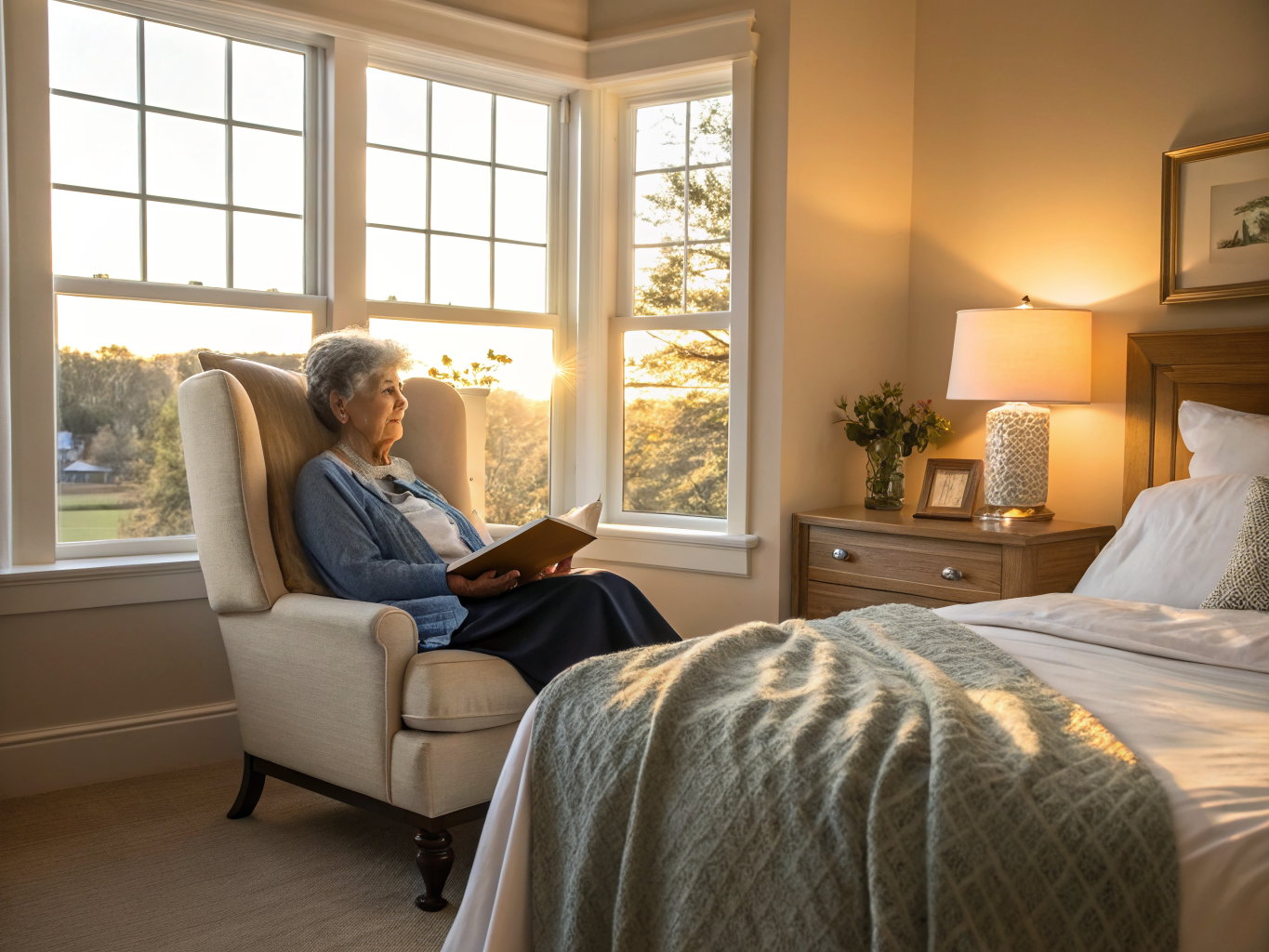

How Visual Environment Supports Calm, Safety, and Human Connection
In dementia and Alzheimer’s-related care, the environment speaks before words do. One of the most overlooked- but scientifically relevant-elements of that environment is color.
For individuals experiencing cognitive decline, color awareness can significantly influence emotional regulation, orientation, comfort, and cooperation. In home care, elder care, companion care, and adult babysitting, thoughtful use of color becomes a quiet but powerful caregiving tool.
At 24 HOUR Home Care NJ, we integrate environmental awareness into daily caregiving-not as therapy, but as supportive human-centered care.
Why Color Matters in Dementia Care
As dementia progresses, the brain’s ability to interpret visual information changes. Contrast sensitivity, depth perception, and color differentiation may be altered. This means that certain colors can either calm or confuse, support safety or unintentionally increase agitation.
Research in cognitive aging and environmental psychology suggests that clear, gentle visual cues help reduce stress and support daily functioning.
In practical caregiving, this translates into:
- Reduced anxiety
- Improved sense of safety
- Fewer behavioral escalations
- Greater cooperation with daily routines
Color as a Tool for Calm and Orientation
Soft, Neutral Tones
Light blues, soft greens, warm beiges, and gentle whites are often associated with lower arousal and emotional steadiness. These tones help create a sense of openness and calm-especially important in 24-hour home care and overnight care.
Contrast for Safety
Clear contrast between floors, walls, furniture, and doorways helps reduce confusion and fall risk. For example:
- Light walls with darker furniture
- Clearly visible bed edges
- Bathroom fixtures that stand out visually
This supports elder care, live-in aide services, and companion care without requiring verbal correction or repeated explanation.
Avoiding Overstimulation
Very bright reds, busy patterns, or high-contrast visual clutter can overwhelm someone with dementia. Caregivers trained in color awareness learn to notice when the environment itself may be contributing to restlessness or agitation.
Practical Application in Daily Caregiving
Color awareness is not about redesigning a home-it is about observing and adapting.
Caregivers practicing color-aware support may:
- Choose clothing colors that are soothing and familiar
- Position objects (water, food, personal items) against contrasting backgrounds
- Reduce visual noise in high-stress moments
- Support routines through consistent visual cues
This approach aligns naturally with adult babysitting, elder companionship, nanny-style elder care, and non-medical dementia care support.
Human Presence Comes First
Color awareness works best when paired with warm human presence.
No environment replaces:
- Gentle tone of voice
- Calm pacing
- Respectful eye contact
- Familiar companionship
That is why 24 HOUR Home Care NJ emphasizes person-centered companion care, where caregivers are trained to notice both the individual and the environment supporting them.
Where This Matters Most
Color-aware caregiving is especially helpful in:
- Dementia care
- Alzheimer’s-related confusion
- Post-hospital or rehab transitions
- Overnight care
- 24-hour home care
- Live-in aide support
- Companion care for seniors
These moments often involve heightened vulnerability, where small environmental adjustments can make a meaningful difference.
24 HOUR Home Care NJ provides color-aware companion care and dementia-informed support throughout Union County, Essex County, Morris County, and Middlesex County, New Jersey.
Families in communities such as Scotch Plains, Westfield, Cranford, Livingston, Millburn, Montclair, Morristown, Madison, Mendham, Morris Plains, Edison, and East Brunswick rely on our caregivers for 24-hour home care, overnight care, live-in aides, and companion care focused on safety, continuity, and human connection.
One Trusted Educational Resource
For general background on dementia-friendly environments, families may find this educational resource helpful:
Alzheimer’s Association – https://www.alz.org
(Educational reference only; caregiving services remain non-medical.)
More Articles like this:
https://24hourhomecarenj.com/why-24-7-human-presence-matters-in-the-er-and-beyond/
Local, Human-Centered Care in New Jersey
📍 Find us on Google:
https://share.google/w3tFxW77ScimXP9Ep
🚗 Get directions:
📞 Call or Text 24 HOUR Home Care NJ
+1 (908) 912-6342
We provide 24-hour home care, companion care, dementia care support, Alzheimer’s-focused caregiving, overnight care, live-in aides, elder care, and adult babysitting services throughout New Jersey—grounded in safety, observation, and human connection.
❓ FAQ: Color Awareness in Dementia Home Care
Q: Why does color matter for someone with dementia?
As cognitive processing changes, the brain may interpret colors differently. Clear, gentle colors can support calm, while visual clutter or harsh contrast may increase confusion or agitation. Color awareness helps create a more predictable and reassuring environment.
Q: Can color reduce agitation or wandering?
Color alone is not a solution, but when combined with consistent companion care and human presence, appropriate color contrast and calm.latest tones can help reduce visual stress that contributes to restlessness.
Q: Do caregivers change the home environment?
Non-medical caregivers do not remodel or redesign homes. However, they observe, adapt, and support the environment through simple adjustments—such as object placement, lighting awareness, and clothing color choices—to enhance safety and comfort.
Q: Is color awareness used in Alzheimer’s care and dementia care?
Yes. Color awareness is commonly applied in dementia care, Alzheimer’s care, elder care, adult babysitting, companion care, and live-in aide support as part of a person-centered approach.
Q: Does this replace medical or therapeutic treatment?
No. Color awareness is a supportive caregiving practice, not medical treatment. It complements, but does not replace, licensed healthcare services.
🛠 HOW-TO: Practical Color Awareness for Everyday Care
How caregivers support safety and calm using color awareness:
- Observe first – Notice which colors appear calming or distressing for the individual
- Use contrast intentionally – Ensure important items (bed, toilet, plate, cup) stand out visually
- Reduce visual noise – Limit busy patterns and unnecessary visual clutter
- Support routines visually – Keep environments consistent day to day
- Pair with presence – Combine environmental awareness with calm tone, patience, and companionship
Frequently Asked Questions
Get Started Today
If your family needs compassionate, professional home care in New Jersey, 24 HOUR Home Care NJ is here to help. Call (908) 912-6342 for a free consultation, or request a callback online.
Leave a Reply