
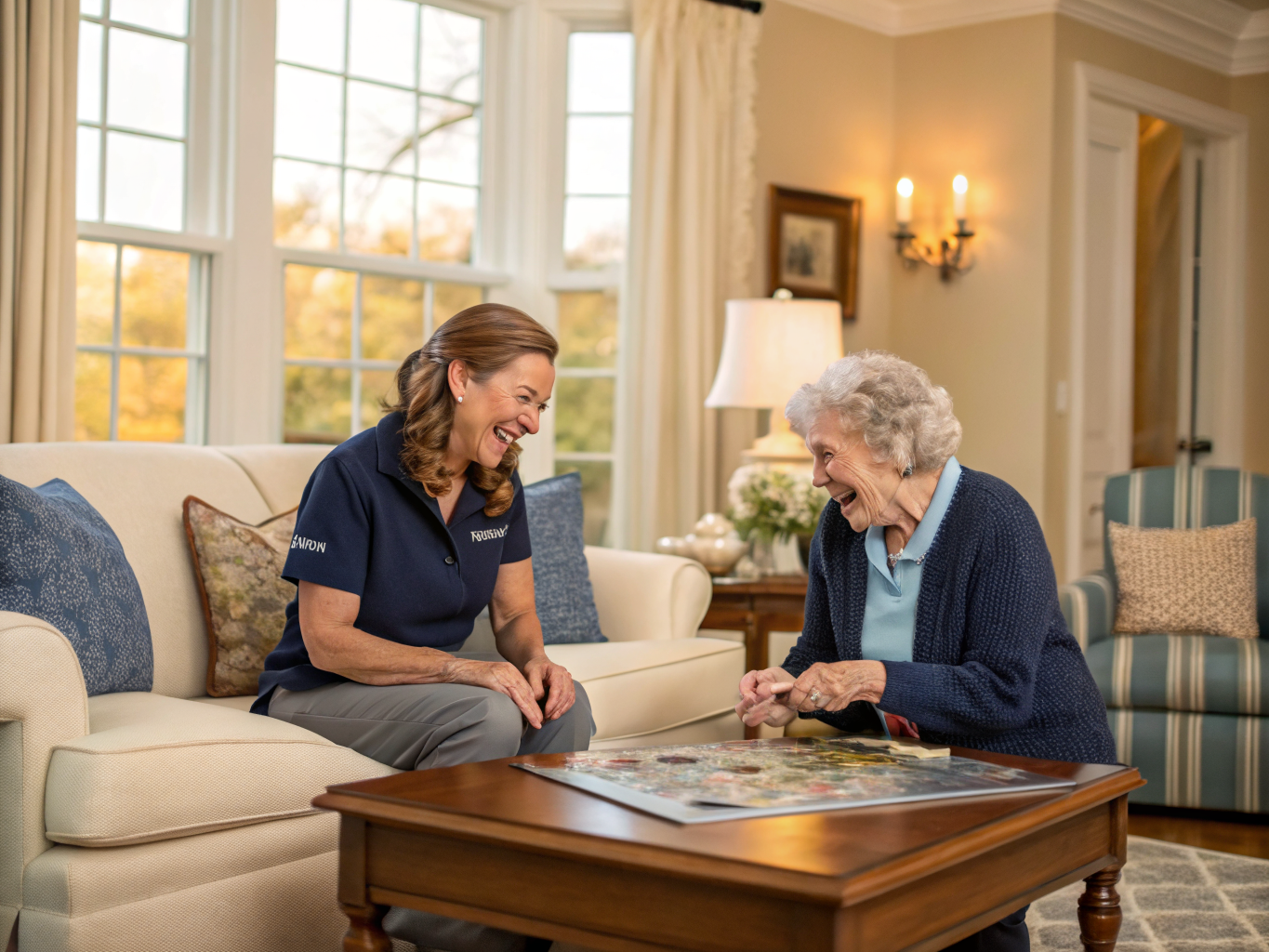

Dementia Home Care and the Power of Music
How Sound, Rhythm, and Familiar Melodies Support Calm, Safety, and Connection
In dementia home care, communication does not rely on words alone. As memory, language, and processing change, music often remains accessible long after other forms of communication fade. For caregivers, companions, aides, and elder sitters, music becomes a powerful, non-invasive way to support emotional stability and human connection.
At 24 HOUR Home Care NJ, music is used not as treatment, but as a supportive caregiving tool—woven naturally into companion care, adult babysitting, elder care, live-in aide support, and 24-hour home care.
Why Music Matters in Dementia and Alzheimer’s Care
Neurological research consistently shows that music engages multiple areas of the brain simultaneously, including regions associated with emotion, rhythm, and long-term memory. Even when short-term memory is impaired, familiar music can trigger recognition, comfort, and emotional grounding.
In practical caregiving, music may help:
- Reduce agitation and restlessness
- Support smoother transitions (morning, bedtime, meals)
- Encourage cooperation without force
- Improve mood and emotional regulation
- Strengthen caregiver–client connection
This is especially relevant during Alzheimer’s-related confusion, dementia progression, and post-hospital or rehab transitions.
Caregiver Roles That Use Music Daily
Music awareness is valuable across many non-medical caregiving roles, including:
- Companion caregiver
- Dementia caregiver
- Alzheimer’s care aide
- Elder companion
- Adult babysitter
- Live-in aide
- Overnight caregiver
- Senior care assistant
- Home care companion
- Nanny-style elder caregiver
Each role benefits from understanding how and when music supports calm, rather than overstimulation.
Caregiver Tips: Using Music the Right Way
1. Choose Familiar, Personal Music
Music from earlier life stages-young adulthood, cultural traditions, or family rituals-often resonates most. Familiarity matters more than genre.
2. Keep Volume Gentle and Predictable
Soft, consistent volume supports safety and calm. Sudden changes in sound can increase confusion.
3. Match Music to the Moment
- Morning: gentle, rhythmic music for orientation
- Afternoon: calming background tones
- Evening: slower, soothing melodies to support rest
Music should support routines, not dominate them.
4. Observe and Adjust
Caregivers watch facial expressions, breathing, and body language. If signs of overstimulation appear, music is paused or changed.
5. Pair Music with Human Presence
Music works best alongside warm companionship, calm voice, and patient pacing. It is not a replacement for human care- it enhances it.
Music as Emotional Safety, Not Entertainment
In dementia care, music is not about performance or stimulation. It is about emotional safety.
For individuals who may struggle with:
- Verbal expression
- New environments
- Transitions in care
- Loss of routine
Music can act as a familiar anchor, gently reconnecting them to a sense of self.
This approach aligns naturally with person-centered dementia care, elder care companionship, and adult babysitting services, while remaining fully non-medical.
One Authoritative External Resource
For families interested in the science behind music and dementia, this educational resource is widely respected:
Music & Memory® Organization
(Used for educational reference only; caregiving services remain non-medical.)
More Articles like this:
 |
|
|
https://24hourhomecarenj.com/why-24-7-human-presence-matters-in-the-er-and-beyond/
Local, Human-Centered Care in New Jersey
📍 Find us on Google:
https://share.google/w3tFxW77ScimXP9Ep
🚗 Get directions:
📞 Call or Text 24 HOUR Home Care NJ
Trusted Partnerships in Care
We proudly collaborate with care partners such as Bonjour Home Care to support continuity, communication, and family-centered planning.
👉 https://maps.app.goo.gl/hAnTKVRGrpchUJRW9?g_st=com.google.maps.preview.copy
Local Dementia Home Care in New Jersey
24 HOUR Home Care NJ provides dementia-informed companion care and music-aware support across Union County, Essex County, Morris County, and Middlesex County.
Families in communities such as Union County, Scotch Plains, Westfield, Cranford, Livingston, Millburn, Montclair, Morristown, Madison, Edison, and East Brunswick of New Jersey.
❓ FAQ: Music in Dementia Home Care
Q: Can music really help someone with dementia?
Music can support emotional regulation, familiarity, and calm. It does not treat dementia, but it often helps reduce stress and supports positive interaction during daily care.
Q: Is music safe for people with Alzheimer’s?
Yes, when used thoughtfully. Volume, tempo, and familiarity matter. Caregivers observe reactions and adjust or stop if overstimulation appears.
Q: Should music be playing all day?
No. Continuous music can be overwhelming. Music is most effective when used intentionally—during transitions, routines, or moments of rest.
Q: What kind of music works best?
Music from the person’s young adulthood or cultural background is often most comforting. Preferences vary by individual.
Q: Can caregivers choose the music?
Caregivers may guide choices, but the focus is always on the individual’s response, not the caregiver’s preference.
Q: Does music replace companionship or supervision?
No. Music complements human presence, eye contact, gentle conversation, and safety supervision. It does not replace caregiving.
🛠 HOW-TO: Using Music Safely and Effectively in Caregiving
How caregivers integrate music into dementia home care:
- Start with observation
Watch facial expression, breathing, posture, and mood before and after music begins. - Use music for transitions
Play familiar, calming music during waking, meals, bathing preparation, or bedtime. - Keep volume soft and stable
Avoid sudden changes. Consistency supports emotional safety. - Limit session length
Short, intentional listening periods are more effective than constant background sound. - Pause when needed
If signs of agitation or confusion appear, stop the music and return to quiet presence. - Pair music with connection
Sit nearby, maintain eye contact, smile, and offer reassurance. Music works best with companionship.
Frequently Asked Questions
Get Started Today
If your family needs compassionate, professional home care in New Jersey, 24 HOUR Home Care NJ is here to help. Call (908) 912-6342 for a free consultation, or request a callback online.
Leave a Reply