
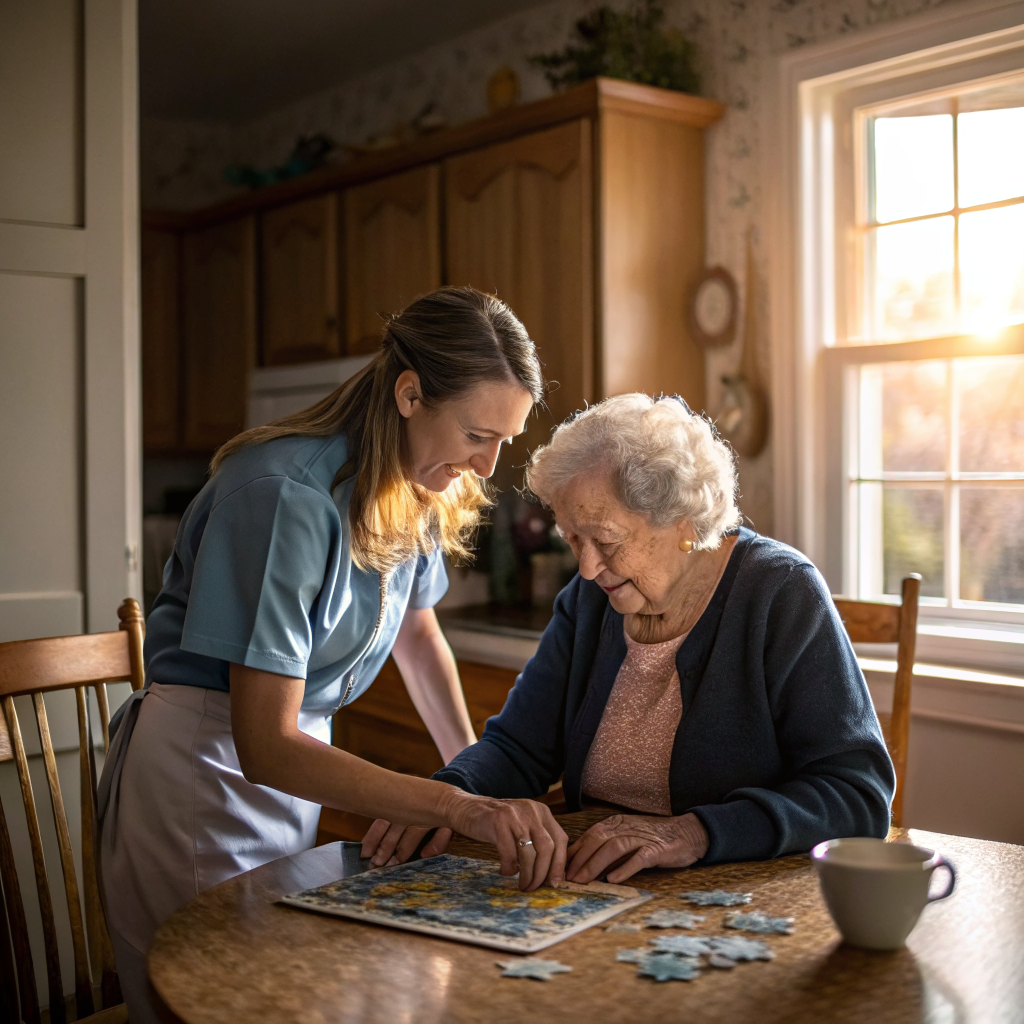

More than 6.7 million Americans are currently living with Alzheimer’s disease, and that number is projected to nearly double by 2050 according to the Alzheimer’s Association. In New Jersey alone, approximately 190,000 residents have Alzheimer’s or another form of dementia — and the vast majority of them prefer to remain in their own homes for as long as possible. This reality creates one of the most urgent and rewarding career specializations in all of home care: the dementia caregiver.
This article is for caregivers considering specialization in dementia and Alzheimer’s care — exploring what the work actually involves, what training prepares you for it, how to manage its emotional demands, and what career advantages specialization provides.
The Scale of Dementia in New Jersey
Dementia is not a single disease but an umbrella term for a group of cognitive disorders — Alzheimer’s being the most common, accounting for 60–80% of cases. Others include vascular dementia, Lewy body dementia, and frontotemporal dementia. What they share is progressive cognitive decline that, at moderate to advanced stages, requires consistent professional support for safe independent living.
The numbers tell a clear story about career demand:
- 190,000 NJ residents are living with Alzheimer’s disease
- The 65-and-older population — the primary demographic for dementia — is NJ’s fastest-growing age cohort
- The majority of dementia patients prefer in-home care over institutional settings
- Family caregivers of dementia patients experience burnout at higher rates than other caregiving populations, creating persistent demand for professional relief and full-time professional care
For caregivers, this means sustained, long-term demand in a specialization that rewards skill investment with premium compensation and deeply meaningful work. Explore dementia caregiver jobs in NJ and Alzheimer’s care jobs in NJ.
What Dementia Caregiving Actually Involves
Dementia caregiving encompasses the full scope of home health aide work — personal care, meals, medication management, transportation — but with an overlay of specialized cognitive and behavioral management skills that distinguish it from generalist caregiving.
Daily care tasks:
- Personal hygiene assistance (bathing, grooming, dressing) with techniques adapted for dementia patients who may resist or not understand the process
- Meal preparation and feeding assistance, accounting for swallowing difficulties and nutritional needs
- Medication management, including monitoring for adverse reactions
- Transportation and accompaniment to medical appointments
- Light housekeeping and home safety monitoring
Dementia-specific skills:
- Validation therapy: Meeting the client in their current reality rather than correcting them. If a client believes it is 1965 and they need to pick up their children from school, a skilled dementia caregiver redirects compassionately rather than confronting the false belief.
- Redirection techniques: Gently steering a client away from unsafe or agitated behaviors toward calming activities.
- Wandering prevention: Understanding exit-seeking behaviors and implementing environmental and behavioral safeguards.
- Sundowning management: Recognizing and responding to the late-afternoon/evening agitation common in dementia patients.
- Non-verbal communication: Reading body language, facial expressions, and behavioral cues when verbal communication deteriorates.
Training and Certification for Dementia Caregivers
Becoming a skilled dementia caregiver requires layered training — a foundation credential plus specialized dementia-specific education.
Foundation: CHHA Certification
The Certified Home Health Aide (CHHA) credential from the NJ Department of Health is the baseline for hands-on personal care in New Jersey. The 76-hour curriculum includes personal care skills, infection control, client rights, safety, and basic clinical skills. This credential is your professional foundation.
Specialization: Dementia Care Training
Several pathways exist for dementia specialization:
- Alzheimer’s Association training: The Alzheimer’s Association’s professional development resources include free online training modules, dementia care practice recommendations, and caregiver-focused education. This is the gold standard reference for dementia care practice in the United States.
- Teepa Snow’s Positive Approach to Care (PAC): A nationally recognized dementia care training framework with hands-on communication and physical assistance techniques specifically designed for dementia patients.
- Employer-provided training: At 24 HOUR Home Care NJ, dementia specialist caregivers receive ongoing in-service training, case-specific coaching, and RN supervision that builds competency over time.

Managing the Emotional Demands of Dementia Care
Honest assessment requires acknowledging that dementia caregiving is emotionally demanding work. Watching a person’s cognition decline, managing behavioral episodes, and building bonds with clients who may not remember your name by the following week takes a psychological toll that caregivers must actively manage.
The Family Caregiver Alliance documents that professional dementia caregivers experience burnout at elevated rates compared to other healthcare workers when unsupported. The key word is “unsupported.” With proper structures in place, many experienced dementia caregivers describe their work as among the most meaningful of their careers.
Evidence-based strategies for dementia caregiver resilience:
- Structured debriefing: Regular check-ins with supervisors or care coordinators to process difficult care episodes before they accumulate into burnout.
- Peer community: Connections with other dementia caregivers provide perspective, shared strategies, and emotional solidarity.
- Deliberate separation of work and home: Establishing mental “off” time — genuine psychological disengagement from client situations — is a skill that experienced caregivers develop intentionally.
- Physical self-care: Sleep, exercise, and nutrition are not optional for high-demand caregiving work. They are professional prerequisites.
- Finding the moments of connection: Even in advanced dementia, genuine moments of joy, humor, recognition, and connection occur. Experienced dementia caregivers learn to treasure these moments and allow them to fuel continued engagement.
Career Advantages of Dementia Specialization
Beyond the intrinsic meaning of the work, dementia specialization provides concrete career advantages:
- Premium compensation: Specialized dementia and Alzheimer’s care roles command higher hourly rates than generalist caregiving positions. Employers pay a premium for the skill set and reliability these roles require.
- Job stability: Specialized caregivers are among the last to face reduced hours during slow periods. Families with dementia patients need consistent, specialized coverage and are reluctant to change caregivers.
- Professional identity and recognition: Dementia specialists are respected within care teams as subject-matter experts. This professional recognition matters for job satisfaction and advancement.
- Career pathways: Dementia care specialization positions you for advancement to care coordinator, training specialist, or RN supervision roles. See our RN supervisor jobs for what advanced career stages look like.
For clients and families served by these caregivers, the difference is equally significant. The dementia care services and Alzheimer’s care we provide depend on caregivers who have committed to this specialization.
Frequently Asked Questions: Dementia Caregiving Careers
What training do I need to become a dementia caregiver in NJ?
The foundational credential for hands-on dementia care in NJ is the CHHA certification (76 hours), governed by the NJ Department of Health. Beyond the CHHA, specialized dementia care training through the Alzheimer’s Association and programs like Teepa Snow’s Positive Approach to Care provide advanced communication techniques and behavioral management skills. 24 HOUR Home Care NJ provides ongoing training. Call (908) 912-6342.
Is dementia care emotionally difficult?
Dementia care can be emotionally challenging — particularly watching cognitive decline progress. However, many dementia caregivers describe their work as among the most meaningful of their careers. Strong training, peer support, supervision, and self-care practices make the emotional demands manageable. The Family Caregiver Alliance offers resources for professional caregiver wellbeing. Learn about dementia caregiver jobs in NJ.
What is the Alzheimer’s Association caregiver certification?
The Alzheimer’s Association offers several professional training pathways, including the Dementia Care Practice Recommendations and free online training modules through their professional development portal. These credentials demonstrate specialized competency to employers and families. Combined with CHHA certification, they position you for premium dementia care roles. See Alzheimer’s care jobs in NJ.
How do dementia caregiver jobs differ from regular home health aide jobs?
Dementia caregivers require specialized communication skills (validation therapy, redirection techniques, non-confrontational approaches), behavioral management training, safety expertise (wandering prevention, home environment modification), and emotional resilience. These skills command premium pay compared to generalist caregiving. Browse dementia caregiver jobs and Alzheimer’s care jobs in NJ.
How many people in NJ have Alzheimer’s or dementia?
According to the Alzheimer’s Association, New Jersey has approximately 190,000 residents living with Alzheimer’s disease — a figure projected to increase significantly as the state’s senior population grows. Nationwide, over 6.7 million Americans are living with Alzheimer’s. This scale of need creates sustained, long-term demand for specialized dementia caregivers.
What career advancement is available for dementia caregivers?
Experienced dementia caregivers can advance to senior care coordinator roles, dementia care specialist positions, training and mentorship roles (teaching newer aides), and care management positions. With additional education, dementia specialists can transition to LPN or RN roles with specialty practice in memory care. See our RN supervisor jobs in NJ and all career openings.
Ready to specialize in dementia care in NJ?
Call (908) 912-6342 or visit our dementia caregiver jobs page.