
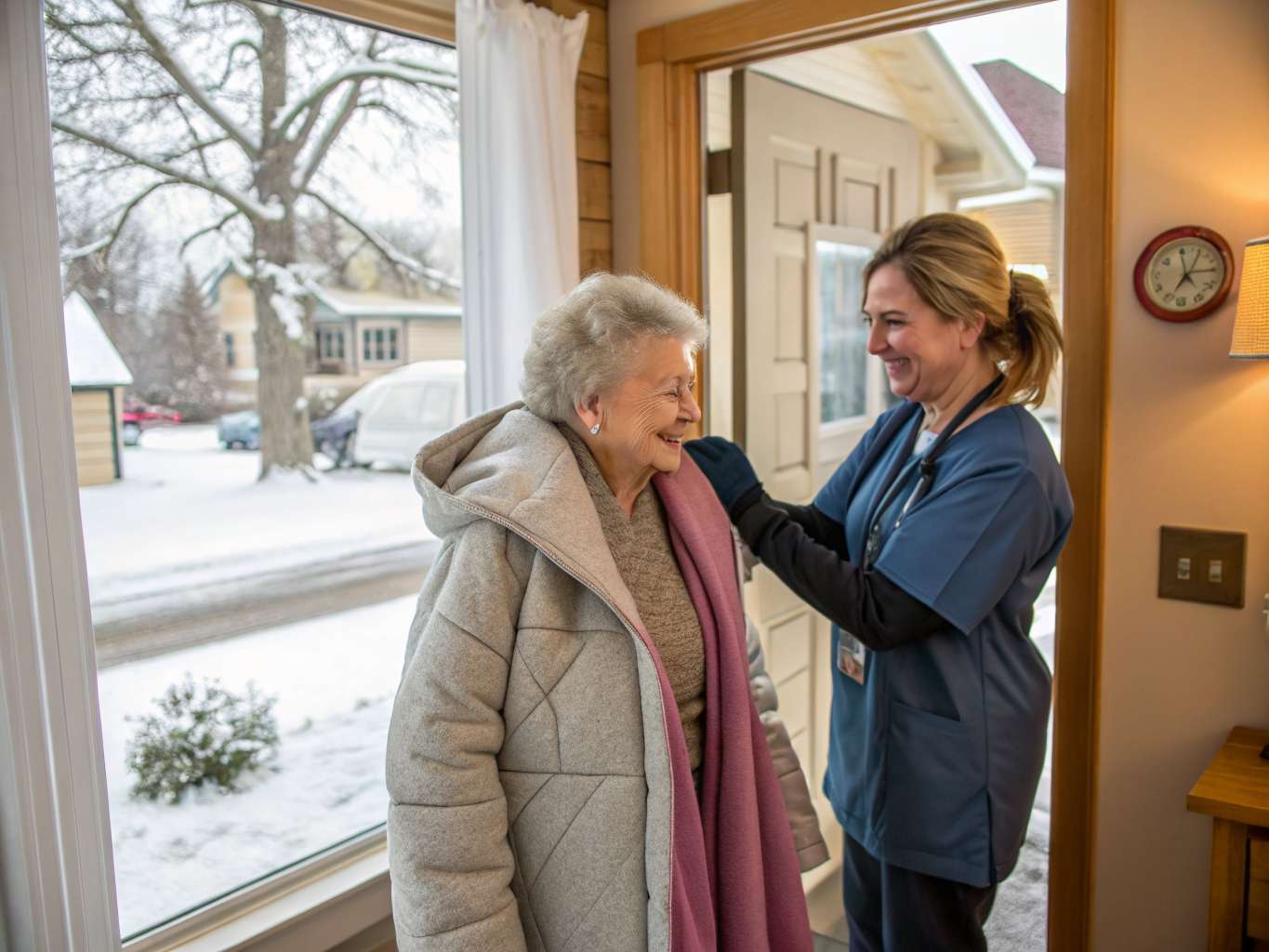
Winter Safety for Seniors in New Jersey: Cold Weather Home Care Tips

Need Winter Home Care? Call (908) 912-6342
New Jersey winters bring a specific set of hazards for older adults — from hypothermia and ice-related falls to heating safety risks, social isolation, and respiratory illness. For NJ seniors living at home, the months from November through March represent the highest-risk period of the year for preventable health emergencies. This guide from 24 HOUR Home Care NJ covers every major winter safety concern for seniors in New Jersey, with practical prevention strategies and guidance on when professional home care support can make the critical difference. Call (908) 912-6342 for a free in-home assessment.
Hypothermia Risk: Why NJ Seniors Are Uniquely Vulnerable
Hypothermia — dangerously low body temperature — is a greater risk for older adults than most families realize. The CDC estimates that over half of all hypothermia deaths in the United States occur in adults over 65. Several age-related factors increase vulnerability:
- Reduced thermoregulation — The body’s ability to detect and respond to cold diminishes with age. Older adults may not feel cold at temperatures that would trigger shivering in younger adults.
- Reduced metabolic heat production — Loss of muscle mass and slower metabolism reduce the body’s ability to generate heat.
- Medications that impair thermoregulation — Beta-blockers, antidepressants, antipsychotics, and sedatives can all impair the body’s cold response.
- Underlying health conditions — Thyroid disease, diabetes, heart disease, Parkinson’s disease, and dementia all increase hypothermia risk.
- Fixed incomes and heating costs — Some NJ seniors reduce heating to manage costs, creating dangerous indoor temperatures.
NJ seniors should maintain indoor temperatures at a minimum of 68–70°F during winter. The NJ Lifeline program (nj.gov/treasury/lifeline) provides utility bill credits for income-eligible seniors to help manage heating costs.
Ice and Fall Prevention: NJ’s #1 Winter Risk for Seniors
Falls are already the leading cause of injury-related death in adults over 65, and winter conditions dramatically increase that risk. Black ice, packed snow, wet entryways, and dim winter lighting create hazardous conditions even in familiar environments. A hip fracture sustained in a winter fall can be life-changing — NJ seniors who fracture a hip have a 25% mortality rate within one year. Prevention is critical.
Comprehensive ice and fall prevention for NJ seniors includes:
Outdoor Safety
- Keep all walkways, driveways, stoops, and steps treated with rock salt or sand-salt mix before and after snowfall
- Install bright motion-sensor lighting at all exterior doors
- Use ice-grip attachments (Yaktrax or similar) on shoes whenever going outdoors in winter conditions
- Never rush — allow extra time for all outdoor movement in winter
- Avoid going outdoors during active ice or snowfall when possible — arrange for delivery or caregiver assistance
- Use a cane or walker with rubber-tipped ice picks in winter conditions
Indoor Safety
- Place non-slip mats at every exterior door to catch ice and moisture brought in from outside
- Ensure all indoor lighting is adequate — replace bulbs proactively and add nightlights in hallways, bathrooms, and bedroom
- Keep pathways clear of clutter, loose rugs, and extension cords that create tripping hazards
- Wear non-slip footwear indoors — bare feet and socks increase fall risk on hard floors
24 HOUR Home Care NJ caregivers conduct informal safety walkthroughs and provide fall prevention home care support during every visit. Call (908) 912-6342.

Keeping your NJ senior safe this winter? (908) 912-6342
Daily winter caregiver support. RN-supervised. Private pay and LTCI accepted. No contracts.
Heating Safety: Carbon Monoxide and Fire Risks
Home heating equipment is the second leading cause of home fire deaths in the United States, and carbon monoxide (CO) poisoning — the “silent killer” — is a critical winter safety risk for NJ seniors. Age-related factors make seniors more susceptible to CO poisoning: reduced respiratory reserve, cardiovascular disease, and cognitive impairment that may delay recognition of symptoms or evacuation.
Winter heating safety checklist for NJ seniors:
- Service the heating system — Have the furnace, boiler, or heat pump professionally inspected and serviced annually before winter begins
- Test CO and smoke detectors — Check batteries in all detectors monthly; replace detectors over 7 years old; install CO detectors on every floor and near sleeping areas
- Never use gas stoves or ovens for heating — a dangerous practice that produces CO and creates fire risk
- Keep space heaters safe — Use only UL-listed space heaters; keep them 3 feet from combustibles; never leave unattended; plug directly into wall outlets (not extension cords)
- Ensure chimney safety — If using a fireplace, have the chimney professionally cleaned and inspected annually; always use a fireplace screen
- Know CO poisoning symptoms — headache, dizziness, weakness, nausea, and confusion. If symptoms occur, evacuate immediately and call 911.
Social Isolation During NJ Winters
Winter is the season when social isolation among NJ seniors intensifies most sharply. Driving becomes difficult or impossible on icy roads; outdoor socialization diminishes; and the natural reduction in daylight hours contributes to low mood and depression. The National Institute on Aging identifies social isolation as a significant risk factor for cognitive decline, depression, weakened immune function, and cardiovascular disease in older adults.
Strategies to combat winter isolation for NJ seniors:
- Schedule regular phone or video calls with family and friends — consistency is more important than duration
- Arrange for a companion caregiver who provides daily human interaction regardless of weather conditions
- Connect with county Division on Aging programs — many offer telephone reassurance programs for homebound seniors
- Maintain regular activity schedules indoors — book clubs, exercise classes, faith community events that continue regardless of weather
- Consider a personal emergency response system (medical alert) so isolated seniors can summon help if needed
A companion caregiver from 24 HOUR Home Care NJ provides consistent daily visits throughout NJ winters — rain, snow, or ice — ensuring your loved one is never isolated. Call (908) 912-6342.
Flu, COVID-19, and Respiratory Illness Prevention
Respiratory illnesses — flu, COVID-19, RSV, and pneumonia — pose the greatest mortality risk to NJ seniors during winter months. Adults over 65 account for approximately 70–85% of all seasonal flu deaths in the United States. Prevention strategies include:
- Annual flu vaccination — high-dose or adjuvanted flu vaccines provide superior protection for adults 65+; schedule vaccination in early fall
- COVID-19 boosters — stay current with CDC-recommended COVID-19 boosters for older adults
- RSV vaccination — the FDA-approved RSV vaccine (Abrysvo, Arexvy) is recommended for adults 60+ and provides significant protection against severe RSV
- Pneumococcal vaccination — NJ seniors should discuss pneumococcal vaccine status with their physician
- Handwashing — frequent handwashing with soap and water for 20+ seconds remains the single most effective non-vaccine prevention strategy
- Nutrition and immune support — adequate protein, vitamin D, and zinc intake support immune function; vitamin D deficiency is particularly common in NJ seniors during winter months
Home caregivers from 24 HOUR Home Care NJ are trained in infection control, practice rigorous hand hygiene, and monitor seniors for early illness symptoms — alerting family and the supervising RN immediately. Call (908) 912-6342.
Winter Emergency Preparedness for NJ Seniors
New Jersey winters bring nor’easters, ice storms, and power outages that can disrupt utilities for days. Senior households should maintain a winter emergency preparedness plan:
- 72-hour emergency supply kit: bottled water (1 gallon/person/day), non-perishable foods (choose easy-to-open items for seniors with arthritis), a 7-day supply of all medications, flashlights and extra batteries, a battery-powered or hand-crank radio, warm blankets, and a first aid kit
- Medication backup: maintain at least a 7-day emergency supply of all critical medications; ask your NJ pharmacist about emergency dispensing policies
- Generator or backup power: seniors dependent on electric medical equipment (CPAP, oxygen concentrators, powered wheelchairs) should have a backup power solution and be registered with their utility company’s medical baseline program
- County warming centers: know the location of your county’s designated warming shelters — typically county libraries, community centers, and schools; your county Division on Aging maintains this information
- Daily check-in system: establish a protocol for family, neighbors, or a home caregiver to check in with the senior daily during severe weather
24-hour home care provides continuous caregiver presence through NJ winter emergencies — ensuring your loved one is never without support. Call (908) 912-6342.
We serve families throughout New Jersey: Union County, Essex County, Morris County, Middlesex County, Bergen County, Somerset County, Monmouth County, Ocean County, Mercer County, Passaic County, and Hunterdon County.
Professional Winter Home Care Across NJ
24 HOUR Home Care NJ provides daily caregiver support through every NJ winter — fall prevention, warmth monitoring, isolation prevention, and emergency preparedness.
Frequently Asked Questions: Winter Safety for Seniors in NJ
What temperature is dangerous for elderly people in winter?
Seniors are at risk of hypothermia at temperatures that may seem moderate to younger adults. The CDC notes that hypothermia can occur in older adults at indoor temperatures as high as 60–65°F if the person is wet, improperly dressed, or has underlying health conditions that impair thermoregulation. NJ seniors should keep thermostats at 68–70°F minimum during winter, wear layered clothing indoors, and avoid prolonged exposure to cold when going outdoors. For winter home care assistance, call (908) 912-6342.
How can I prevent falls on ice for my elderly parent in NJ?
Preventing ice-related falls for NJ seniors requires a combination of environmental and behavioral strategies: keep walkways, driveways, and stoops salted and cleared; install grab bars at all exterior steps; use non-slip door mats inside and outside; ensure adequate outdoor lighting; equip seniors with ice-grip shoe attachments; limit outdoor activity during icy conditions; and arrange for a caregiver or family member to accompany the senior when going outdoors in winter weather. 24 HOUR Home Care NJ caregivers assist with safe outdoor mobility and monitor conditions daily. Call (908) 912-6342.
What are the signs of hypothermia in a senior?
Signs of hypothermia in an elderly person include: shivering (though this may be absent in severe hypothermia), slurred speech, sluggishness or unusually slow movements, confusion or unusual behavior, pale or blue-tinged skin, and very slow or shallow breathing. If you suspect hypothermia, call 911 immediately. While waiting for emergency services, move the person to a warm location, remove any wet clothing, and cover with warm blankets. Do not apply direct heat (heating pads or hot water bottles). For daily winter monitoring by a home caregiver, call (908) 912-6342.
How does winter isolation affect seniors in New Jersey?
Winter in New Jersey creates significant isolation risks for seniors: unsafe driving conditions limit mobility; illness and falls keep seniors indoors; shortened daylight hours reduce outdoor activity; and inclement weather reduces visits from family and friends. Social isolation is linked to accelerated cognitive decline, depression, weakened immune function, and increased mortality — particularly in the winter months. A home caregiver provides daily human connection during NJ winters, regardless of weather conditions. For companion care during winter, call (908) 912-6342.
How can I keep my elderly parent safe during a NJ winter power outage?
To prepare NJ seniors for winter power outages: maintain a 72-hour emergency kit including water, non-perishable food, medications, flashlights, and a battery-powered radio; know the location of the nearest warming center (usually a county library or community center); have a backup contact list for family, neighbors, and healthcare providers; consider a standby generator for seniors dependent on electric medical equipment; and establish a daily check-in protocol during severe weather. 24-hour home care provides continuous caregiver presence during NJ winter emergencies. Call (908) 912-6342.
What steps can help prevent flu and respiratory illness in homebound seniors during NJ winters?
Key prevention strategies for NJ seniors during flu season: receive annual flu vaccination and stay current on COVID-19 boosters; practice frequent handwashing with soap and water for 20+ seconds; avoid contact with sick individuals; use a humidifier to maintain indoor humidity at 40–60%; ensure good nutrition including vitamin D (which many NJ seniors are deficient in during winter); get adequate sleep; and stay physically active indoors. Home caregivers monitor for symptoms daily and alert family and the supervising RN to any health changes. Call (908) 912-6342.