
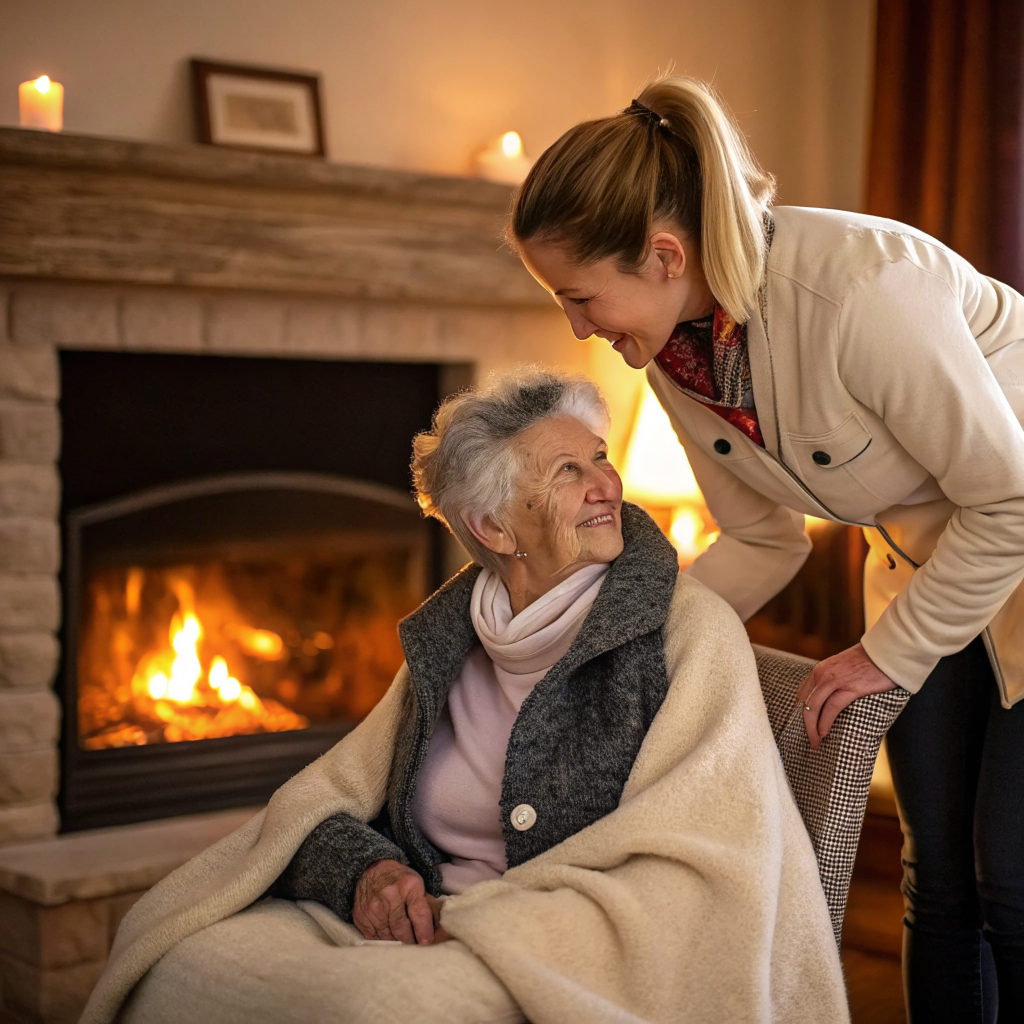
New Jersey winters are serious business. From nor’easters that dump two feet of snow to prolonged cold snaps that push temperatures into single digits, the winter months present a constellation of hazards specifically dangerous for older adults. Hypothermia, slip-and-fall accidents on ice, carbon monoxide from heating equipment, and the devastating psychological effects of winter isolation all demand careful attention from families and professional caregivers.
24 Hour Home Care NJ provides round-the-clock care and live-in services that keep NJ seniors warm, safe, and connected throughout the winter season.
Understanding Hypothermia Risk in Older Adults
Most people think of hypothermia as something that happens outdoors in extreme cold. But for seniors, hypothermia can develop indoors, at temperatures that would barely inconvenience a younger person. Several physiological changes make older adults vulnerable:
- Reduced thermogenesis: Aging metabolism generates less heat, and aging muscles have diminished shivering response — the body’s primary mechanism for warming itself.
- Impaired temperature perception: Many seniors cannot accurately perceive their body temperature or the ambient temperature, failing to notice when they are becoming dangerously cold.
- Medication effects: Beta-blockers, sedatives, antipsychotics, and some diabetes medications impair temperature regulation.
- Chronic conditions: Hypothyroidism, diabetes, and malnutrition all reduce cold tolerance significantly.
The minimum safe indoor temperature for seniors is 68°F. Below 65°F, elderly individuals are at meaningful hypothermia risk with prolonged exposure.
Winter Hazards Beyond Hypothermia
Ice and Snow Falls
Icy walkways, snow-covered steps, and frost-slick surfaces are prime locations for the falls that fracture hips and change the trajectory of seniors’ independence. Our home aides ensure that entryways and pathways used by seniors are clear, apply ice melt products, and accompany seniors when outdoor movement is necessary.
Carbon Monoxide Risk
Space heaters, fireplaces, and gas furnaces all carry CO risk, particularly in tightly sealed winter homes. Aides verify that CO detectors are functioning, ensure fireplaces are properly vented, and monitor seniors who use portable heaters for proper ventilation.
Heating System Monitoring
Furnace failures during a NJ cold snap can be life-threatening for seniors who cannot independently arrange repairs. Our caregivers notice when a home is not maintaining adequate temperature and can immediately contact family, landlords, or HVAC services.
Winter Dehydration
Counterintuitively, seniors are at significant dehydration risk in winter — dry heated air increases insensible fluid losses, and the cold reduces the sensation of thirst. Aides maintain proactive hydration protocols year-round.
Combating Winter Isolation
Social isolation and loneliness are not just psychological concerns — research published in the Journal of the American Geriatrics Society links chronic loneliness to faster cognitive decline, increased dementia risk, and higher all-cause mortality in older adults. NJ winters naturally restrict seniors’ mobility and social activity, making the presence of a companion caregiver genuinely health-protective.
Our caregivers provide daily conversation, help seniors participate in hobbies, facilitate video calls with family, and accompany seniors to indoor social events, religious services, and medical appointments — maintaining the social connections that are essential to wellbeing even when the weather makes independent travel impossible.
Winter Care Planning Across NJ Counties
Families in Hunterdon County and Morris County experience some of NJ’s most severe winter weather, with roads often impassable for days after major storms. Our live-in care model is particularly valuable in these areas, ensuring continuous care presence regardless of road conditions.
Urban areas in Essex County and Union County face different winter hazards — heavily salted sidewalks that can be slippery and wet, increased crime during dark winter evenings, and heating systems in older apartment buildings that may be unreliable.
Our geriatric home care services are tailored to the specific challenges of each community.
Financial Assistance for Winter Home Care in NJ
NJ’s LIHEAP (Low Income Home Energy Assistance Program) helps eligible seniors with heating costs. The NJ Division of Aging Services coordinates additional winter safety resources through local Area Agencies on Aging. For private-pay home care, rates in NJ range from $22–$30 per hour, with live-in arrangements starting around $250–$300 per day for full-time care.
Call us today at (908) 912-6342 or contact us online to schedule a free in-home assessment. Our caregivers serve families across Union, Essex, Morris, Middlesex, Bergen, Somerset, Passaic, Hunterdon, Mercer, Monmouth, and Ocean counties.
Frequently Asked Questions
- At what indoor temperature does hypothermia risk begin for seniors?
-
Seniors can develop hypothermia at indoor temperatures as high as 60°F if exposure is prolonged. Many older adults have reduced ability to sense cold and may not adjust the thermostat or add layers. The recommended indoor minimum for seniors is 68°F.
- How can home care prevent winter isolation for NJ seniors?
-
Home aides provide daily social interaction, help seniors participate in activities they enjoy, facilitate video calls with family, and ensure transportation to medical appointments and social events even in winter weather.
- What are signs of hypothermia in elderly people?
-
Shivering (which may stop as hypothermia worsens), confusion, slurred speech, drowsiness, shallow breathing, and a weak pulse. If suspected, call 911 immediately and warm the person gradually with blankets.
- Does 24 Hour Home Care NJ provide services during snow emergencies?
-
Yes — our caregivers are committed to showing up for clients regardless of weather conditions. We have protocols for winter weather events to ensure continuity of care for seniors who depend on us.
- How do I heat-proof my NJ senior parent’s home on a budget?
-
NJ’s Low Income Home Energy Assistance Program (LIHEAP) provides heating assistance for eligible seniors. Weather-stripping, door draft stoppers, and heavy curtains are low-cost measures. An occupational therapist can do a free home safety assessment through some insurance plans.
Don’t wait for a winter emergency to put care in place. Contact us today to arrange a free home assessment and build a winter care plan for your loved one in Bergen, Passaic, Mercer, or any NJ county we serve.
Leave a Reply