
Recognizing When Family Caregiving Is No Longer Sustainable
There comes a point in many family caregiving journeys when the arrangement that worked for months or even years begins to break down. It is not a sudden failure — it is a gradual realization that the demands of caring for an aging parent have grown beyond what one family member can manage safely and sustainably. Recognizing this inflection point is one of the most important — and most difficult — decisions a family caregiver will make.
According to the Family Caregiver Alliance, the average duration of a family caregiving situation is 4.5 years, and needs typically escalate significantly over that period. What starts as occasional help with groceries evolves into daily meal preparation, medication management, bathing assistance, and eventually round-the-clock supervision. At 24 Hour Home Care NJ, we work with families throughout Morris County, Essex County, Bergen County, and across New Jersey to plan smooth, compassionate transitions from family care to professional support.
The signs that it is time to transition are often clearer to others than to the caregiver themselves. If any of the following resonate, it may be time to explore professional home care as a complement to — or gradual replacement for — your current family caregiving arrangement.
Signs That It Is Time to Bring in Professional Help
Your own health is declining. You have put off your own medical appointments, your blood pressure is up, you have chronic back pain from lifting, you are not sleeping, or you have developed anxiety or depression symptoms. The National Institute on Aging reports that caregivers who are strained have a 63% higher mortality rate than non-caregivers. Your health is not a luxury — it is the foundation of the entire care arrangement.
Safety incidents are increasing. Falls, missed medications, kitchen accidents, wandering episodes, or near-misses that keep happening despite your best efforts. When you are exhausted and overstretched, mistakes happen. A professional caregiver who is rested, trained, and focused solely on your parent’s safety can prevent the incidents that keep you up at night.
The parent-child relationship is suffering. When every interaction revolves around care tasks, the loving relationship that existed before caregiving can erode. If your visits with your parent feel more like a job than a family connection, if arguments have replaced conversations, or if you feel resentment building, the relationship is telling you something important.
Your career is taking significant hits. Repeated absences, declining performance, passed-over promotions, or serious consideration of quitting your job. The financial consequences of career disruption affect not only your present but your retirement security. AARP estimates that caregivers lose an average of $522,000 in lifetime wages and benefits.
Personal care needs have become uncomfortable. Helping a parent with bathing, toileting, and dressing can be deeply uncomfortable for both the parent and the adult child. Many seniors feel humiliated receiving intimate care from their children, and many adult children struggle with this role reversal. Professional caregivers are trained to provide personal care with dignity and clinical detachment, which is often more comfortable for everyone.
You have no life outside caregiving. When was the last time you saw friends, went to a movie, read a book for pleasure, or spent time on a hobby? If caregiving has consumed your entire identity, the arrangement is not sustainable. You deserve a life, and your parent deserves a caregiver who is not running on empty.
Overcoming the Emotional Barriers to Seeking Help
Even when the signs are clear, many family caregivers resist the transition to professional help. Understanding the emotional barriers can help you move past them.
Guilt. “I promised Mom I would never put her in a home.” Here is the important distinction: hiring home care is the opposite of institutional placement. Professional home care keeps your parent in their own home, in their own community, with their own routines. You are honoring their wish to remain at home by ensuring they have the support to do so safely. A caregiver coming to their home for a few hours is not “putting them in a home” — it is bringing the help to them.
Obligation. “She raised me. I owe her this.” Your parent raised you to have a full, healthy life — not to sacrifice your health, career, and relationships in a caregiving role that grows more demanding each month. The best way to honor what your parent gave you is to build a sustainable care plan that allows both of you to thrive. That almost always includes professional help.
Cultural expectations. In many cultures, family-only caregiving is deeply embedded. Italian, Hispanic, Asian, and many other cultural traditions emphasize family responsibility for elder care. While these values are beautiful, they were developed in eras when extended families lived together, women did not work outside the home, and people did not live to 90 with complex chronic conditions. Adapting these values to modern realities is not abandonment — it is wisdom.
Fear of judgment. “What will the neighbors think? What will my siblings say?” People who judge your decision to hire professional help are rarely the ones showing up to do the work themselves. Make decisions based on what is best for your parent and your family, not on the opinions of people who are not living your reality.
Perfectionism. “No one can care for Mom the way I do.” This may have been true initially, but as your parent’s needs grow and your resources diminish, the quality of your care inevitably declines — even though your love never does. A trained, rested professional caregiver may actually provide more consistent, safer care than an exhausted family member who is spread too thin.
Planning a Smooth Transition: The Trial Period Approach
The most successful transitions from family to professional home care use a gradual, trial-based approach that reduces resistance and builds trust organically. Here is the framework we recommend to families across Middlesex County, Somerset County, Union County, and throughout New Jersey.
Step 1: Start the conversation early. Do not wait until a crisis forces the issue. Introduce the idea of professional home care during a calm, private moment. Frame it around your parent’s goals: “Mom, I want to make sure you can stay in this house as long as possible. Having some extra help a few days a week could make that happen.” Focus on independence, not dependence.
Step 2: Suggest a trial period. Instead of presenting professional care as a permanent change, propose a two-week or one-month trial. “Let’s try having someone come three mornings a week and see how it goes. If you do not like it, we will figure something else out.” This lowers the emotional stakes and gives your parent a sense of control.
Step 3: Introduce the caregiver personally. At 24 Hour Home Care NJ, we arrange meet-and-greet sessions before care begins. Your parent gets to meet the caregiver, ask questions, and feel that they have a voice in the process. This personal connection transforms a stranger into a familiar face before care even starts.
Step 4: Start with companionship, then expand. Many families find success starting with companion care — conversation, light meal preparation, activity engagement, and gentle assistance. Once your parent is comfortable with their caregiver, it is much easier to introduce personal care tasks like bathing assistance or medication reminders.
Step 5: Be present initially, then gradually step back. Stay for the first visit or two so your parent feels supported. Then leave for short periods (“I need to run an errand — Sarah will be here with you”). Gradually extend your absences as trust builds. Within a few weeks, most parents are comfortable and even look forward to their caregiver’s visits.
Step 6: Maintain your role on the care team. You never stop being part of the care team. You just shift from frontline provider to care coordinator, advocate, and family member. Attend care plan reviews, communicate regularly with the agency, and continue meaningful visits that focus on relationship rather than tasks.
Becoming a Daughter or Son Again: The Gift of Professional Care
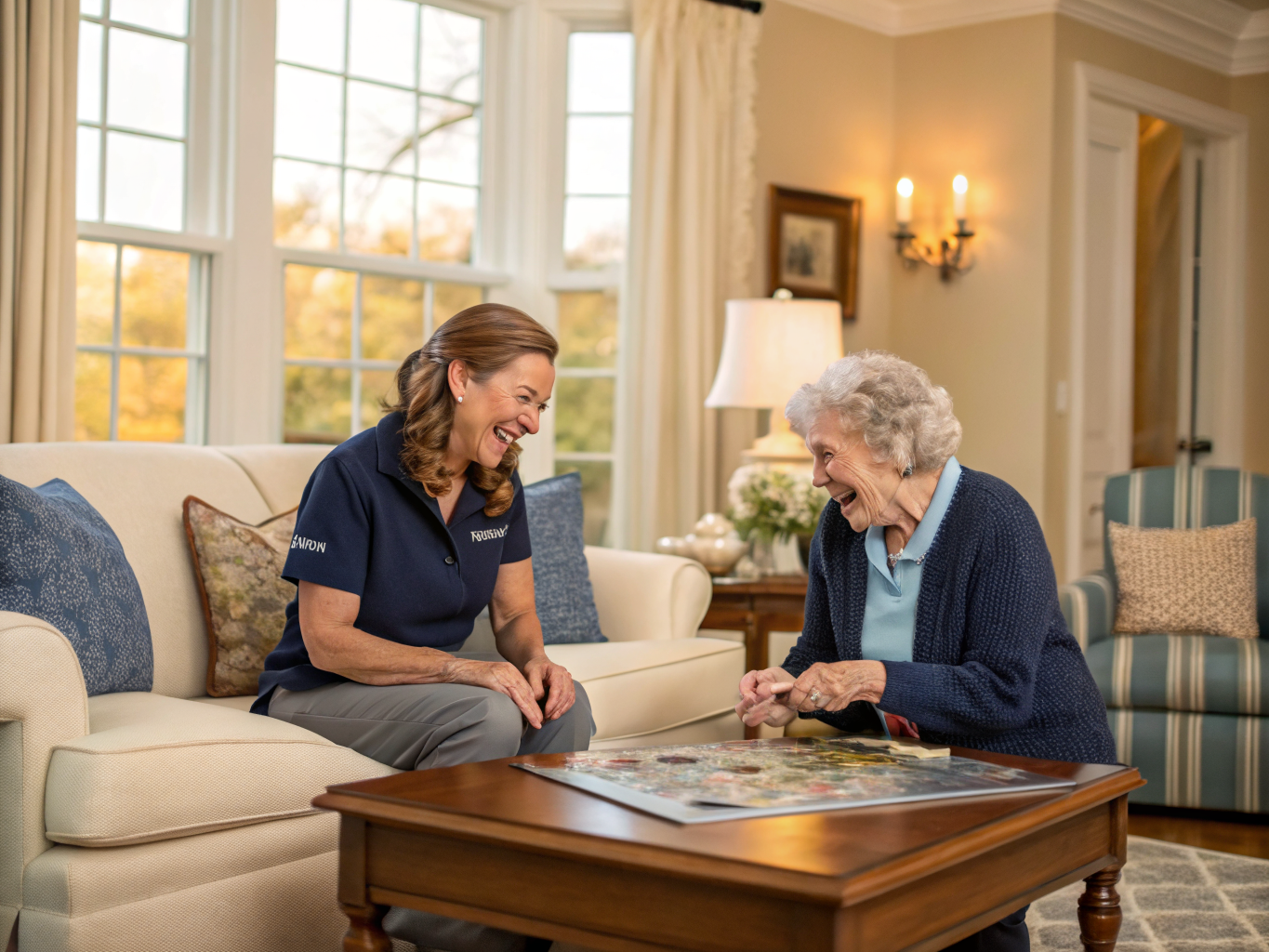
Perhaps the most beautiful outcome of transitioning to professional home care is the restoration of the parent-child relationship. When you are no longer your mother’s nurse, cook, housekeeper, and medication manager, you can simply be her daughter or son again. When visits are not consumed by tasks and checklists, there is room for the conversations, laughter, and connection that define a healthy family relationship.
Family members who have made this transition consistently tell us the same thing: “I wish we had done this sooner.” The guilt they feared is replaced by relief. The resentment they felt is replaced by genuine enjoyment of their parent’s company. And their parent — who may have initially resisted — often says something like, “I did not want to be a burden to you. This is better for both of us.”
Professional home care agencies like 24 Hour Home Care NJ carefully match caregivers with clients based on personality, interests, language, cultural background, and care needs. This matching process ensures that your parent does not just receive competent care — they gain a companion and ally who enriches their daily life. Many of our caregiver-client relationships become deeply meaningful bonds that last years.
If you are a family caregiver who recognizes yourself in this article, we invite you to take the first step. Call (908) 912-6342 or request a free assessment online. Our care coordinators understand the emotional complexity of this transition and will guide your family through each step with compassion, patience, and professionalism. You have already given so much — let us help carry the load.