
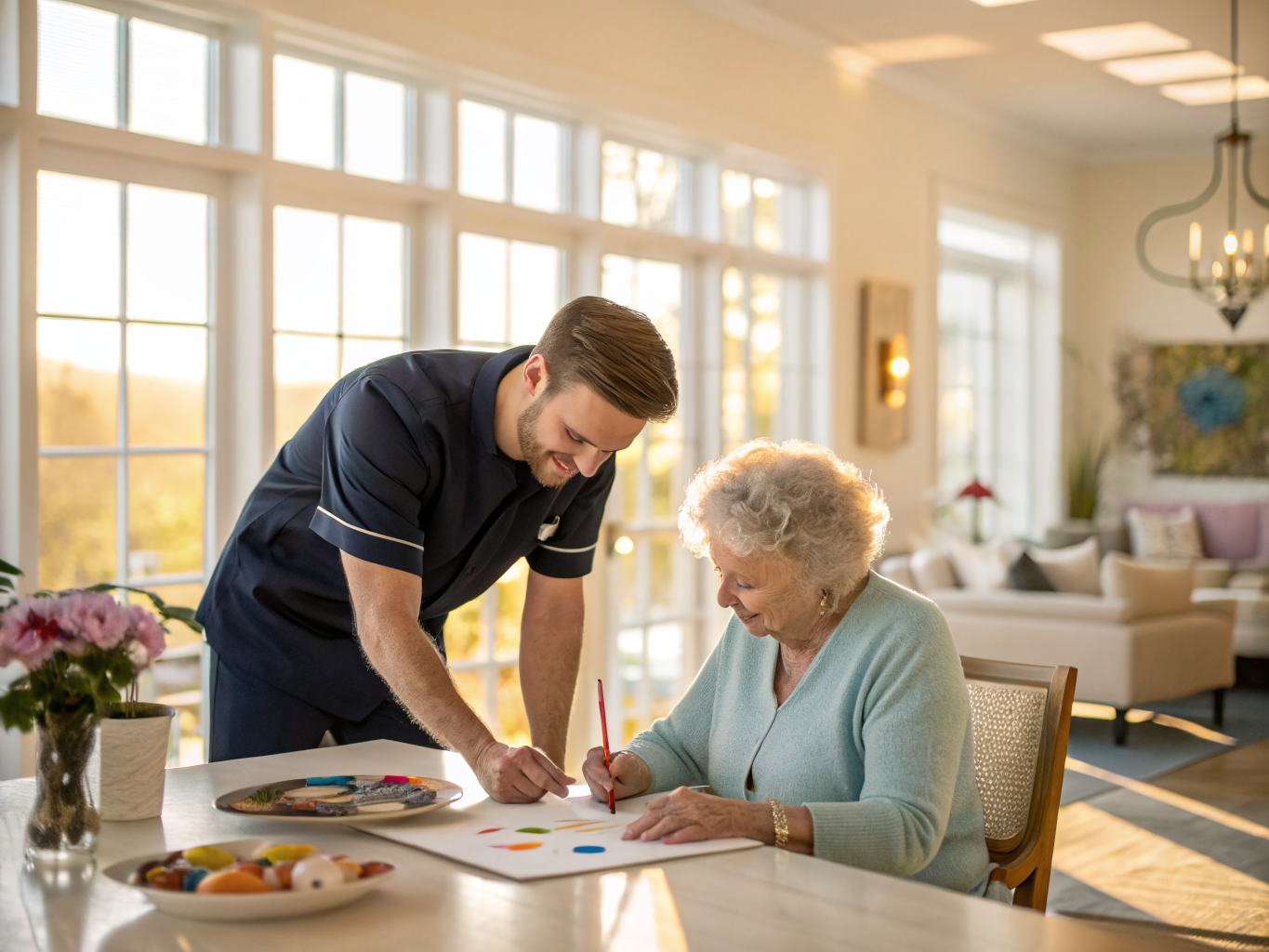

When a family welcomes a caregiver into their home for around the clock care, something deeper than scheduling begins. It becomes a shared environment. A shared rhythm. A shared emotional atmosphere.
In around the clock home care, live in home care, and 24 hour aide arrangements, tone of voice is not a small detail — it becomes the emotional climate of the home.
At 24 HOUR Home Care NJ, we understand that caregiving is not only about assistance. It is about how that assistance feels.
When Care Is Continuous, Tone Becomes Structure
In part-time care, tone matters.
In around the clock home care, tone defines the household experience.
When a live in aide or rotating 24 hour aides are present daily, their:
- Voice pacing
- Volume
- Word choice
- Emotional steadiness
- Facial expression
shape how the senior feels inside their own home.
A calm tone can reduce agitation.
A rushed tone can increase anxiety.
A respectful tone preserves dignity.
Tone of Voice and Emotional Safety
Especially in live in home care, seniors are highly sensitive to emotional cues. Research in caregiving psychology shows that older adults — particularly those experiencing cognitive change — respond strongly to tone and body language.
In around the clock care, tone supports:
- Cooperation with daily routines
- Reduced confusion
- Improved sleep rhythms
- Lower stress responses
- Trust between caregivers and family
A stable voice equals a stable environment.
When Someone Resides in the Home: Respect Matters More
Inviting a live in aide into the home requires mutual respect. Tone of voice influences:
- Household harmony
- Family communication
- Senior dignity
- Professional boundaries
- Emotional predictability
In live in home care, the caregiver is not a visitor — they are a consistent presence. Tone becomes the invisible structure that keeps the home calm.
Tone of Voice in Dementia and Around the Clock Care
In around the clock home care for individuals with memory changes, tone matters even more than content.
Correcting memory can escalate stress.
A gentle tone can prevent escalation.
Professional caregivers trained in dementia home care -aware communication use:
- Slower pacing
- Reassuring language
- Validation before redirection
- Soft volume
- Predictable phrasing
This approach is especially important in 24 hour aides schedules where nighttime reassurance may be needed.
How 24 Hour Aides Maintain Emotional Consistency
In rotating shift models of around the clock care, consistency between caregivers is critical.
At 24 HOUR Home Care NJ, coordination supports:
- Shared communication guidelines
- Unified tone approach
- Clear household expectations
- Calm conflict resolution
- Family updates delivered respectfully
Consistency across caregivers prevents emotional whiplash.
The Difference Between Task Tone and Care Tone
Task tone:
“Let’s get this done.”
Care tone:
“Let’s do this together.”
In live in home care, small phrasing differences affect cooperation, dignity, and emotional stability.
Care tone builds partnership.
Task tone can create resistance.
Around the Clock Home Care and Household Culture
Every home has a rhythm. In around the clock home care, caregivers adapt to the household’s tone — not the other way around.
Tone should be:
- Calm, not clinical
- Supportive, not authoritative
- Respectful, not infantilizing
- Clear, not rushed
- Warm, not overly casual
Professionalism and kindness can coexist.
Evidence-Based Resource on Dementia Care
For additional information about dementia and caregiving:
🔗 National Institute on Aging – Alzheimer’s & Dementia Caregiving
A Research-Supported Perspective
Emotional regulation and environmental predictability are frequently discussed in aging research. For additional information:
🔗 National Institute on Aging – Caregiving and Stress
Similar Articles
 |
|
|
 |
|
|
 |
|
|
Frequently Asked Questions
Why is tone of voice important in live in home care?
Because continuous presence amplifies emotional signals. A calm tone promotes stability.
Do 24 hour aides receive communication guidance?
Yes. Emotional awareness and respectful communication are essential parts of professional caregiving.
Is tone especially important in dementia care?
Yes. Individuals with cognitive changes often respond more to tone than to words.
How does around the clock care maintain consistency?
Through coordination, communication protocols, and shared caregiving standards.
Why Families Choose 24 HOUR Home Care NJ
Families seeking around the clock care, live in home care, or 24 hour aides want more than coverage. They want emotional stability inside the home.
At 24 HOUR Home Care NJ, we prioritize:
- Calm, respectful caregivers
- Clear communication
- Consistent tone standards
- Household harmony
- Professional boundaries
Because how care sounds is just as important as what care does.
Contact 24 HOUR Home Care NJ
If you are considering around the clock home care, live in home care, a live in aide, or 24 hour aides in New Jersey, we are here to support your family.
📞 Call or Text 24 HOUR Home Care NJ
+1 (908) 912-6342
Call Now | Text Us
📍 Find us on Google:
https://www.google.com/maps?cid=17867675212303854943
Frequently Asked Questions
Get Started Today
If your family needs compassionate, professional home care in New Jersey, 24 HOUR Home Care NJ is here to help. Call (908) 912-6342 for a free consultation, or request a callback online.
Leave a Reply