
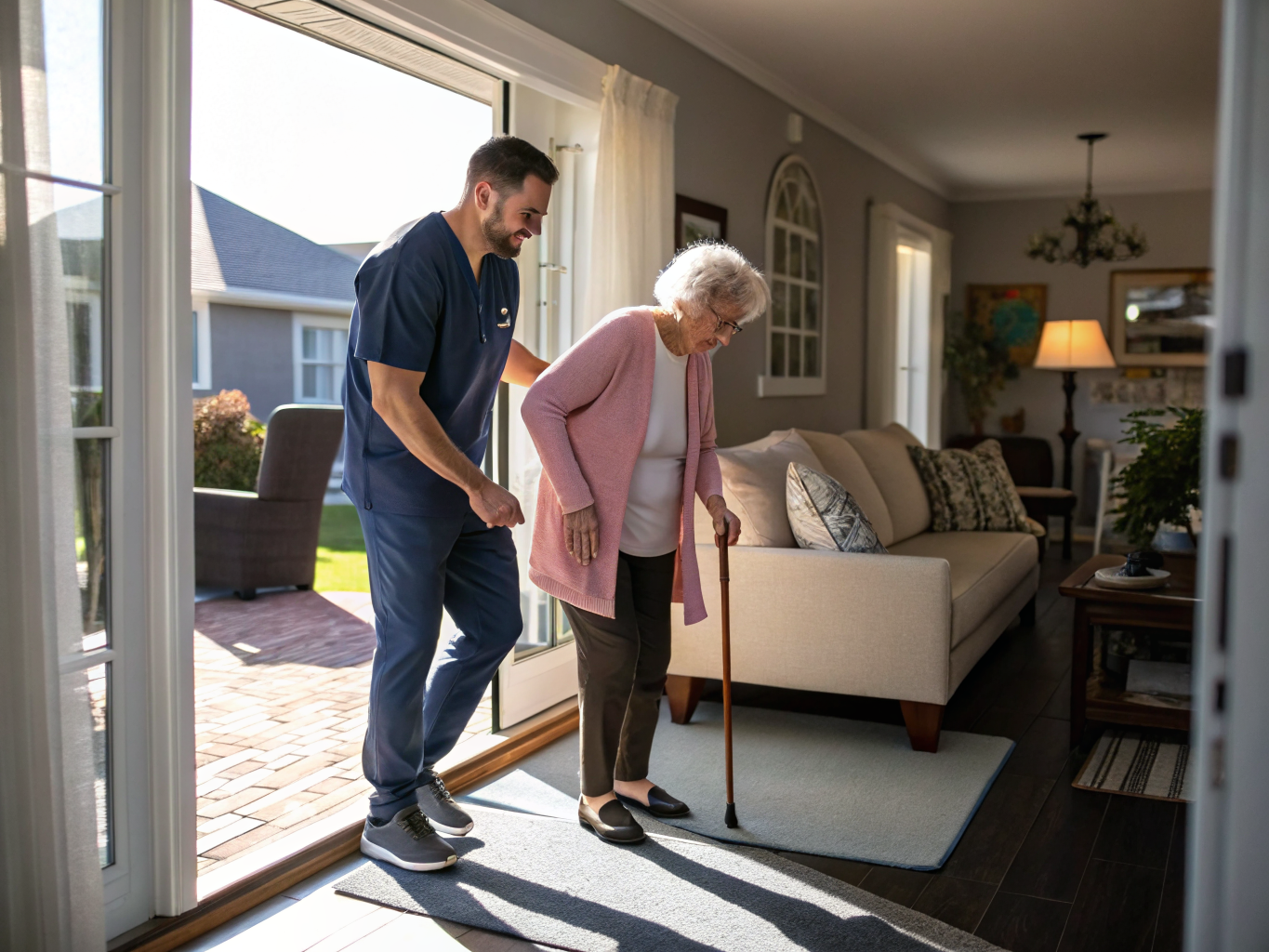
Stroke Recovery Care in Hackensack, NJ

At a Glance — Stroke Recovery Care in Hackensack, NJ
- Hemiparesis & ADL support — Safe transfers, dressing, grooming, mobility assistance for one-sided weakness
- Fall prevention — Stroke survivors are at high fall risk; continuous safety supervision and gait assistance
- Medication management — Blood thinner reminders, pill schedules, refill coordination with Hackensack pharmacies
- Therapy reinforcement — Daily practice of speech, OT, and PT exercises from Hackensack University Medical Center — Primary Stroke Center
- Post-stroke depression support — Emotional engagement, cognitive activities, consistent human presence
- RN-supervised care plans — Designed by a Registered Nurse, coordinated with your loved one’s physicians
- Call now: (908) 912-6342
Call (908) 912-6342 — Stroke Recovery Care in Hackensack, NJ
24 HOUR Home Care NJ provides professional stroke recovery home care for survivors and their families in Hackensack, New Jersey. A stroke is one of the most disruptive medical events a family can face — sudden, life-altering, and demanding an immediate transition from intensive hospital care to a complex home recovery. The weeks and months following a stroke are the critical neuroplasticity window, when consistent, expert daily support produces the greatest functional recovery. Our NJ Certified Home Health Aides — supervised by a Registered Nurse — provide hemiparesis assistance, fall prevention, medication management including blood thinners, reinforcement of speech and occupational therapy exercises, swallowing safety supervision, cognitive rehabilitation activities, and compassionate emotional support for the one in three stroke survivors who experience post-stroke depression. Call (908) 912-6342 for a free in-home assessment — a stroke recovery caregiver can start within 24 to 48 hours of hospital discharge from Hackensack University Medical Center — Primary Stroke Center.
Why Stroke Recovery at Home Produces Better Outcomes
Research published in leading journals including Stroke (the journal of the American Stroke Association) consistently demonstrates that stroke survivors who receive structured support in their home environment — rather than extended nursing facility stays — show superior functional recovery, higher satisfaction, and lower rates of rehospitalization. The brain heals best in familiar surroundings, with consistent stimulation and meaningful daily activity. Professional home care in Hackensack provides exactly this: a structured daily routine, expert assistance with the physical challenges of post-stroke recovery, and the emotional stability of the home environment.
According to the NIH National Institute of Neurological Disorders and Stroke, approximately 795,000 Americans experience a stroke each year, and stroke is the leading cause of long-term adult disability. The CDC notes that up to 80% of strokes are preventable — and for those who do survive a stroke, intensive early recovery support dramatically improves functional outcomes.
What Stroke Recovery Home Care Includes in Hackensack
Our stroke recovery caregivers in Hackensack provide comprehensive daily support across every dimension of post-stroke recovery:
Hemiparesis and Mobility Assistance
One-sided weakness — hemiparesis — is the most common post-stroke disability, affecting arm, leg, and facial muscles on one side of the body. Our caregivers are trained in safe transfer techniques, gait belt use, fall prevention during ambulation, and adaptive assistance for dressing, grooming, bathing, and feeding on the affected side. We reinforce the transfer and mobility techniques taught by physical and occupational therapists at Hackensack University Medical Center — Primary Stroke Center.
Fall Prevention
Stroke survivors face a dramatically elevated fall risk. Balance impairment, spasticity, sensory deficits, and cognitive changes combine to make Hackensack stroke survivors among the highest-risk populations for injurious falls. Our caregivers implement home safety assessments, remove trip hazards, install grab bars and adaptive equipment in consultation with the therapy team, accompany stroke survivors during all ambulation, and provide continuous overnight supervision during the highest-risk nighttime bathroom trips. Learn more about our fall prevention home care program.
Medication Management — Blood Thinners and Stroke Medications
Secondary stroke prevention depends critically on adherence to anticoagulant and antiplatelet regimens. Warfarin, rivaroxaban (Xarelto), apixaban (Eliquis), clopidogrel (Plavix), and other medications require precise daily timing and careful monitoring. Our caregivers provide medication reminders, organize weekly pill schedules, coordinate refills with local Hackensack pharmacies, and communicate any concerns — missed doses, side effects, medication changes — to our supervising RN and the patient’s neurologist.
Speech Therapy Reinforcement
For stroke survivors with aphasia, dysarthria, or dysphagia (swallowing difficulties), daily practice of exercises prescribed by speech-language pathologists is essential for recovery. Our caregivers in Hackensack engage stroke survivors in the specific communication exercises, reading activities, and verbal practice routines assigned by their SLP, maximizing the benefit of outpatient or teletherapy sessions. For stroke survivors with dysphagia, our caregivers follow the modified texture diet and positioning protocols prescribed to prevent aspiration.
Cognitive Rehabilitation and Mental Engagement
Cognitive deficits — memory impairment, attention problems, executive function changes — affect a significant proportion of stroke survivors. Our caregivers provide structured daily cognitive engagement: puzzles, memory exercises, reminiscence activities, reading, writing practice, and other brain-stimulating activities that support the neural recovery process. These activities are incorporated into the care plan designed by our RN based on the neuropsychological assessments from Hackensack University Medical Center — Primary Stroke Center.
Post-Stroke Depression Support
Post-stroke depression affects approximately one in three stroke survivors and is a major predictor of poor recovery outcomes. The consistent daily presence of a warm, engaged caregiver — providing conversation, social connection, routine, and emotional support — is a powerful protective factor against depression-driven decline. When our caregivers observe signs of depression, withdrawal, or psychological distress, they communicate immediately with our supervising RN, who coordinates with the patient’s physician or care team.

Ready to start stroke recovery care in Hackensack? (908) 912-6342
Free in-home assessment. Private pay and LTCI accepted. No contracts, no minimums.
From Hackensack University Medical Center — Primary Stroke Center to Home — Seamless Transition Care
Hackensack University Medical Center (HUMC), the flagship of Hackensack Meridian Health, holds Joint Commission Primary Stroke Center certification and operates a dedicated neurovascular team providing tPA administration, mechanical thrombectomy, stroke neurology, and an inpatient neuro-rehabilitation program — one of Bergen County’s premier stroke care destinations. Our Bergen County care team works directly with hospital discharge planners and social workers at Hackensack University Medical Center — Primary Stroke Center to ensure that stroke survivors returning to Hackensack receive seamless, coordinated care from day one. The transition from hospital to home is the highest-risk period in stroke recovery — our RN conducts an in-home assessment, collaborates with the patient’s neurologist and therapy team, and deploys a trained caregiver who understands the specific deficits, goals, and precautions established during the inpatient stay.
Who Benefits from Stroke Recovery Home Care in Hackensack
- Recent stroke survivors — Patients discharged from Hackensack University Medical Center — Primary Stroke Center who need daily professional support during the critical early recovery window
- Hemiparesis patients — Stroke survivors with one-sided weakness who need safe ADL assistance, transfer support, and mobility help
- High fall risk seniors — Stroke survivors with balance impairment, spasticity, or vertigo requiring continuous fall prevention supervision
- Aphasia and swallowing difficulties — Patients with communication deficits or dysphagia needing daily therapy reinforcement and safe meal assistance
- Complex medication regimens — Survivors on blood thinners or multiple stroke medications requiring precise daily management
- Family caregiver support — Spouses and adult children in Hackensack who are providing primary care and need professional respite or round-the-clock backup
Why Hackensack Families Choose 24 HOUR Home Care NJ for Stroke Recovery
As Bergen County’s largest city and the home of Hackensack University Medical Center, Hackensack is a hub for stroke care and post-stroke recovery throughout northern New Jersey. Hackensack’s diverse, densely populated neighborhoods — from the riverside condominiums along Overlook Drive to the single-family homes near Johnson Park — are home to thousands of stroke survivors managing their recovery in place. HUMC’s discharge planners work closely with home care agencies because research consistently shows that medically supervised home recovery produces better functional outcomes than extended facility stays for appropriate patients. Stroke survivors in Hackensack face the same universal challenges: relearning ADLs with hemiparesis, reinforcing speech therapy exercises between outpatient appointments, managing complex medication regimens including anticoagulants, and combating the emotional isolation that exacerbates post-stroke depression.
What sets us apart for stroke recovery care in Hackensack:
- NJ-licensed and insured — every caregiver is a Certified Home Health Aide
- RN-supervised — a Registered Nurse designs the stroke recovery care plan and coordinates with Hackensack University Medical Center — Primary Stroke Center physicians
- Stroke-trained caregivers — experienced with hemiparesis, aphasia, dysphagia, post-stroke depression, and fall prevention
- Hospital discharge coordination — we work directly with Hackensack University Medical Center — Primary Stroke Center discharge planners for seamless transitions
- Same-caregiver consistency — critical for stroke survivors; one primary aide builds familiarity and therapeutic rapport
- Private-pay flexibility — no contracts, no minimums, no insurance delays
- LTCI accepted — Genworth, John Hancock, Mutual of Omaha, Transamerica, Unum
- Scales with recovery — begin with intensive 24-hour care post-discharge, reduce to companion care as independence is regained
Local Facts — Hackensack, Bergen County
- Population: ~44,000
- County: Bergen County, New Jersey
- ZIP Codes: 07601, 07602
- Nearby Stroke Center: Hackensack University Medical Center — Primary Stroke Center
- Layer 2 Town Page: Home Care in Hackensack, NJ
Stroke Recovery Resources for Hackensack Families
- American Stroke Association — stroke recovery guides, caregiver resources, local support groups
- NIH — Stroke Information — research-based stroke recovery and rehabilitation information
- Mayo Clinic — Stroke — stroke symptoms, treatment, and recovery guidance
- CDC Stroke Prevention — stroke risk reduction and secondary prevention data
- Bergen County Division of Senior Services — benefits counseling, caregiver support, senior services
- NJ Department of Health — home care licensing and consumer protection
Stroke Recovery Care Throughout Bergen County
24 HOUR Home Care NJ provides stroke recovery home care throughout Hackensack (ZIP 07601, 07602) and every community in Bergen County, including Paramus, Ridgewood, Teaneck, Englewood, Fort Lee, Glen Rock, Wyckoff, Saddle River, Fair Lawn, Ramsey, Mahwah, and Ho-Ho-Kus. We also serve Hackensack home care needs including fall prevention, 24-hour care, live-in care, overnight care, companion care, and post-surgery care. View all 11 NJ counties we serve.
Neighboring towns we serve: Teaneck | Paramus | Englewood
We also serve families throughout New Jersey: Union County, Middlesex County, Somerset County, Morris County, Bergen County, Monmouth County, Ocean County, Essex County, Mercer County, Passaic County, Hunterdon County.
Start Stroke Recovery Care in Hackensack Today
Whether your loved one was just discharged from Hackensack University Medical Center — Primary Stroke Center or is weeks into recovery, our RN will design a personalized stroke recovery care plan and a certified caregiver can begin within 24–48 hours.
Frequently Asked Questions — Stroke Recovery Home Care
What does stroke recovery home care include in Hackensack, NJ?
Stroke recovery home care in Hackensack includes hands-on assistance with activities of daily living (ADLs) for seniors with post-stroke hemiparesis or weakness, fall prevention, medication management (including blood thinners), reinforcement of speech and occupational therapy exercises prescribed by Hackensack University Medical Center — Primary Stroke Center, cognitive rehabilitation activities, swallowing safety supervision, and emotional support for post-stroke depression. Every care plan is designed by our Registered Nurse. Call (908) 912-6342.
How soon after a stroke should home care begin in Hackensack?
The American Stroke Association and neurologists agree that the first 90 days following a stroke are the critical neuroplasticity window — when the brain’s ability to rewire and recover is highest. Home care should begin as soon as the stroke survivor is medically cleared to return home from Hackensack University Medical Center — Primary Stroke Center. In many cases, our RN can complete an in-home assessment in Hackensack and have a caregiver in place within 24 to 48 hours of hospital discharge. Call (908) 912-6342 to start planning immediately.
How do caregivers help with hemiparesis (one-sided weakness) after a stroke?
Our NJ Certified Home Health Aides in Hackensack are trained to assist stroke survivors with hemiparesis through safe transfer techniques, gait assistance, dressing and grooming support for the affected side, adaptive equipment use, range-of-motion exercises prescribed by physical and occupational therapists, and continuous safety supervision. Our caregivers reinforce — never replace — the work of the therapy team. Every care plan is RN-supervised. Call (908) 912-6342.
Is fall prevention part of stroke recovery care in Hackensack?
Yes — fall prevention is a core component of every stroke recovery care plan in Hackensack. Stroke survivors have a significantly elevated fall risk due to hemiparesis, spasticity, balance impairment, and cognitive changes. Our caregivers implement home safety modifications, use gait belts and transfer techniques, accompany stroke survivors during all mobility, and are especially vigilant during nighttime bathroom trips — the highest-risk fall scenario. Call (908) 912-6342.
Can caregivers help manage blood thinners and stroke medications in Hackensack?
Yes. Blood thinner management — warfarin, rivaroxaban (Xarelto), apixaban (Eliquis), and other anticoagulants — is a critical component of stroke secondary prevention. Our caregivers in Hackensack provide medication reminders, organize pill schedules, ensure doses are taken on time, coordinate refills with local pharmacies, and flag any signs of medication side effects or missed doses to our supervising RN and the patient’s physician. Call (908) 912-6342.
How much does stroke recovery home care cost in Hackensack, NJ?
Stroke recovery home care rates in Hackensack depend on the hours of care needed, level of assistance required, and whether care is provided during the day, evening, or overnight. 24 HOUR Home Care NJ accepts private pay with no contracts and no minimums. Most long-term care insurance (LTCI) policies cover post-stroke home care — we work with Genworth, John Hancock, Mutual of Omaha, Transamerica, and other LTCI carriers. Call (908) 912-6342 for a free in-home assessment and personalized quote.