
Stroke Recovery at Home: Timeline, Challenges, and How Home Care Helps

Key Takeaways for Stroke Recovery Families
- Most neurological recovery occurs in the first 3-6 months — early, intensive care matters most
- Home care supports therapy continuity between formal rehabilitation sessions
- Post-stroke depression affects 30-50% of survivors — emotional support is clinical care
- Falls are the leading cause of re-hospitalization after stroke — prevention is essential
- Call now: (908) 912-6342
Stroke Recovery Support? Call (908) 912-6342
Each year, approximately 795,000 Americans experience a stroke, according to the American Heart Association. Of those who survive, the majority return home — where the real work of recovery begins. The transition from hospital or rehabilitation facility to home is one of the most critical and vulnerable periods in stroke recovery. Professional stroke recovery home care from 24 HOUR Home Care NJ bridges the gap between acute care and independent living — supporting rehabilitation, preventing complications, and restoring quality of life. Call (908) 912-6342 for a free in-home assessment with our Registered Nurse.
Understanding Stroke: Ischemic vs. Hemorrhagic
A stroke occurs when blood supply to part of the brain is interrupted — either by a blocked artery (ischemic stroke, 87% of cases) or a ruptured blood vessel (hemorrhagic stroke, 13% of cases). The location and extent of brain tissue affected determines which functions are impaired. Common post-stroke deficits include:
- Hemiplegia or hemiparesis (one-sided weakness or paralysis)
- Aphasia (language and speech impairment)
- Dysphagia (swallowing difficulty)
- Cognitive impairment (memory, attention, executive function)
- Visual field deficits (loss of part of the visual field)
- Emotional and behavioral changes
- Bladder and bowel dysfunction
Recovery is possible because of neuroplasticity — the brain’s ability to reorganize and form new neural connections. This process is most active in the first 3-6 months post-stroke and is significantly enhanced by intensive, consistent rehabilitation and supportive care at home.
The Three Phases of Stroke Recovery
Phase 1: Acute Recovery (Days to 3 Months)
The acute phase begins immediately after stroke and represents the period of most rapid neurological recovery. The brain is in its highest state of neuroplasticity. Hospital and inpatient rehabilitation focus on stabilizing medical status and initiating intensive therapy. When patients are discharged home during this phase, professional home care becomes critical.
Home care priorities in acute phase: Medication adherence (critical for stroke prevention — antiplatelet or anticoagulation therapy, blood pressure control), daily physical therapy exercises between formal sessions, fall prevention (hemiplegia dramatically increases fall risk), aspiration prevention for dysphagia patients, bowel and bladder management, skin integrity, and emotional support. Our RN coordinates directly with the hospital discharge team and rehabilitation specialists.
Phase 2: Subacute Recovery (3-6 Months)
During the subacute phase, neurological recovery continues at a slightly slower rate but remains significant. Patients are typically engaged in outpatient therapy (physical, occupational, speech) while managing daily life at home. Fatigue — a nearly universal post-stroke symptom — peaks in this phase and can undermine recovery efforts.
Home care priorities in subacute phase: Transportation to outpatient therapy appointments, reinforcing home exercise programs, managing post-stroke fatigue, assisting with activities of daily living as independence is rebuilt, nutrition support (especially for dysphagia patients), and monitoring for secondary complications including urinary tract infections, depression, and aspiration pneumonia. Many families transition to part-time companion care in this phase as the survivor regains some independence.
Phase 3: Chronic Recovery (6+ Months)
In the chronic phase, neurological recovery slows but compensation strategies continue to improve functional ability. The focus shifts to maximizing independence, preventing recurrent stroke, managing chronic sequelae, and supporting quality of life long-term.
Home care priorities in chronic phase: Ongoing medication management (secondary prevention medications must be taken indefinitely), continued fall prevention, companionship and social engagement to prevent isolation and depression, coordination with outpatient specialists, and flexible care support calibrated to current functional status.

Post-stroke home care available throughout New Jersey. Free RN assessment.
How Home Care Supports Rehabilitation
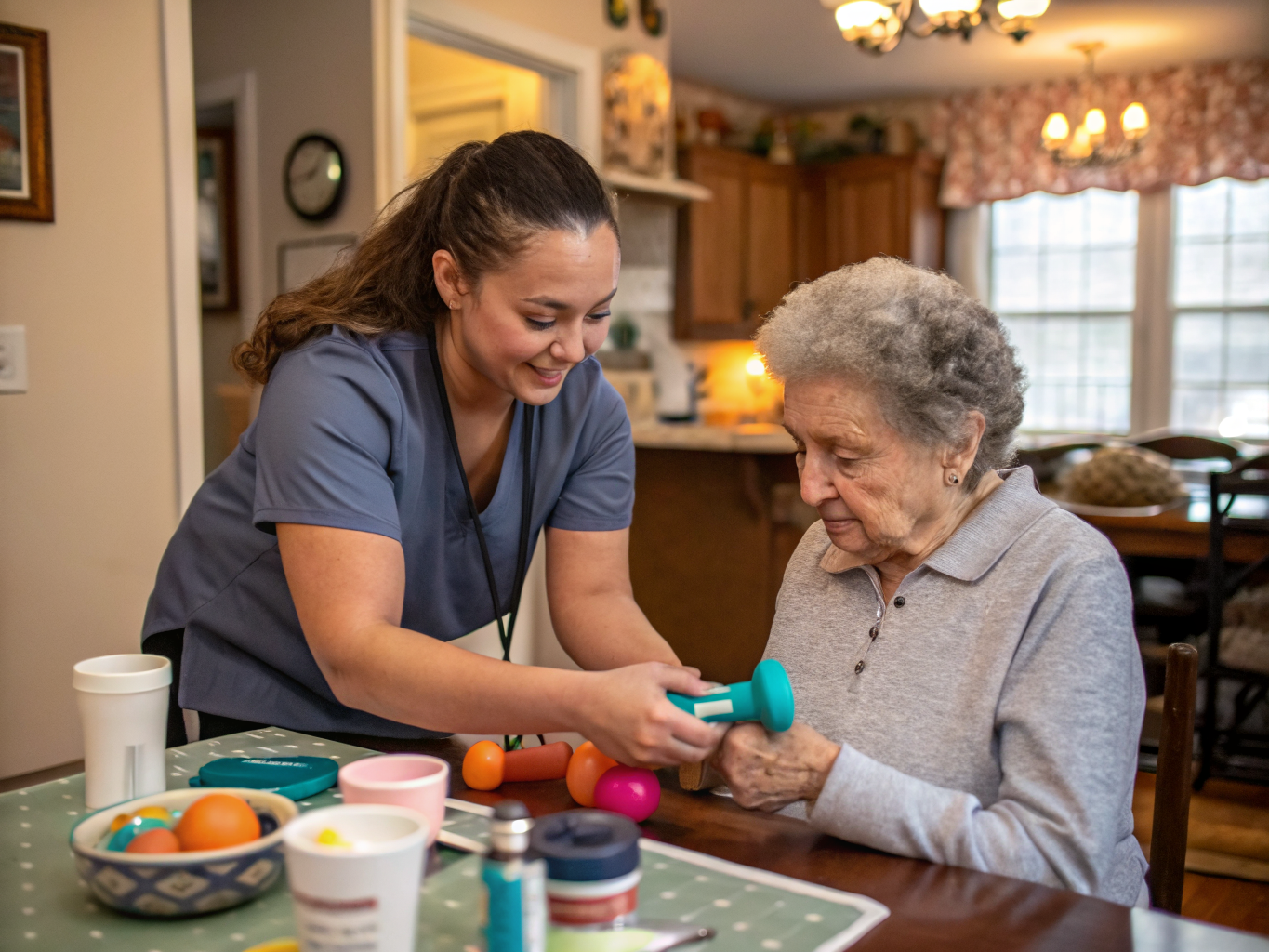
Formal therapy — physical, occupational, and speech — drives neurological recovery after stroke. But therapy sessions are typically 30-60 minutes, 3-5 days per week. The hours between sessions are equally important: the brain consolidates learning and builds neural pathways during repeated, consistent practice. Home caregivers from 24 HOUR Home Care NJ play a critical role in rehabilitation continuity:
- Exercise adherence: Supervising and assisting with home exercise programs prescribed by physical and occupational therapists
- Safety during exercise: Providing stand-by assistance to prevent falls during walking, balance training, and upper extremity exercises
- Speech therapy reinforcement: Practicing speech exercises, reading aloud, word-finding strategies, and aphasia communication techniques prescribed by the SLP
- Occupational therapy carryover: Reinforcing adaptive techniques for ADLs — dressing, bathing, eating — taught by the occupational therapist
- Transportation to outpatient therapy: Ensuring consistent attendance at all scheduled therapy appointments
- Fatigue management: Scheduling activities and rest periods to optimize the survivor’s energy for therapy
Emotional Recovery After Stroke
Stroke is a traumatic experience — for the survivor and for the entire family. Post-stroke depression (PSD) affects 30-50% of stroke survivors and is one of the strongest predictors of poor functional recovery. Post-stroke anxiety, emotional lability (pseudobulbar affect), and PTSD are also common. The American Stroke Association identifies emotional recovery as a core component of stroke rehabilitation.
Professional home caregivers address emotional recovery through:
- Consistent companionship: Social isolation dramatically worsens post-stroke depression — daily interaction with a warm, consistent caregiver combats isolation
- Encouragement and motivation: Maintaining the stroke survivor’s engagement with recovery activities and celebrating functional gains
- Family communication: Reporting mood changes, behavioral symptoms, or signs of depression to the care team and family
- Respite for family caregivers: Family caregiver burnout is nearly universal in stroke recovery — respite care allows family members to recharge and continue providing emotional support
Resources for Stroke Families in New Jersey
- American Stroke Association — Recovery resources, survivor stories, caregiver support, and stroke prevention education
- American Heart Association — Stroke risk factors, medication management, and secondary prevention
- National Institute on Aging — Stroke and aging research resources
- NJ Department of Health — NJ certified stroke centers and home care agency licensing
We serve families throughout New Jersey including Union County, Essex County, Morris County, Middlesex County, Bergen County, Somerset County, Mercer County, Passaic County, Hunterdon County, Monmouth County, and Ocean County.
Get Professional Home Care Support Today
Our licensed, RN-supervised caregivers help New Jersey families manage stroke recovery at home — from medication reminders and fall prevention to full-time 24-hour care.
Frequently Asked Questions
How long does stroke recovery take at home?
Stroke recovery timelines vary significantly by stroke severity and location. Most neurological recovery occurs within the first 3-6 months (acute and subacute phases), when the brain is most neuroplastic. However, meaningful improvement in function continues for years. Chronic phase recovery (6 months+) focuses on compensation strategies and preventing secondary complications. Professional home care supports recovery at every phase.
What is the most important factor in stroke recovery?
The most important factors in stroke recovery are: (1) intensity and consistency of rehabilitation exercises, (2) time since stroke — the earlier therapy begins, the better outcomes; (3) preventing secondary complications like falls, pneumonia, and depression; and (4) medication compliance (antiplatelet, anticoagulant, and blood pressure medications). Professional home care addresses all four factors simultaneously.
How can a home caregiver support speech therapy after stroke?
Home caregivers reinforce speech therapy exercises prescribed by the speech-language pathologist (SLP) — practicing word repetition, conversation exercises, and reading aloud between formal therapy sessions. For aphasia patients, caregivers use communication boards, speak slowly with clear sentences, and allow extra processing time. Our RN coordinates with the stroke team at discharge to ensure continuity of care. Call (908) 912-6342.
What are the biggest fall risks during stroke recovery at home?
Post-stroke fall risks include: hemiplegia or hemiparesis (one-sided weakness), visual field deficits (hemianopia), neglect syndrome, impulsivity and poor safety awareness, balance and coordination deficits, spasticity causing abnormal movement patterns, and orthostatic hypotension from blood pressure medications. Professional caregivers provide stand-by assistance, home hazard modification, and exercise program support.
What emotional challenges do stroke survivors face during home recovery?
Post-stroke depression affects 30-50% of stroke survivors and significantly impairs recovery. Other emotional challenges include anxiety, emotional lability (uncontrolled crying or laughing), frustration with functional limitations, social withdrawal, and caregiver relationship strain. Home caregivers provide consistent companionship, encourage participation in therapy, monitor mood changes for reporting to the medical team, and support the whole family.
Does 24 HOUR Home Care NJ provide stroke recovery care in New Jersey?
Yes. We provide specialized stroke recovery home care throughout all 11 NJ counties. Our RN coordinates with hospital discharge planners, neurologists, physical therapists, occupational therapists, and speech-language pathologists to create a comprehensive recovery plan. Services include personal care, medication management, therapy reinforcement, fall prevention, and full-time care during the acute recovery phase. Call (908) 912-6342.