
Understanding Medical Alert Systems for Senior Safety
Medical alert systems — also called personal emergency response systems (PERS) — have been protecting seniors for decades. These wearable devices allow older adults to summon help at the press of a button, providing a critical safety layer for those who live alone or spend significant time unsupervised. The National Institute on Aging recommends medical alert systems as part of a comprehensive home safety strategy for aging adults.
For New Jersey families, medical alert systems offer affordable peace of mind while a parent maintains independence at home. However, understanding what these systems can and cannot do is essential for making informed safety decisions. At 24 Hour Home Care NJ, we help families across Essex County, Morris County, and all of New Jersey evaluate where a medical alert system fits within a broader care strategy — and when it is time to add professional home care support.
Types of Medical Alert Systems: Pendants, Wristbands, and Smart Devices
Today’s medical alert market offers a range of devices designed for different lifestyles and risk levels. Understanding the options helps families choose the right system for their loved one’s specific situation.
In-Home Systems consist of a base station connected to the home phone or cellular network and a wearable pendant or wristband with a help button. When pressed, the device connects to a 24/7 monitoring center where trained operators assess the situation and dispatch appropriate help. Range typically extends 600-1,300 feet from the base station, covering the entire home and yard. Leading providers include Philips Lifeline, Medical Guardian, and Bay Alarm Medical.
Mobile GPS Systems are standalone devices that work anywhere with cellular coverage, ideal for seniors who remain active outside the home. These units feature built-in GPS tracking, two-way voice communication, and fall detection. They are particularly useful for seniors in suburban New Jersey communities who walk to stores, attend senior centers, or visit neighbors in Bergen County or Union County neighborhoods.
Smartwatch-Style Devices like the Apple Watch, Medical Guardian MGMini, and Lively Wearable2 combine medical alert functionality with fitness tracking, medication reminders, and smartphone integration. These appeal to tech-savvy seniors who want discrete protection without the stigma of a traditional medical pendant.
Automatic Fall Detection is an add-on feature available on most modern systems. Using accelerometers and sophisticated algorithms, these devices can detect a sudden fall and automatically contact the monitoring center — even if the senior is unconscious or unable to press the button. According to research from the National Council on Aging, falls are the leading cause of fatal and nonfatal injuries among older Americans, making automatic detection a vital feature.
How Medical Alert Systems Complement Professional Home Care
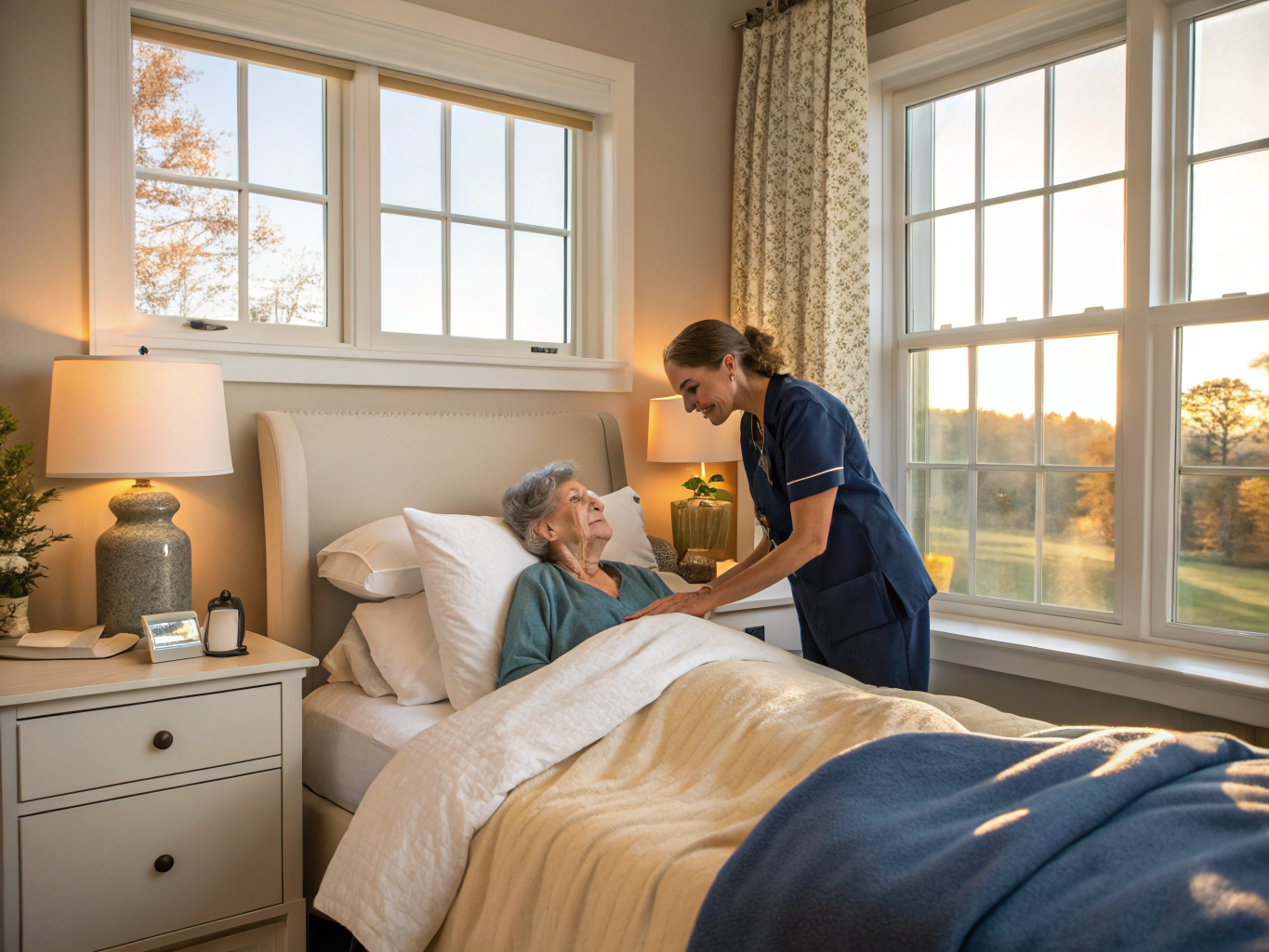
Medical alert systems and professional home care are not competing solutions — they are complementary layers of protection that work best together. A medical alert system provides emergency response capability around the clock, while a professional caregiver provides the proactive, hands-on support that prevents emergencies from occurring in the first place.
Consider this scenario: A senior with hourly care during the day wears a medical alert pendant during evening and nighttime hours when the caregiver is not present. If she falls while getting up for a glass of water at midnight, the fall detection feature alerts the monitoring center, which contacts her daughter and dispatches EMS. Without the alert system, she might have remained on the floor for hours.
Conversely, a medical alert system alone cannot prevent the fall from happening. A professional caregiver from 24 Hour Home Care NJ implements fall prevention strategies — clearing pathways, ensuring adequate lighting, assisting with mobility, managing medications that cause dizziness, and providing physical support during transfers. The caregiver addresses the root causes; the alert system provides the safety net.
For families in Somerset County and Middlesex County, this layered approach provides maximum protection while allowing the senior to maintain independence and dignity at home.
Features to Look for When Choosing a Medical Alert System
Not all medical alert systems are created equal. When evaluating options for your NJ senior, consider these critical features:
- Fall detection capability — Essential for seniors at high fall risk; look for systems with proven accuracy rates
- Two-way voice communication — The senior should be able to speak directly with the monitoring center through the wearable device
- Waterproof design — Since many falls occur in the bathroom, the device must function in the shower or bath
- Battery life — Mobile GPS units should last at least 24-72 hours between charges
- GPS location tracking — Critical for seniors with dementia or those who are active outside the home
- Caregiver app or portal — Allows family members to check the device’s status, location, and battery level remotely
- No long-term contracts — Many reputable companies offer month-to-month service with no cancellation penalties
- UL-listed monitoring center — Ensures the call center meets rigorous safety and reliability standards
Monthly costs typically range from $20 for basic in-home systems to $55 for full-featured GPS units with fall detection. While this is a modest investment compared to the cost of 24-hour home care, families should recognize that alert systems are reactive (responding after an event) rather than proactive (preventing the event).
When a Medical Alert System Is Not Enough
A medical alert system is an excellent first step for relatively independent seniors who need emergency backup. However, there are clear indicators that a senior has progressed beyond what an alert system alone can provide:
- Frequent falls — more than one per month, regardless of whether the alert was activated
- Inability to perform daily activities independently (bathing, dressing, cooking, toileting)
- Cognitive decline — forgetting to wear the device, pressing the button accidentally, or not understanding how to use it
- Medication mismanagement — missing doses, double-dosing, or taking incorrect medications
- Found on the floor unable to reach or activate the device
- Significant weight loss, poor hygiene, or a decline in home cleanliness
- Increasing isolation, depression, or anxiety
When these signs appear, it is time to consider professional in-home care. Our caregivers at 24 Hour Home Care NJ provide companion care, personal care, live-in care, and 24-hour care — each designed to address the specific needs that a medical alert system cannot meet. A senior can continue wearing their medical alert device as an additional safety layer while receiving hands-on professional care.
Take the Next Step Toward Comprehensive Senior Safety
Whether your loved one currently uses a medical alert system and needs additional support, or you are exploring safety options for the first time, 24 Hour Home Care NJ is here to guide your family. Our free, no-obligation home care assessment evaluates your senior’s current safety measures, identifies gaps, and recommends the right combination of technology and professional care.
We serve families throughout New Jersey, including Passaic County, Monmouth County, and Ocean County. Call us today at (908) 912-6342 or contact us online to schedule your assessment.
Related: Smart Home Technology for Senior Safety