
Understanding Your Options: Independent Living and Home Care
When an aging parent needs more support than they currently have, families in New Jersey typically face two primary options: moving their loved one into an independent living community or arranging professional home care. Both paths have genuine advantages, and the right choice depends on your parent’s specific needs, personality, financial situation, and preferences.
This comparison is not about which option is universally better — it is about which option is better for your parent. Some seniors thrive in the social environment of an independent living community. Others would be miserable leaving the home where they raised their children and the neighborhood they have known for decades. Understanding what each option truly offers, beyond the marketing brochures and advertisements, helps families make informed decisions they will not regret.
At 24 Hour Home Care NJ, we have worked with thousands of New Jersey families navigating this exact decision. We have seen both options work beautifully, and we have seen both fail when the fit was wrong. Here is an honest, comprehensive comparison to guide your family’s choice.
What Independent Living Facilities Offer
Independent living communities — also called retirement communities or senior living communities — are residential complexes designed exclusively for adults typically aged 55 or older who are largely able to care for themselves but want a maintenance-free lifestyle with built-in social opportunities.
Social programming: This is independent living’s strongest advantage. Communities offer organized activities including fitness classes, arts programs, card games, movie nights, book clubs, day trips, and communal dining. For seniors who are socially isolated at home, this structured social environment can be transformative. Loneliness is a serious health risk for older adults — the National Institute on Aging reports that social isolation increases the risk of dementia by 50 percent and premature death by 26 percent.
Maintenance-free living: Residents do not need to worry about lawn care, snow removal, home repairs, or appliance maintenance. In a New Jersey climate with harsh winters and humid summers, the freedom from home maintenance is a significant quality-of-life improvement for seniors who can no longer manage these tasks.
Meals and dining: Most communities include one to three daily meals in a communal dining room. This ensures regular nutrition and eliminates the challenges of grocery shopping, meal preparation, and kitchen cleanup that many seniors find increasingly difficult.
Safety features: Independent living communities are purpose-built with wide hallways, grab bars, emergency call systems, and 24-hour front desk staff. The physical environment is optimized for senior safety in ways that retrofitting a private home may not fully achieve.
Limitations of independent living: Independent living does not include personal care assistance. Residents who need help bathing, dressing, managing medications, or other activities of daily living must either hire private aides (at additional cost) or transition to assisted living, which is a different level of care with significantly higher costs. If your parent’s needs increase beyond what independent living accommodates, another disruptive move becomes necessary.
What Professional Home Care Offers
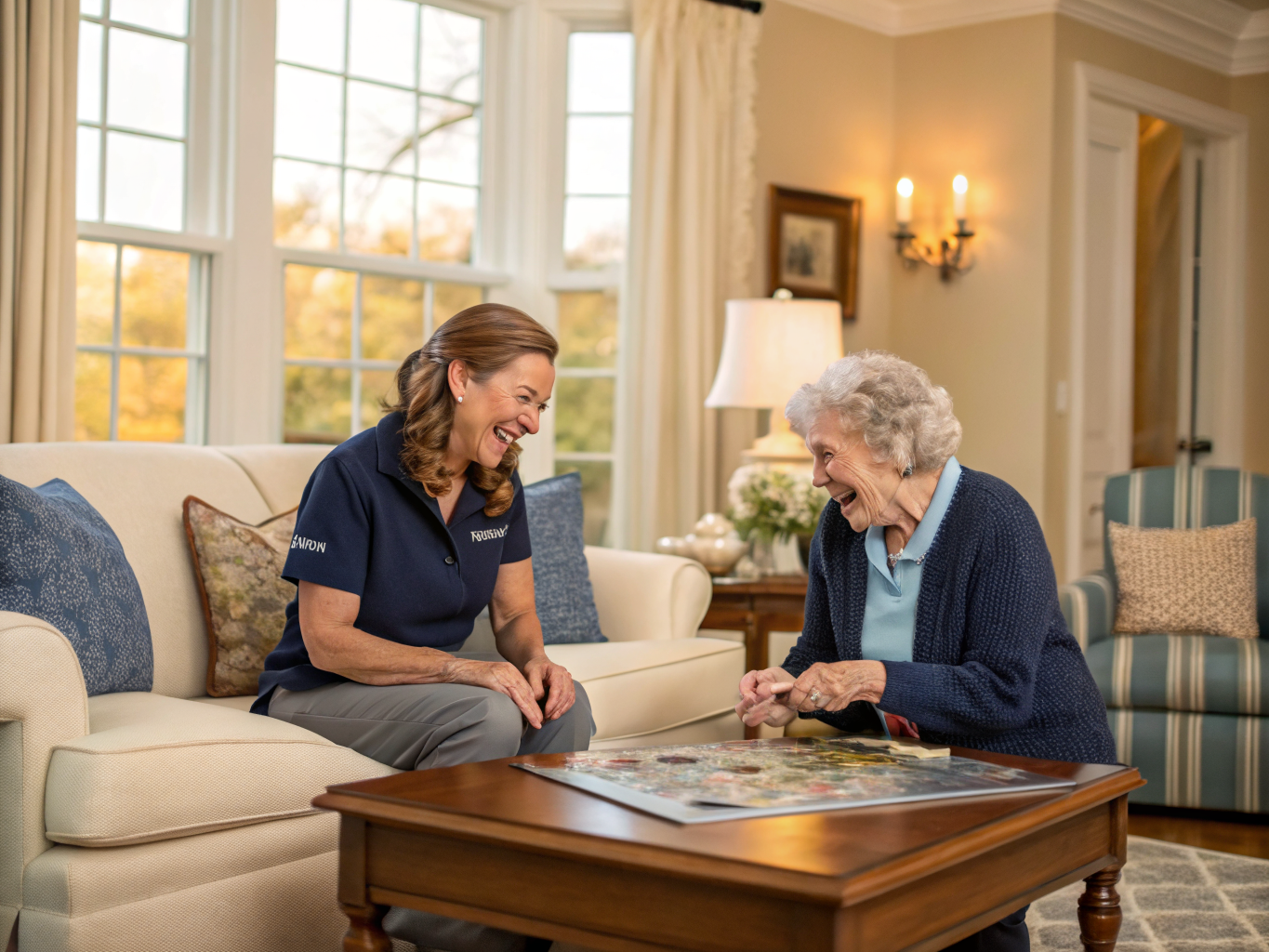
Professional home care brings trained caregivers into the senior’s existing home to provide whatever level of support is needed — from a few hours of companionship per week to round-the-clock 24-hour care.
Personalized one-on-one attention: This is home care’s defining advantage. In an independent living community, staff attention is shared among many residents. With home care, your parent receives dedicated, individualized support from a caregiver whose sole focus during their shift is your loved one’s needs, preferences, and well-being. This personalized attention is especially valuable for seniors with chronic health conditions, cognitive changes, or complex care needs.
Familiar environment: Your parent remains in the home where they have lived for years or decades. They sleep in their own bed, sit in their favorite chair, tend their garden, and are surrounded by photographs, books, and belongings that carry deep emotional significance. The psychological value of familiar surroundings cannot be overstated, particularly for seniors with early cognitive changes who rely on environmental cues to maintain orientation and routine.
Family proximity: When a parent ages at home, family visits are natural and easy. Grandchildren stop by after school. Neighbors drop in for coffee. Family traditions — holiday meals, birthday celebrations, weekend dinners — continue in the same setting where they have always occurred. This continuity of family life is one of the most powerful benefits of aging in place.
Scalable care: Home care scales seamlessly with changing needs. A senior might start with companion care three mornings per week, add personal care assistance as mobility declines, and eventually transition to 24-hour home care — all without leaving home. There is no disruptive move, no new environment to adjust to, and no waiting lists.
Dietary freedom: At home, meals are prepared according to the senior’s exact preferences, dietary restrictions, cultural traditions, and schedule. There are no communal dining schedules to follow, no institutional menus, and no compromise on the foods that bring your parent comfort and pleasure.
Cost Comparison: Independent Living vs Home Care in NJ
Cost is often the deciding factor for New Jersey families, and it deserves a clear-eyed comparison that accounts for all expenses, not just the headline numbers.
Independent living costs in NJ: According to the Genworth Cost of Care Survey, independent living communities in New Jersey typically range from $2,500 to $5,000 per month, though premium communities in desirable areas like Bergen County or Morris County can exceed $6,000 per month. This usually includes housing, maintenance, some meals, and activity programming. However, the total cost often includes additional fees: community fees or buy-in costs ($1,000 to $5,000 or more), parking fees, pet fees, guest meal charges, and charges for additional services. If personal care is eventually needed, hiring private aides within an independent living community adds $25 to $35 per hour on top of the base rent.
Home care costs in NJ: Professional home care in New Jersey typically costs $25 to $35 per hour for non-medical care. The monthly cost depends entirely on how many hours are needed. A senior who needs companion care 4 hours per day, 5 days per week, would pay approximately $2,500 to $3,500 per month. A senior needing 12 hours of daily personal care would pay approximately $9,000 to $12,600 per month. Live-in care, where a single caregiver provides 24-hour presence with designated sleep time, typically costs $300 to $400 per day, or $9,000 to $12,000 per month.
Hidden costs to consider: When comparing costs, factor in that seniors aging at home continue to pay mortgage or rent, property taxes, homeowner’s insurance, utilities, home maintenance, and repairs. However, many New Jersey seniors own their homes outright, making their housing costs significantly lower than independent living rent. When a senior moves to independent living, their home either sits empty (continued expenses with no benefit) or is sold (losing a major family asset and potential inheritance).
The bottom line: For seniors with modest care needs (fewer than 6-8 hours per day), home care typically costs less than independent living when the senior owns their home. For seniors with extensive care needs (12+ hours per day), the cost may be similar to or higher than independent living — but the care provided is far more comprehensive and personalized. Each family’s financial situation is unique, and we recommend a thorough cost analysis that accounts for all variables.
Emotional, Social, and Medical Considerations
Emotional impact: Moving to a new environment is one of the most stressful experiences for seniors, particularly those with cognitive changes. Research shows that relocation stress syndrome — characterized by confusion, anxiety, depression, and accelerated decline — affects a significant percentage of seniors who move to communal living environments. Seniors who remain at home with professional support avoid this relocation trauma entirely.
Conversely, some seniors experience genuine relief upon moving to independent living. Those who have been isolated, overwhelmed by home maintenance, or anxious about living alone may find the community environment liberating rather than stressful. The senior’s personality and preferences should weigh heavily in this decision.
Social needs: If your parent is socially isolated and unlikely to seek out social engagement independently, the built-in social programming of independent living may be beneficial. However, if your parent has an established social network — church community, neighborhood friends, volunteer activities — removing them from that network through a move may be counterproductive. Professional home care can include companion care that provides social interaction and assists with transportation to community activities.
Medical and care needs: If your parent has chronic health conditions requiring monitoring, complex medication regimens, or progressive conditions like Parkinson’s disease or dementia, home care provides the dedicated attention these conditions demand. In independent living, medical needs beyond basic wellness checks require outside providers and additional coordination. Home care integrates all aspects of support — personal care, medication management, meal preparation, and health monitoring — under one consistent caregiver relationship.
Making the Decision: When Each Option Is the Better Choice
Independent living may be the better choice when: Your parent is largely independent and primarily needs social engagement and maintenance-free living. They are excited about the move and see it as a positive lifestyle change. They do not have significant medical or personal care needs. They are comfortable with communal living and adapting to a new environment. The family home has become a burden rather than a comfort.
Home care may be the better choice when: Your parent has a strong emotional attachment to their home and community. They need personalized assistance with activities of daily living. They have chronic health conditions requiring consistent monitoring. They have cognitive changes that make adapting to a new environment difficult or dangerous. Family members live nearby and want to maintain close daily involvement. The senior values independence, privacy, and individual routine above communal social programming.
Many families find that the ideal solution evolves over time. A senior might benefit from independent living during their active retirement years and then transition to home care when medical or personal care needs increase. Others do the reverse — starting with home care and later choosing a community for social reasons. There is no single right answer, only the answer that best serves your parent’s current needs and preferences.
We invite you to call 24 Hour Home Care NJ at (908) 912-6342 for an honest, no-pressure conversation about your family’s situation. We will help you evaluate both options objectively and, if home care is the right fit, create a personalized care plan that keeps your parent safe, engaged, and thriving at home.