
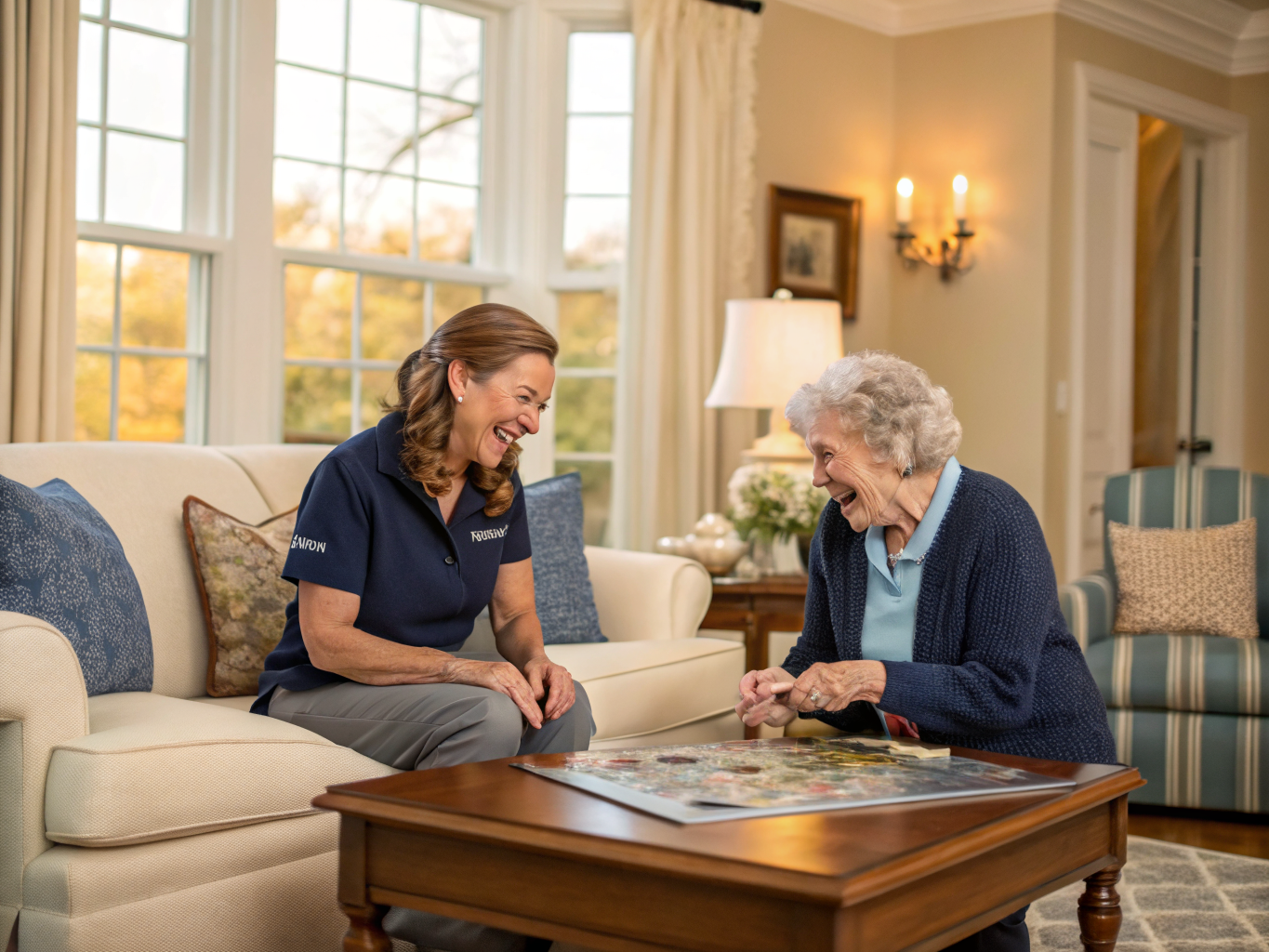
Choosing the Right Home Care Model for Your Family
One of the most consequential decisions families face when arranging home care is whether to choose hourly care or live-in care. Both models deliver professional, compassionate support in your loved one’s home, but they differ significantly in structure, cost, flexibility, and the type of coverage they provide.
The right choice depends on your loved one’s specific care needs, daily schedule, safety concerns, and your family’s budget. According to Genworth’s Cost of Care Survey, New Jersey is among the most expensive states for home care services, making it especially important to select the model that delivers the best value for your situation.
At 24 Hour Home Care NJ, we help families throughout the state — from Bergen County to Middlesex County to Monmouth County — evaluate their options and build a care plan that fits. This comprehensive comparison will help you understand both models so you can make a confident, informed decision.
Hourly Home Care Explained: Flexible Support When You Need It
Hourly home care is exactly what it sounds like: a professional caregiver comes to your loved one’s home for a predetermined number of hours each day. The schedule is customized — some families need just 4 hours in the morning for personal care and breakfast, while others require 12-hour shifts to cover the full waking day.
How hourly care works:
- You select the days and hours you need (minimum is typically 4 hours per visit)
- A caregiver arrives at the scheduled time and performs all agreed-upon tasks
- You pay only for the hours of care provided
- Schedules can be adjusted weekly based on changing needs
- Multiple short visits per day are possible (e.g., morning and evening shifts)
Typical hourly care rates in New Jersey:
- Companion care: $22–$28 per hour
- Personal care (CHHA/CNA): $25–$35 per hour
- Specialized care (dementia, complex medical): $30–$40 per hour
- Weekend/holiday rates may be 10-20% higher
Hourly care is ideal when:
- Your loved one needs help during specific times of day but not continuously
- Family members are available to provide coverage during other hours
- The care recipient is relatively independent and safe when alone for portions of the day
- Care needs are moderate — assistance with bathing, meals, and medications but not constant supervision
- You want to start with minimal care and increase gradually
- Budget constraints require limiting care to essential hours only
Many families in Morris County and Union County begin with a few hours of hourly care per day and expand as needs grow. The flexibility of hourly care makes it an excellent entry point into professional home care services.
Live-In Home Care Explained: Around-the-Clock Presence and Peace of Mind
Live-in home care provides a caregiver who resides in your loved one’s home, offering support throughout the day and being available at night. This model provides the security of constant presence without the significantly higher cost of two-shift 24-hour care.
How live-in care works:
- One caregiver stays in the home for a full 24-hour period (or several consecutive days)
- The caregiver is entitled to a sleep period of at least 8 hours and reasonable meal breaks per New Jersey labor laws
- A comfortable sleeping area must be provided for the caregiver
- Typically, live-in caregivers work 3-5 days on, then a relief caregiver takes over for 2-4 days
- The caregiver handles all personal care, meals, housekeeping, companionship, and safety monitoring
Typical live-in care rates in New Jersey:
- Standard live-in: $300–$400 per day
- Complex care live-in (dementia, high acuity): $375–$450 per day
- Live-in care averages $12.50–$18.75 per hour of coverage — far less than hourly rates
Live-in care is ideal when:
- Your loved one needs assistance throughout the day and cannot safely be left alone
- There is no family member available to fill gaps in an hourly care schedule
- The care recipient has dementia or Alzheimer’s requiring constant supervision
- Fall risk is significant and someone needs to be present at all times
- The client experiences anxiety or confusion when left alone
- You want comprehensive coverage at a lower per-hour cost than hourly care
Cost Comparison: Hourly vs Live-In by Monthly Spend
Understanding the financial implications of each model is critical for long-term planning. Here is a realistic monthly cost comparison for common care scenarios in New Jersey:
Scenario 1: 6 hours/day, 5 days/week
- Hourly care: 6 hrs x $30/hr x 22 days = $3,960/month
- Live-in care: Not practical — live-in is designed for around-the-clock needs
- Winner: Hourly care
Scenario 2: 10 hours/day, 7 days/week
- Hourly care: 10 hrs x $30/hr x 30 days = $9,000/month
- Live-in care: $375/day x 30 days = $11,250/month (but provides 24-hr presence)
- Winner: Hourly care on cost alone, but live-in provides 14 extra hours of coverage per day
Scenario 3: 12+ hours/day, 7 days/week
- Hourly care: 14 hrs x $30/hr x 30 days = $12,600/month
- Live-in care: $375/day x 30 days = $11,250/month (with overnight presence included)
- Winner: Live-in care — lower cost AND more coverage
Scenario 4: 24-hour continuous need (awake overnight required)
- Two 12-hour hourly shifts: $30/hr x 24 hrs x 30 days = $21,600/month
- Live-in + overnight aide: $375 + $250/night x 30 = $18,750/month
- Winner: Live-in + overnight supplement
The crossover point where live-in care becomes more economical than hourly care is typically around 12-14 hours of daily need. Beyond that, live-in care offers both better value and more comprehensive coverage.
Hybrid Approaches: Getting the Best of Both Models
Many families discover that the ideal solution is not purely hourly or purely live-in, but a customized hybrid that combines elements of both. Here are some popular hybrid arrangements we set up for families across Essex County, Somerset County, and throughout New Jersey:
Weekday live-in + weekend hourly: A live-in caregiver covers Monday through Friday, and hourly caregivers handle weekend shifts. This gives the live-in caregiver proper rest and gives the family flexibility on weekends when family members may be available to help.
Hourly care + overnight aide: Daytime hourly care covers personal care and activities during the day, and a separate overnight caregiver provides nighttime safety and supervision. This works well for families who can provide some daytime support but cannot handle nights.
Graduated care plan: Start with a few hours of hourly care to build comfort and trust, then expand to live-in care as needs increase. This gradual approach helps the client adjust to having professional help in their home.
Shared care: Family members handle certain hours or days, and professional caregivers fill in the remaining gaps. Our care coordinators work with families to design schedules that maximize family involvement while ensuring no coverage gaps.
Decision Framework: 5 Questions to Determine Which Model Is Right
Still unsure which model fits your situation? Work through these five questions:
- Can your loved one safely be alone for any part of the day? If no, live-in or 24-hour care is necessary. If yes, hourly care for the hours of greatest need may suffice.
- Does your loved one need help at night? If they regularly need nighttime assistance (bathroom, wandering, anxiety), live-in care with overnight availability — or a dedicated overnight aide — is essential.
- What is your monthly budget? Calculate the total hours of care needed and compare costs using the scenarios above. If you need 12+ hours daily, live-in is almost certainly more economical.
- Is there family support available? If family members can reliably cover certain hours, hourly care for the remaining gaps may be the most efficient approach. If family availability is unpredictable, live-in care provides consistent coverage regardless.
- How important is caregiver continuity? Live-in care typically means fewer caregivers rotating through your loved one’s home, which can be significant for clients with dementia who become confused by unfamiliar faces.
Our experienced care coordinators at 24 Hour Home Care NJ walk families through this decision framework every day. We do not push one model over another — we listen to your needs, evaluate your situation, and recommend the approach that makes the most sense. Call (908) 912-6342 or request a free consultation to get personalized guidance.