
Hospice and End-of-Life Caregiving: A Compassionate Career Guide

Working as a hospice caregiver is one of the most profound career paths in home care. While it demands emotional strength, clinical skill, and deep empathy, hospice work also offers a unique sense of purpose: helping patients live their final days with dignity, comfort, and compassionate human presence. This guide covers what hospice caregivers do, how to prepare emotionally and professionally, NJ training requirements, coordination with the hospice team, and the sustaining self-care practices that allow aides to do this work long-term. If you are considering hospice aide jobs in NJ, this resource is for you.
What Hospice Caregivers Do
A hospice aide — also called a hospice home health aide — provides hands-on personal care and comfort support to patients who have elected hospice services, typically in their homes or in residential facilities. Unlike aides in other settings, hospice caregivers work explicitly within a comfort-focused care model, where the goal is quality of life rather than cure.
Daily responsibilities typically include:
- Personal care — bathing, oral hygiene, grooming, dressing, and repositioning to prevent pressure sores
- Comfort measures — positioning for pain relief, applying lotions, warming blankets, providing gentle touch
- Nutrition and hydration support — preparing soft foods, offering fluids, supporting appetite as tolerated
- Light housekeeping — maintaining a clean, calm, and orderly environment in the patient’s immediate space
- Observation and reporting — noting changes in breathing, skin color, pain indicators, or consciousness level and communicating promptly to the hospice nurse
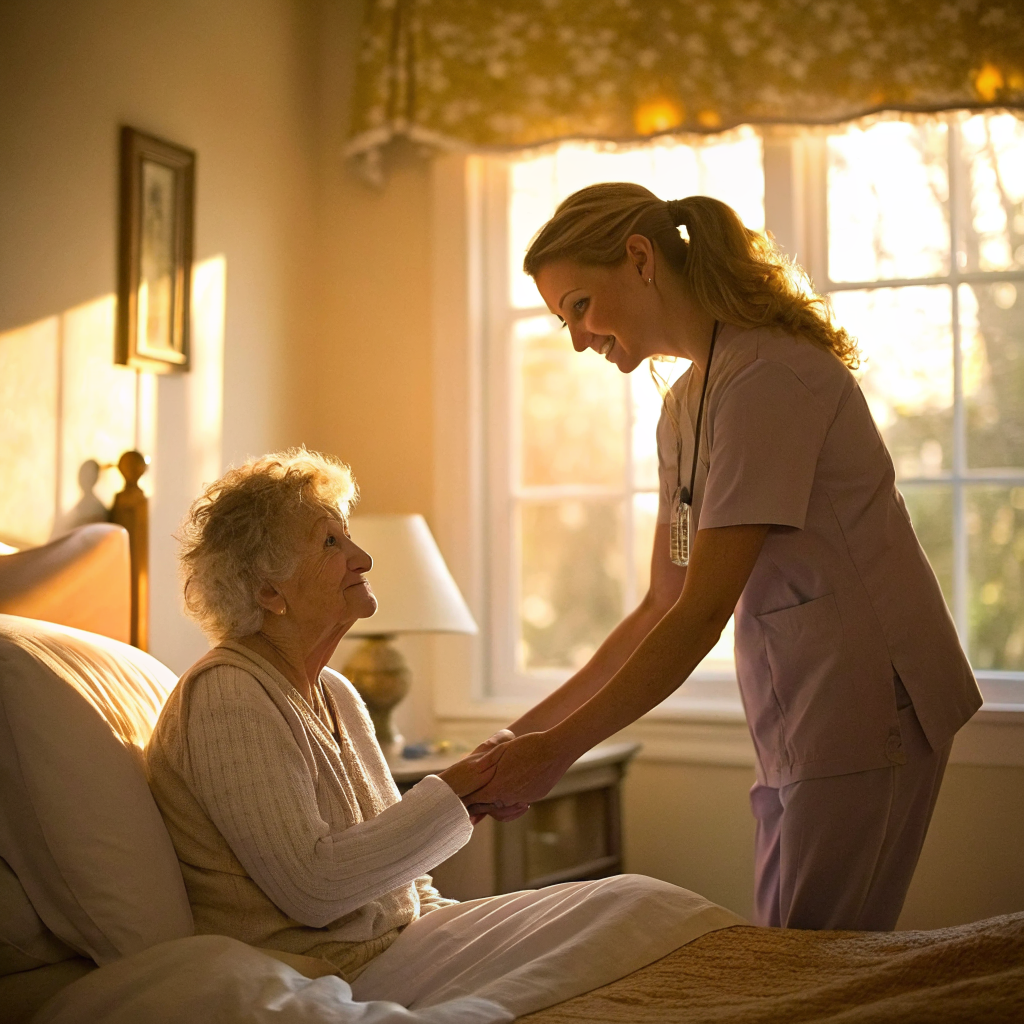
- Emotional companionship — being a calm, reassuring presence; listening; holding a hand; sitting in silence when words are not needed
- Family support — answering family questions within your scope, offering reassurance, and coordinating with the interdisciplinary team
Hospice aides do not administer medications (that responsibility belongs to nurses), but they play a critical frontline role in observing and documenting changes that guide the clinical team’s pain and symptom management decisions.

Emotional Preparation for Hospice Work
New hospice aides consistently report that the emotional dimension of the work is more challenging than anticipated — and ultimately more rewarding. Here is how experienced caregivers prepare and sustain themselves emotionally:
Develop a Philosophy of Death and Dying
Reading frameworks like the five stages of grief (Kübler-Ross), or exploring resources from the Hospice Foundation of America, helps caregivers approach death as a natural process rather than a failure of care. Shifting the frame — from “we couldn’t save them” to “we helped them live fully until the end” — is foundational to hospice philosophy.
Set Intentional Emotional Boundaries
Boundaries in hospice are not about being cold — they are about being sustainable. Experienced aides describe learning to be fully present with a patient without carrying each loss home. Rituals like brief moments of acknowledgment at the end of a shift, journaling, or a quiet decompression drive help mark the transition from professional to personal space.
Use the Interdisciplinary Team
Hospice care is a team sport. Social workers, chaplains, nurses, and volunteers all share the emotional labor. When something is weighing on you — a particularly difficult death, a distressed family, secondary trauma — bring it to the team. Peer debriefing is a recognized protective factor against caregiver burnout in end-of-life settings.
Recognize Grief as Professional
It is normal to grieve patients. Many hospice aides maintain informal memorials, attend memorial services, or write a brief note to families after a death. Acknowledging grief as a legitimate professional experience — not a weakness — allows caregivers to process loss and continue doing important work.
Training Requirements in New Jersey
To work as a hospice aide in New Jersey, caregivers must hold a current New Jersey Home Health Aide (HHA) certification or a Certified Nurse Aide (CNA) certification. NJ HHA certification requires completing a state-approved training program (75 hours minimum) and passing a competency evaluation. The NJ Department of Health maintains the HHA registry and regulates training programs statewide.
Beyond the baseline certification, most hospice agencies — including 24 HOUR Home Care NJ — provide additional orientation specific to hospice work, which may cover:
- Principles of hospice philosophy and comfort-focused care
- Communicating with patients and families about end-of-life concerns
- Recognizing signs of active dying and when to notify the nurse
- Pain assessment communication (using standardized scales)
- Cultural and religious practices around death and dying
- Self-care and professional resilience for hospice workers
The National Council of State Boards of Nursing provides additional context on nursing aide scope of practice that applies to hospice aides working under nurse supervision.
Some aides pursue additional credentials over time, such as the Certified Hospice and Palliative Nursing Assistant (CHPNA) credential — a voluntary certification that demonstrates specialized competence in end-of-life care and can increase earning potential and career advancement opportunities.
Coordinating with the Hospice Team
Hospice care is delivered by an interdisciplinary team (IDT) — and the home health aide is an essential frontline member of that team. Understanding your role within the team structure makes you more effective and confident in hospice settings.
The hospice IDT typically includes:
- Hospice Registered Nurse (Case Manager) — Conducts nursing assessments, manages pain and symptom control, communicates with the physician, and supervises the aide’s care plan
- Attending Physician / Hospice Medical Director — Certifies the hospice diagnosis, prescribes medications and pain management protocols
- Social Worker — Provides emotional support, counseling, and practical assistance for patients and families; coordinates community resources
- Chaplain / Spiritual Care Counselor — Addresses spiritual, religious, and existential needs of patients and families
- Home Health Aide (You) — Provides the most consistent daily presence; personal care, observation, and compassionate companionship
- Volunteer Coordinator / Volunteers — Provides companionship, respite for family caregivers, and practical assistance
- Bereavement Coordinator — Supports families for 13 months following the patient’s death
As a hospice aide, your most critical communication responsibility is prompt, accurate reporting to the hospice nurse. Changes in breathing pattern, increased pain indicators, skin changes, decreased responsiveness, or family distress are all reportable observations. The nurse depends on your frontline observations to adjust the care plan appropriately.
Self-Care for Hospice Aides
The AARP and the National Institute on Aging both recognize caregiver burnout as a significant occupational risk for those in caregiving roles. For hospice aides, proactive self-care is not optional — it is a professional obligation that protects both you and your patients.
Evidence-based self-care practices for hospice workers include:
- Physical activity — Even brief daily movement (a 20-minute walk) significantly reduces stress hormones and improves emotional resilience
- Quality sleep — Sleep deprivation amplifies emotional sensitivity; protecting sleep is foundational for hospice workers
- Social connection outside of work — Maintaining friendships, family relationships, and social activities that are completely separate from caregiving provides emotional restoration
- Mindfulness and grounding practices — Brief mindfulness exercises, deep breathing, or meditation help process the emotional weight of end-of-life work
- Regular peer support — Formal or informal conversations with colleagues who understand hospice work reduce isolation and normalize the emotional experience
- Knowing when to ask for help — If you experience persistent symptoms of secondary traumatic stress (intrusive thoughts, emotional numbness, hypervigilance), consult the hospice social worker or your own healthcare provider
The Reward: Providing Dignity at Life’s End
Hospice caregivers occupy a unique place in the healthcare system — they are present at one of life’s most sacred transitions and provide the kind of consistent, compassionate human presence that no technology or clinical protocol can replace. Patients who receive quality hospice care die with less pain, greater comfort, and surrounded by the dignity and respect they deserve. Families remember the aide who sat with their mother through her final night, who kept her comfortable and spoke gently to her — long after clinical details have faded.
According to the Bureau of Labor Statistics, employment for home health and personal care aides is projected to grow 22% through 2032 — much faster than average — driven by an aging population. Within that growth, hospice care represents one of the most specialized and meaningful career tracks available to HHAs.
If you feel called to this work, explore hospice aide positions with 24 HOUR Home Care NJ, or browse home health aide jobs in NJ to begin your caregiving career.
Ready to Begin a Hospice Caregiving Career in New Jersey?
24 HOUR Home Care NJ is hiring compassionate aides for hospice and end-of-life support roles.
Frequently Asked Questions
What does a hospice caregiver do on a daily basis?
A hospice aide provides personal care (bathing, dressing, repositioning), comfort measures, oral hygiene, light housekeeping, meal preparation, and emotional companionship to terminally ill patients. They monitor and report changes in condition to the hospice nurse and coordinate with the broader hospice team. Learn more at hospice aide jobs in NJ.
Do I need special training to work as a hospice caregiver in New Jersey?
Yes. NJ requires a current Home Health Aide (HHA) or Certified Nurse Aide (CNA) certification. Many hospice agencies provide additional orientation covering pain assessment communication, comfort measures, and grief support. The NJ Department of Health regulates HHA certification requirements.
How do hospice caregivers handle the emotional weight of end-of-life work?
Experienced hospice aides build resilience through peer support groups, regular debriefing with the hospice social worker or chaplain, setting clear emotional boundaries, and consistent self-care routines. Many find meaning in providing dignity during life’s final chapter — which offsets the emotional demands of the work.
What is the difference between hospice care and palliative care?
Hospice care is for patients with a terminal prognosis of six months or less who have elected comfort-focused care over curative treatment. Palliative care can begin at any stage of illness alongside curative treatment, focusing on symptom management and quality of life. The Hospice Foundation of America provides detailed resources for both patients and caregivers.
What are the rewards of working as a hospice caregiver?
Hospice caregivers consistently report deep professional fulfillment from providing comfort, preserving dignity, and supporting families during one of life’s most profound transitions. The work is emotionally demanding but uniquely meaningful — many describe it as the most purposeful work of their caregiving careers.
How do I apply for hospice aide jobs in New Jersey?
Visit our hospice aide jobs page to apply. 24 HOUR Home Care NJ provides competitive pay, flexible scheduling, and a supportive team environment. You can also browse home health aide positions in NJ for related roles. Call (908) 912-6342 for details.
24 HOUR Home Care NJ serves families across New Jersey including Union, Essex, Morris, Somerset, Middlesex, Bergen, Passaic, Mercer, Hunterdon, Monmouth, and Ocean counties. Call (908) 912-6342 for career inquiries.