
Why Home Modifications Matter for Senior Safety
Every year, one in four Americans aged 65 and older experiences a fall, according to the Centers for Disease Control and Prevention. Falls are the leading cause of injury-related death among older adults and the most common reason for emergency department visits in seniors. The sobering reality is that the majority of these falls happen at home — the place where seniors feel safest.
The good news is that most home falls are preventable. Strategic home modifications can reduce fall risk by up to 50 percent, according to research published in the Journal of the American Geriatrics Society. For New Jersey families committed to helping their loved ones age in place safely, home modifications represent one of the most impactful and cost-effective investments they can make.
This room-by-room guide covers the essential modifications that transform a standard New Jersey home into a safe, accessible environment for aging seniors. Whether your parent lives in a Cape Cod in Bergen County, a colonial in Morris County, or a ranch in Middlesex County, these modifications apply to virtually every home style common in our state.
Bathroom Modifications: The Most Critical Room
The bathroom is statistically the most dangerous room in the house for seniors. Wet surfaces, hard fixtures, tight spaces, and the physical demands of bathing and toileting combine to create a high-risk environment. Prioritize bathroom modifications above all other rooms.
Grab bars: Install ADA-compliant grab bars next to the toilet (one on the wall, one potentially floor-mounted), inside the shower or tub (both vertical and horizontal bars), and at the bathroom entrance. Grab bars must be anchored into wall studs or use specialized mounting hardware rated for at least 250 pounds. Decorative grab bars that double as towel bars are available for families concerned about an institutional appearance. Professional installation costs $100 to $300 per bar and is money well spent for peace of mind.
Walk-in shower conversion: Replacing a traditional bathtub with a curbless walk-in shower eliminates the dangerous step-over that causes many senior falls. A zero-threshold shower allows wheelchair or walker access and includes a built-in bench seat for seated bathing. A handheld showerhead on an adjustable slide bar lets the senior control water placement from a seated position. This modification typically costs $3,000 to $8,000 in New Jersey but is one of the most impactful safety upgrades available.
Raised toilet seat and comfort-height toilet: Standard toilets sit at 15 inches, which requires significant leg strength to stand from. A comfort-height toilet (17-19 inches) or an aftermarket raised toilet seat with armrests makes sitting and standing substantially easier. A toilet seat riser costs $30 to $80 and can be installed in minutes, making it one of the quickest safety improvements.
Non-slip surfaces: Apply adhesive non-slip strips or textured decals to the shower or tub floor. Place a non-slip bath mat outside the shower. Ensure bathroom rugs have rubberized non-skid backing, or better yet, remove loose bathroom rugs entirely — they are a leading trip hazard.
Lighting: Install bright, glare-free lighting in the bathroom. Motion-activated night lights along the path from bedroom to bathroom prevent nighttime falls during bathroom trips, which are among the most common fall scenarios for seniors.
Kitchen Modifications: Accessibility and Fire Safety
The kitchen is where seniors spend significant time each day, and it presents unique hazards including fire risk, sharp implements, hot surfaces, and the need to reach, bend, and lift. Thoughtful kitchen modifications promote both safety and continued independence in meal preparation.
Lever-style handles: Replace round doorknobs and faucet knobs with lever-style handles throughout the kitchen. Lever handles require minimal grip strength and can be operated with a closed fist, elbow, or forearm — critical for seniors with arthritis, which affects over 50 percent of adults over 65. Replacement handles cost $10 to $40 each and are a straightforward DIY project.
Pull-out shelving and lazy Susans: Deep lower cabinets become inaccessible when bending and reaching are difficult. Pull-out shelf inserts ($50 to $200 per cabinet) bring contents to the front of the cabinet, eliminating the need to bend deep into dark spaces. Corner cabinets benefit from lazy Susan turntables that rotate contents into easy reach.
Stove safety: Automatic stove shut-off devices ($80 to $400) turn off burners after a preset time or when the stove detects no motion in the kitchen. These devices are essential for seniors with any degree of memory impairment. Induction cooktops, which only heat when a pot is present and cool immediately when removed, offer another layer of safety for approximately $300 to $1,500.
Accessible storage: Move frequently used items — plates, glasses, medications, canned goods — from upper shelves to countertop level or lower cabinets. Install under-cabinet lighting to illuminate work surfaces. Consider a rolling kitchen cart that brings supplies to the prep area, reducing the number of trips back and forth across the kitchen.
Anti-fatigue flooring: Cushioned floor mats at the sink, stove, and primary prep areas reduce leg fatigue and joint pain during meal preparation. These mats should have beveled edges to prevent tripping and non-skid bottoms to prevent sliding.
Bedroom Modifications: Sleep Safety and Nighttime Navigation
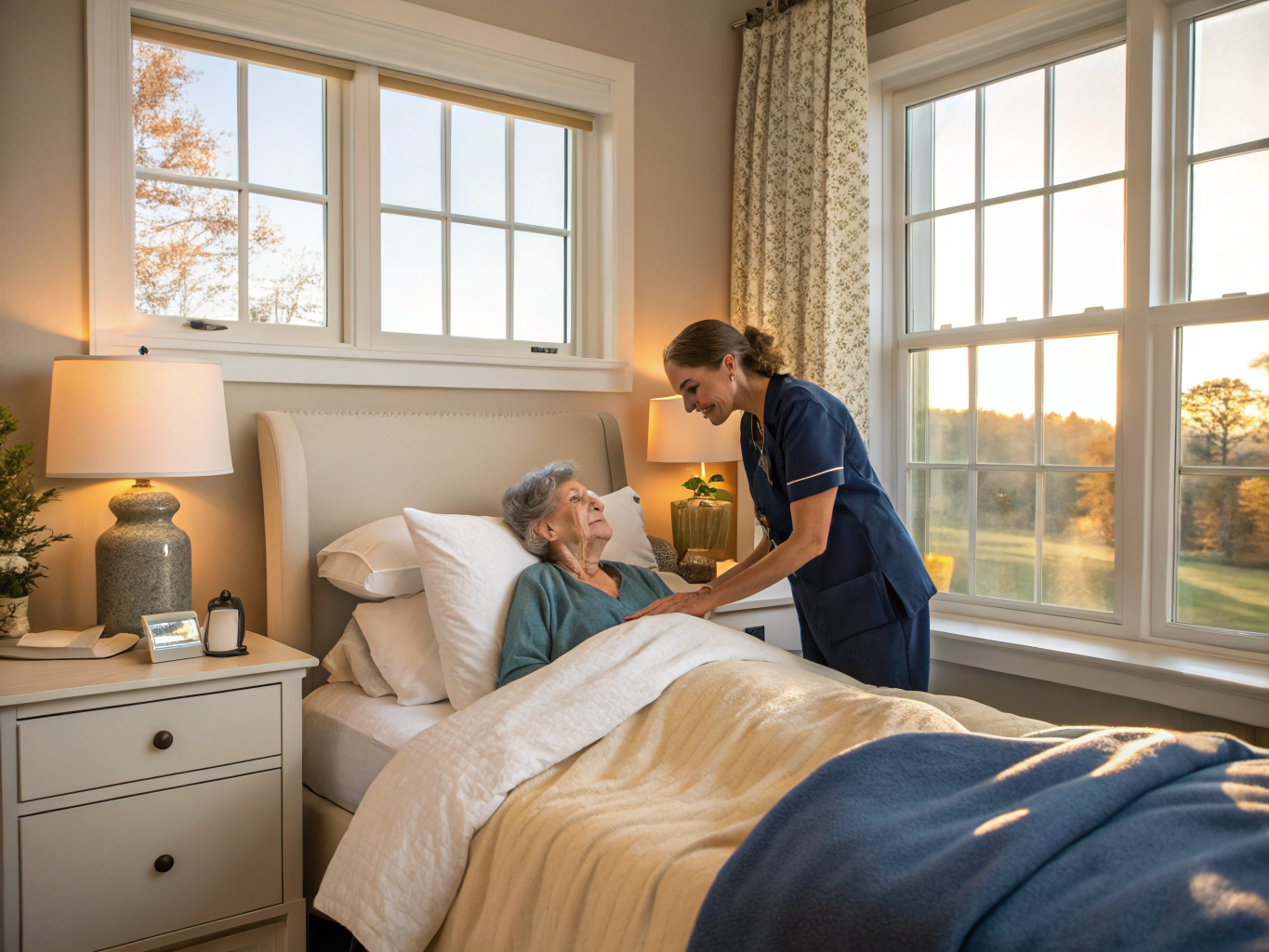
Falls during nighttime bathroom trips are among the most common and most dangerous fall scenarios for seniors. Bedroom modifications focus on safe sleep positioning, easy bed transfers, and illuminated nighttime paths.
Bed height optimization: The ideal bed height allows a senior to sit on the mattress edge with feet flat on the floor and knees at a 90-degree angle. Beds that are too high or too low make transfers dangerous. Adjustable bed risers ($15 to $40) raise a low bed to the proper height. For seniors with significant mobility limitations, an adjustable hospital-style bed with side rails and electronic positioning ($500 to $3,000 for home models) provides maximum safety and comfort.
Nighttime illumination: A clear, well-lit path from bed to bathroom is non-negotiable. Motion-activated LED strip lights along baseboards ($15 to $50) illuminate the path without the blinding brightness of overhead lights. A motion-activated nightlight in the bathroom provides immediate illumination upon entry. Light switches at the bedside eliminate the need to walk across a dark room.
Phone and medical alert accessibility: A charged phone and medical alert pendant should be within arm’s reach of the bed at all times. A bedside table or caddy that holds the phone, water glass, medications, flashlight, and eyeglasses keeps essential items organized and prevents the dangerous reaching and stretching that can cause falls.
Flooring: Remove throw rugs and runners from the bedroom and hallway between bedroom and bathroom. If flooring is slippery hardwood, consider adding low-pile carpet or non-slip area rugs secured with carpet tape on all edges. Electrical cords should be routed along walls and secured with cord covers to eliminate trip hazards.
Stairway, Entry, and Outdoor Modifications
Stairs are the second most common location for senior falls in the home. New Jersey’s multi-level homes — Cape Cods, colonials, split-levels — frequently require stair navigation that becomes increasingly dangerous as mobility and balance decline.
Dual handrails: Install sturdy handrails on both sides of all stairways, both interior and exterior. Rails should extend the full length of the stairs and include a horizontal extension at the top and bottom so the senior can steady themselves before and after the stairs. Round rails with a 1.25 to 1.5-inch diameter are easiest to grip. Cost: $200 to $600 per stairway for professional installation.
Stair lifts: When stair climbing becomes unsafe or impossible, a stair lift allows the senior to ride between floors while seated. Straight stair lifts cost $2,500 to $5,000 installed, while curved configurations (common in New Jersey colonials) range from $8,000 to $15,000. Rental options are available for temporary needs, such as post-surgery recovery. Many New Jersey seniors use a stair lift to maintain access to a second-floor bedroom without the expense and disruption of a first-floor renovation.
Exterior ramps: Front and back entry steps can be supplemented or replaced with ramps for seniors who use walkers or wheelchairs. Permanent wooden or aluminum ramps cost $1,000 to $8,000 depending on length and configuration. Portable threshold ramps ($50 to $300) address single-step entries. All ramps should include non-slip surfaces and side railings.
Outdoor lighting and walkways: Motion-activated flood lights illuminate driveways, walkways, and entries. Pathway solar lights mark the edges of walkways. During New Jersey winters, heated mats placed on steps and walkways prevent ice accumulation, reducing one of the most dangerous seasonal hazards for seniors.
Smart Home Technology for Senior Safety
Modern smart home technology offers powerful safety tools that complement physical home modifications and professional caregiving. These technologies are increasingly affordable, user-friendly, and effective at keeping seniors safe.
Voice-activated assistants: Amazon Alexa and Google Home devices allow seniors to control lights, set medication reminders, make phone calls, play music, and access emergency services using only their voice. For seniors with limited mobility or vision impairment, voice control eliminates the need to physically manipulate switches, phones, and remotes. A basic smart speaker costs $30 to $50 and can be set up in minutes.
Automated lighting: Smart bulbs and smart switches ($15 to $50 each) can be programmed to turn on automatically at sunset, respond to motion detection, and be controlled by voice. Automated lighting ensures that a senior never has to navigate a dark room to reach a light switch.
Video monitoring and doorbells: With the senior’s consent, video cameras in common areas provide remote family monitoring and fall detection. Video doorbells ($100 to $300) let seniors see and speak with visitors without approaching the door, adding both safety and security. Many systems include two-way communication, so family members can check in visually at any time.
Medical alert systems: Personal emergency response systems (PERS) provide one-button access to emergency services and designated contacts. Modern systems include automatic fall detection, GPS tracking for seniors who go outdoors, and medication reminders. Monthly monitoring costs range from $20 to $50. For seniors living alone, a medical alert system is one of the most important safety investments available.
Smart locks and sensors: Smart door locks allow keyless entry and remote locking, eliminating the fumbling with keys that can be difficult for arthritic hands. Door and cabinet sensors can alert family members to unusual activity patterns — for example, if a senior has not opened the refrigerator by mid-morning, it may indicate a problem.
When Home Modifications Alone Are Not Enough
Home modifications are essential for safe aging in place, but there comes a point when physical changes to the home cannot substitute for human assistance. If your loved one struggles with activities of daily living despite a well-modified home, it is time to consider professional home care services.
Signs that modifications alone are insufficient include repeated falls even with grab bars and non-slip surfaces installed, inability to prepare meals despite an accessible kitchen, medication mismanagement, increasing confusion or disorientation, and difficulty with personal hygiene even with adaptive equipment. These indicators suggest that a trained caregiver’s presence — not just a safer environment — is what your loved one needs.
24 Hour Home Care NJ provides the full spectrum of in-home support, from companion care that offers social engagement and light housekeeping to personal care that assists with bathing, dressing, and mobility, all the way to 24-hour home care for seniors who need continuous supervision. Our caregivers work within your modified home, maximizing the value of every safety improvement you have made.
To discuss how professional home care can complement your home modification plan, call us at (908) 912-6342 for a free in-home safety assessment. We will evaluate your loved one’s needs, review your home’s current modifications, and recommend additional changes alongside a personalized care plan.