
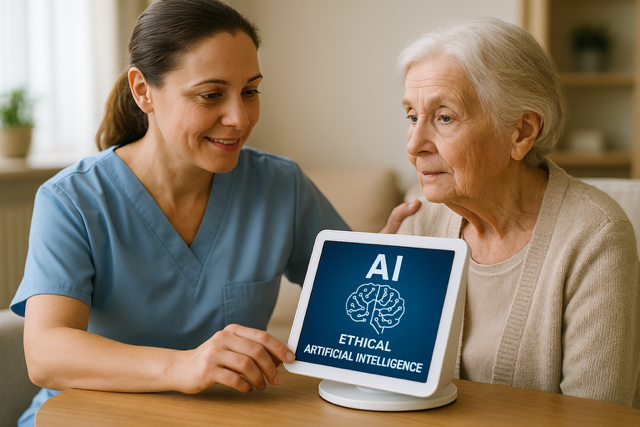

How Presence Intelligence Is Quietly Transforming Everyday Caregiving
In today’s fast-moving world of caregiving, attention is the most valuable resource — not just seeing what is happening, but sensing what might happen next.
Artificial intelligence is beginning to support this human task, not through automation or surveillance, but through something emerging researchers call presence intelligence.
Presence intelligence enhances what caregivers already do well: read subtle emotional changes, anticipate risks, respond early, and create calmer environments for seniors. At 24 HOUR Home Care NJ, we integrate technology only when it enhances dignity, strengthens safety, and makes home care in New Jersey more human — never less.
To explore all services, visit:
🔗 https://24hourhomecarenj.com/
🔗 https://24hourhomecarenj.com/care-services/
🔗 https://24hourhomecarenj.com/locations/home-care-in-new-jersey/
AI That Observes Without Intruding
Families are often surprised to learn that ethical AI does not rely on cameras, surveillance, or intrusive data capture. Instead, it works through micro-pattern recognition — quiet signals that caregivers can use to make more informed decisions.
This aligns with insights from our article on predictive caregiving:
🔗 The Caregiver’s Predictive Brain
1. Micro-alerts before an emergency
AI can detect:
- slight gait changes
- nighttime wandering tendencies
- shifts in hydration habits
- subtle confusion signals
These early warnings help live-in caregivers and 24-hour aides intervene proactively — preventing falls, dehydration, or agitation, especially in dementia care homes.
2. Emotional-pattern detection
AI supports what our caregivers already practice through embodied presence and co-regulation:
Micro-analysis of tone, vocabulary, and daily routines can reveal emotional patterns:
- early anxiety
- overstimulation
- loneliness
- nighttime agitation
This strengthens companion care, dementia support, and family communication.
3. Medication reliability
Gentle reminders help maintain stable routines without overwhelming seniors — a crucial part of Alzheimer’s and long-term care.
4. Predictive stability
AI also helps determine:
- safest times of day
- best caregiver–client match
- optimized routines
- environmental adjustments for cognitive comfort
This creates safer, more stable home-care environments across counties like Morris County, NJ:
🔗 https://24hourhomecarenj.com/locations/morris-county-nj/
Surprising Realizations Families Don’t Expect
AI reduces—not increases—stress for seniors.
Calm, non-intrusive reminders and safety cues reduce overwhelm and confusion.
AI improves the caregiver–client relationship.
Less cognitive load for the caregiver → more companionship and meaningful human time.
AI helps live-in caregivers rest safely.
Nighttime micro-alerts protect both the aide and the client without constant checking.
Modern AI does not require cameras.
Pattern-recognition without surveillance protects dignity while enhancing safety.
Ethical AI: The Standards We Follow
At 24 HOUR Home Care NJ, technology must meet three conditions:
1. Dignity first
No surveillance. No invasive monitoring. No data capture beyond what families approve.
2. Human care stays primary
AI can support awareness — it can never replace compassion, intuition, or presence.
3. Families remain fully in control
All tools, permissions, and adjustments are optional and transparent.
To explore care options, see:
🔗 Choosing a Live-In Aide vs Hourly Caregiver
Where Ethical AI Already Helps in New Jersey Homes
- 24-hour home care NJ
Predictive alerts reduce emergency risk. - Dementia and Alzheimer’s home care
Emotional-pattern recognition supports stability. - Live-in caregiver services
Nighttime micro-alerts improve safety. - Companion and respite care
AI supports personalized engagement and routines.
Research insight:
🔗 National Institute on Aging — Technology & Aging
https://www.nia.nih.gov/health/technology-aging
FAQ
1. Does AI replace caregivers?
No — it enhances awareness while human connection remains central.
2. Is it safe for dementia clients?
Yes. It uses non-intrusive signals that reduce agitation and confusion.
3. Do families control what AI sees?
Absolutely — families authorize all settings and can turn features off anytime.
4. Can AI predict emergencies?
It can detect early warning patterns that help prevent falls or nighttime wandering.
How to Integrate Ethical AI Into Your Care Plan
1. Schedule a consult
Talk to our care coordinators:
📞 +1 (908) 912-6342
2. Choose low-intrusion tools
We recommend only supportive, calming options.
3. Pair AI with trained human care
Create a hybrid model of intuition + intelligence.
4. Review monthly
Families adjust settings based on needs and lived experience.
Your Loved One Deserves Care + Intelligent Safety
Ethical AI is the quiet ally behind modern caregiving — stabilizing routines, reducing risk, and strengthening the bond between seniors and their caregivers.
To explore 24-hour care, live-in aides, overnight support, dementia home care, and private home-care services, contact:
📞 Call or text: +1 (908) 912-6342
🌐 https://24hourhomecarenj.com/
Key Takeaways
- Presence intelligence helps caregivers anticipate risks and respond to subtle emotional changes.
- Ethical AI uses non-intrusive methods to provide micro-alerts and emotional pattern detection in caregiving.
- AI enhances routines and safety without replacing the human connection in home care services.
- Families maintain control over AI settings, ensuring dignity and privacy for seniors.
- Integrating AI with trained human care creates a supportive environment for clients and caregivers.
Hourly care provides support during specific parts of the day, while 24-hour home care ensures continuous assistance with caregivers who rotate or a live-in aide who stays in the home.
A live-in caregiver helps with daily tasks such as bathing, dressing, meal preparation, medication reminders, mobility, companionship, and overnight safety monitoring.
Yes. All certified home health aides (CHHAs) must be trained and approved by the New Jersey Board of Nursing and supervised by a registered nurse.
It is recommended when a senior needs constant supervision, has dementia or wandering risks, wakes frequently at night, or requires continuous assistance with mobility or personal care.
Yes. 24-hour home care provides consistent structure, safety, routine, and redirection — all essential for individuals living with memory loss.
Yes. Regular supervision, proper hydration and nutrition, fall-risk reduction, and early identification of changes in condition can help prevent avoidable hospital visits.
Most agencies can begin services within 24–48 hours after completing the assessment and creating a care plan.
Yes. Home care is flexible. Hours, caregivers, and support tasks can be modified as the senior’s needs change.
No. Home care also supports adults recovering from surgery, individuals with disabilities, and anyone who needs help with daily living or companionship.
Time needed: 1 day
How to Choose the Right Home Care in New Jersey
- Identify care needs
Consider mobility, memory support, daily routines, medication reminders, nighttime needs, and personal preferences.
- Compare care models
Decide between hourly care, live-in care, or full 24-hour home care depending on how much supervision and assistance is required.
- Check caregiver certifications
Confirm that every caregiver is a Certified Home Health Aide (CHHA) approved by the New Jersey Board of Nursing.
- Request a personalized care plan
Request a personalized care plan
A strong agency should assess the home environment, routines, safety needs, and cognitive requirements before assigning a caregiver. - Ask about supervision and communication
Choose an agency that offers RN oversight, regular check-ins, and easy communication for updates.
- Review safety practices
Confirm fall-prevention steps, emergency readiness, and caregiver backup plans.
- Discuss compatibility
Personality, language, lifestyle, and communication style matter — the right match improves trust and consistency.
- Evaluate flexibility
Make sure the agency can adjust the schedule, add hours, or upgrade to 24-hour care if health needs change.
- Plan for long-term stability
Consider how the care will evolve with age, memory changes, or new medical recommendations.