
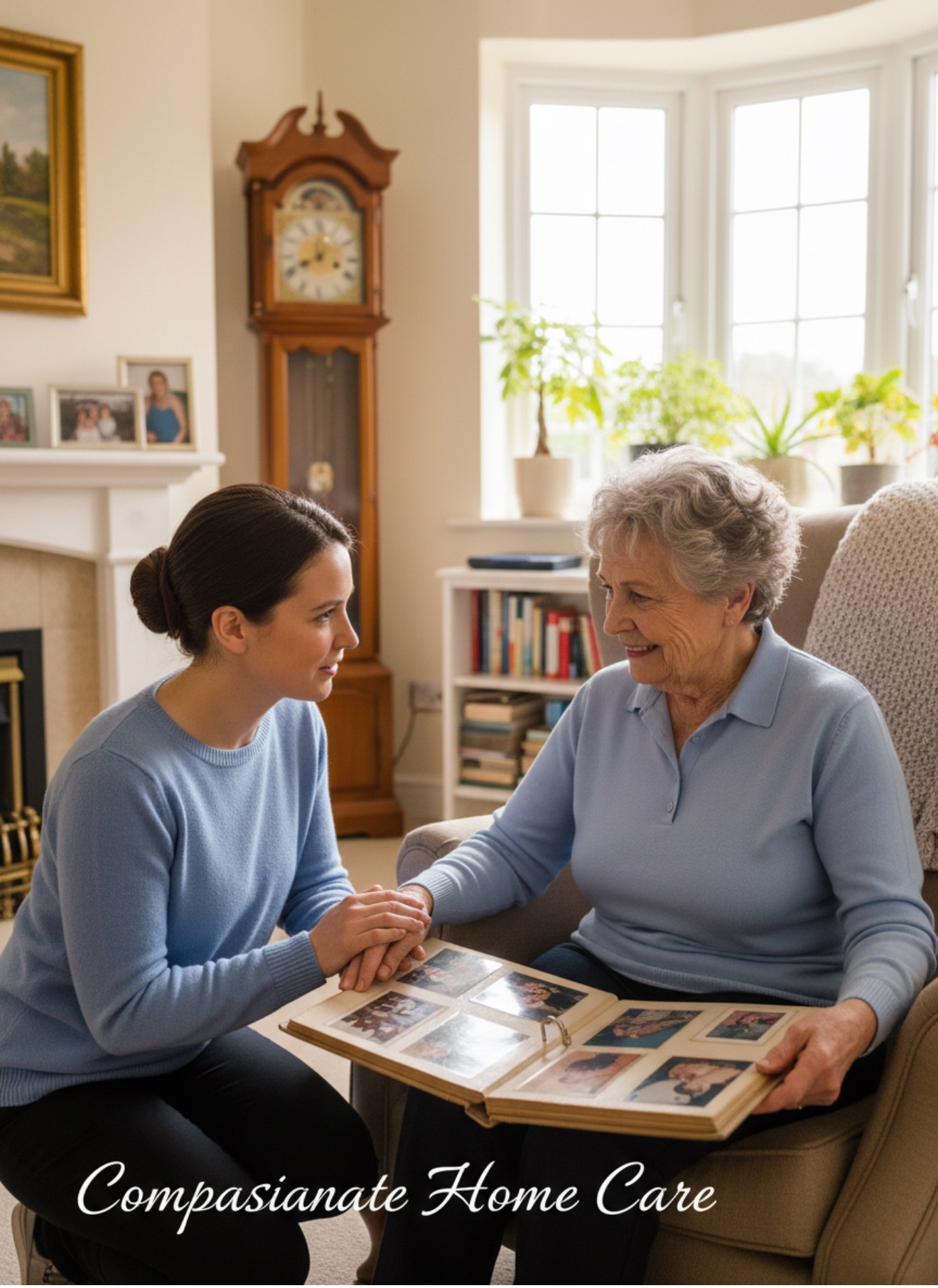
The future of 24 Hour Home Care in New Jersey is not defined by technology alone, nor by hours on a schedule. It is defined by how well care systems understand the human nervous system—and how thoughtfully they translate that understanding into daily life.
As families seek reliable home care in New Jersey, especially for aging loved ones or those experiencing cognitive changes, the expectations are shifting. Care is no longer seen as a list of tasks. It is increasingly understood as an experience of safety, shaped by science, environment, and human connection.
At 24 Hour Home Care NJ, we view the next evolution of home care through a lens that integrates neuroscience, sensory design, and caregiving psychology—what we call scientific empathy.
From task-based care to nervous-system–aware care
Traditional care models often focus on what is done. The emerging model focuses on how it is experienced.
The human brain—especially in older adults—continuously evaluates:
Am I safe? Is this predictable? Is this person familiar and calm? Does this environment make sense?
When these questions remain unanswered, stress increases. Over time, this stress can affect sleep, mood, cooperation, and overall well-being.
This is why modern 24-hour home care NJ must be designed not just around coverage, but around regulation—supporting the nervous system through consistent routines, calm communication, and a supportive home environment.
Families exploring home care in New Jersey often notice that small changes in routine or environment can lead to meaningful improvements in daily stability.
Dementia care and the science of perception
In dementia home care, the brain’s ability to filter information is often reduced. Sounds feel louder. Transitions feel abrupt. Too many words can overwhelm rather than help.
Scientific empathy recognizes that:
Resistance is often confusion Agitation is often sensory overload Withdrawal is often fatigue or misalignment
Effective memory care at home reduces cognitive load rather than increasing explanation. This includes:
predictable phrasing, simplified choices, stable caregiver presence, and environments designed to feel readable and familiar.
Learn more about our care philosophy in Care Services and our dedicated approach to dementia home care.
The role of environment in the future of home care
The home itself is a silent participant in care.
Lighting, sound, layout, and routine all communicate with the brain—often more powerfully than words. In the future of 24 Hour Home Care in New Jersey, environments are intentionally shaped to support calm and orientation.
Key elements include:
stable lighting patterns that support circadian rhythm, reduced background noise, clear visual cues, and consistent daily flow.
This perspective is explored further in:
Meta-Framework of Care 24 Hour Home Care: Mind, Body, Environment
Together, these approaches move care beyond supervision toward co-regulation.
Micro-gestures: where empathy becomes visible
The future of home care is not only structural—it is relational.
Research and real-world observation show that small caregiver behaviors have a disproportionate impact on how safe a person feels. These include:
tone of voice, pace of movement, eye contact, timing of touch, and respect for personal rhythm.
We explore this deeply in Micro-Gestures in 24 Hour Home Care, where science meets daily human interaction.
For families relying on 24 hour caregivers, these details are often what separate stress from reassurance.
Live-in care and 24-hour models: choosing with clarity
As care needs evolve, families often weigh live-in caregiver services against continuous 24-hour coverage.
Live-in home care services NJ can offer continuity and familiarity when nights are generally calm. 24-hour live-in care NJ and rotating coverage models are often better suited for higher nighttime needs, fall risk, or wandering concerns.
Both models, when grounded in scientific empathy, aim to preserve dignity while ensuring safety. More information is available under:
24-hour senior care in New Jersey 24-hour elder care in New Jersey 24-hour home health aide 24-hour home health aide NJ
24 Hour Home Care in New Jersey: a localized future
The future of care is also local. Community rhythms, seasonal changes, and household dynamics all matter.
24 Hour Home Care NJ supports families across New Jersey with structured, neuroscience-aware care that adapts to real life—not generic templates.
You can explore our local presence and updates through:
Google Business Profile Google Maps listing
For planning and consultation:
Looking forward: empathy as infrastructure
The next evolution of home care is not louder, faster, or more complex. It is quieter, smarter, and more humane.
When care systems understand how the brain experiences safety—when mind, body, and environment are aligned—care becomes more than assistance. It becomes a stabilizing presence that allows people to remain at home with dignity.
This is the future of 24 Hour Home Care in New Jersey:
science-informed, human-centered, and designed for real lives.
Compliance note (optional footer)
This article is informational and educational in nature. It does not replace medical advice or diagnosis. Care plans are individualized based on personal needs and preferences.