
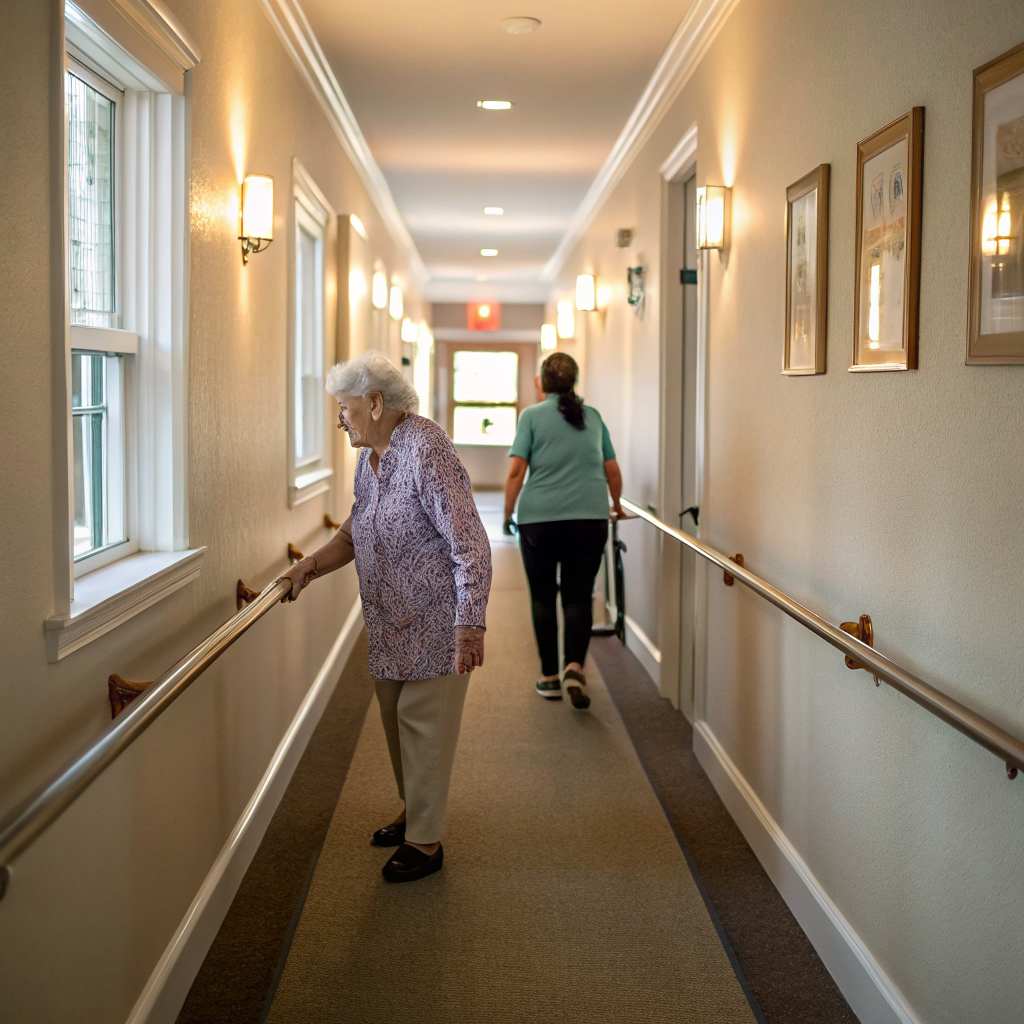
Every November, when clocks “fall back” for the end of Daylight Saving Time, New Jersey families face a predictable but often overlooked crisis for older adults: sharply elevated fall risk. The one-hour shift in sunrise and sunset times disrupts seniors’ established routines, impairs sleep quality, and — crucially — creates darker home environments during hours when many older adults are most active.
At 24 Hour Home Care NJ, our caregivers are trained to recognize and proactively address the hazards this seasonal transition creates. Here is what every NJ family should know.
The Science: Why Time Changes Affect Seniors Disproportionately
The human circadian clock is governed by light cues — and older adults’ circadian systems are particularly sensitive to disruption. When darkness arrives an hour earlier, several problems cascade:
- Sleep fragmentation: Seniors may wake at what feels like their normal time but is actually predawn darkness, increasing nighttime activity.
- Increased sedative medication effects: Some seniors take sleep aids or nighttime pain medications; when their schedule shifts, dosing timing misaligns with activity.
- Reduced Vitamin D: Less usable daylight means reduced outdoor exposure, compounding the bone-weakening effects of Vitamin D deficiency already common in older adults.
- Mood disruption: Seasonal Affective Disorder (SAD) symptoms can emerge, reducing motivation, increasing fatigue, and subtly impairing coordination.
Fall Risk Factors Unique to Autumn in NJ
Beyond the time change itself, autumn in New Jersey introduces additional hazards:
- Wet leaves on walkways: Perhaps the most underappreciated fall hazard — wet leaf accumulation on sidewalks and steps is extraordinarily slippery and difficult for seniors to detect.
- Transition from summer to heavier clothing: Bulkier footwear, longer pants, and heavier coats change gait mechanics and increase trip risk.
- Temperature fluctuations: Cold weather triggers muscle stiffness that reduces coordination and balance, particularly in the morning.
- Home heating activation: Dry heated air in the home can cause dehydration, which impairs balance and reaction time.
The Nighttime Fall Problem: Why Overnight Care Matters
The most dangerous falls for seniors happen at night — specifically during unassisted trips to the bathroom. Research consistently shows that falls between 11pm and 3am carry the highest injury severity, largely because seniors are groggy, the environment is dark, and no one is present to respond immediately. “Long lie” — remaining on the floor after a fall for more than an hour — dramatically increases mortality risk and risk of pneumonia, pressure injuries, and hypothermia.
Our overnight home care service places a trained caregiver in the home specifically to assist with nighttime bathroom trips, respond to falls, and ensure seniors are never in a dangerous situation alone during the dark hours that autumn and winter bring.
How Home Aides Create a Fall-Safe Autumn Environment
Lighting Assessment and Improvement
Our caregivers conduct a room-by-room lighting audit — identifying dark hallways, switches that are hard to reach from bed, and areas where additional night lights would help. They install motion-activated night lights in bathrooms and between bedroom and bathroom.
Pathway Clearing
Loose rugs (a primary trip hazard), clutter in walking paths, electrical cords across floors, and furniture placement that restricts clear pathways are all addressed. Aides also ensure that outdoor pathways are clear of leaves and debris before seniors use them.
Footwear Guidance
Socks, slippers without grip, and loose footwear account for a substantial portion of indoor falls. Aides help seniors select and consistently use non-slip footwear and assist with any orthopedic footwear that requires help putting on or adjusting.
Medication Timing Review
When the time changes, aides work with families and physicians to adjust medication timing to the new schedule — ensuring that sedating medications (sleep aids, pain relievers, some blood pressure drugs) are taken at bedtime rather than drifting earlier due to the schedule change.
Resources for NJ Seniors at Fall Risk
Seniors in Morris County can access fall prevention programs through the Morris County Office on Aging. Those in Union County should ask their physician about the CDC’s STEADI (Stopping Elderly Accidents, Deaths & Injuries) program, available through many NJ primary care practices.
For seniors who have already experienced a fall, our live-in care and 24-hour care options provide the continuous supervision that post-fall recovery requires.
Call us today at (908) 912-6342 or contact us online to schedule a free in-home assessment. Our caregivers serve families across Union, Essex, Morris, Middlesex, Bergen, Somerset, Passaic, Hunterdon, Mercer, Monmouth, and Ocean counties.
Frequently Asked Questions
- Why does the time change increase fall risk for seniors?
-
The abrupt shift in daylight hours disrupts circadian rhythms, causes sleep deprivation, and increases nighttime activity in darker conditions — all factors that elevate fall risk, particularly in the first week after the clocks change.
- What home modifications reduce fall risk for NJ seniors in autumn?
-
Installing night lights in hallways and bathrooms, securing loose rugs, ensuring grab bars in bathrooms, clearing clutter from walking paths, and ensuring proper footwear are the most impactful modifications.
- How common are falls among NJ seniors?
-
According to the CDC, one in four Americans over 65 falls each year. Falls are the leading cause of injury and injury-related death in older adults, and the risk spikes with seasonal darkness changes.
- Can a home care aide help prevent falls at night?
-
Yes — overnight caregivers can assist seniors with nighttime bathroom trips (a primary fall scenario), ensure adequate lighting, and respond immediately if a senior does fall, preventing the extended floor time that significantly worsens outcomes.
- What should I do if my NJ elderly parent fell but seems okay?
-
Even if no obvious injury occurred, have the senior evaluated by a physician. Internal injuries and hairline fractures may not be immediately apparent. Contact us for a care assessment and consider increasing overnight supervision.
Learn more about our services in Somerset County, Middlesex County, and Bergen County. Our caregivers are ready to help NJ families transition through every season safely.
Leave a Reply