
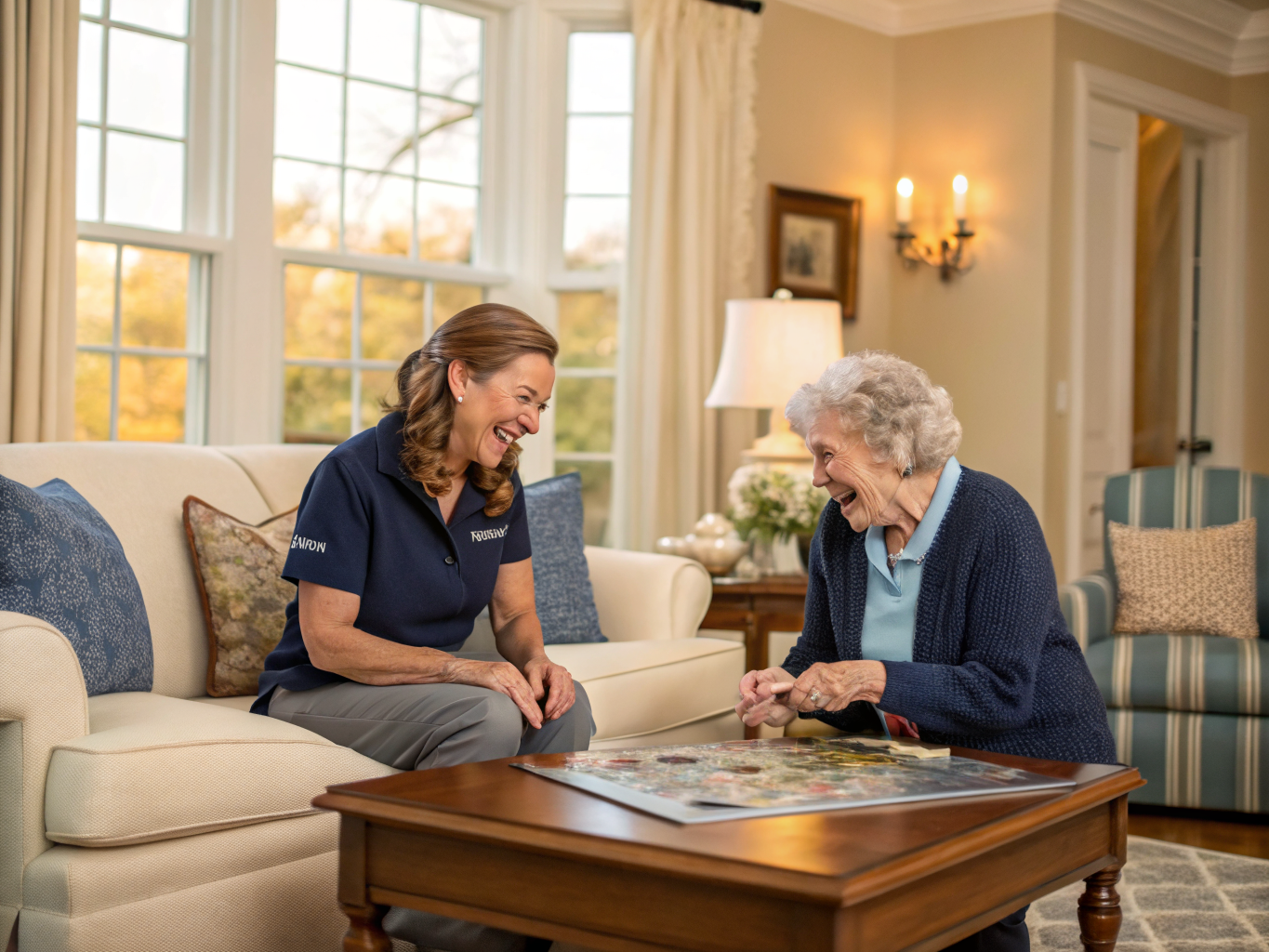
Mirror Minds — The Neuroscience of Emotional Contagion in Home Care
Home › Care Services › Emotional Contagion in Caregiving
Have you ever walked into a room and immediately sensed tension — even before anyone spoke? Or noticed that a friend’s laughter made you smile before you understood the joke? This is emotional contagion: the automatic, unconscious transfer of emotional states between people. And in caregiving, it is one of the most powerful — and least discussed — factors affecting outcomes.
At 24 HOUR Home Care NJ, we train our caregivers to understand and harness this phenomenon, because the science is clear: a caregiver’s emotional state directly shapes the health, mood, and behavior of the person receiving care.
The Mirror Neuron System
In the 1990s, neuroscientists at the University of Parma discovered mirror neurons — brain cells that fire both when we perform an action and when we observe someone else performing it. Subsequent research, summarized in peer-reviewed literature, revealed that this mirroring extends to emotions: when we see someone smile, our brain activates the same circuits as if we were smiling. When we sense someone’s anxiety, our stress systems respond in kind.
For older adults — especially those with dementia who have lost some capacity for cognitive reasoning but retain full emotional sensitivity — this mirroring effect is amplified. They may not understand why their caregiver is stressed, but their nervous system will absorb and reflect that stress.
How Emotional Contagion Affects Senior Health
Research from Harvard Health and the American Psychological Association documents measurable consequences of emotional contagion in care settings:
- Stressed caregiver = elevated client cortisol — a rushed, anxious caregiver raises the client’s stress hormones, weakening immune function and increasing agitation
- Calm caregiver = lower client blood pressure — a relaxed, warm presence activates the client’s parasympathetic nervous system, promoting healing and rest
- Impatient tone = behavioral escalation — even subtle frustration in voice or posture can trigger aggression, resistance, or withdrawal in dementia patients
- Joyful interaction = improved cognition — positive emotional exchanges boost dopamine, enhancing attention, memory, and willingness to engage
The Burnout Connection
This science explains one of the most important reasons families seek professional support. A family caregiver who has been providing care alone for months or years is often operating in a state of chronic emotional depletion. Their stress, grief, and exhaustion are not character flaws — they are physiological realities. And those emotional states are being transmitted to the person they are trying to help.
Respite care and professional 24-hour home care break this cycle by introducing rested, emotionally regulated caregivers who transmit calm rather than stress. The Family Caregiver Alliance identifies this as one of the primary benefits of professional care.
Need 24-Hour Home Care in New Jersey?
Our certified caregivers provide compassionate, around-the-clock support for your loved one — right at home.
How Our Caregivers Apply This Science
Emotional Self-Regulation Training
Every caregiver in our team receives training in emotional self-regulation: recognizing their own stress signals, using breathing techniques to shift into a calm state, and understanding that their internal state is a care tool. Before entering a client’s home, they take a moment to center themselves — because the first 30 seconds set the emotional tone for the entire visit.
Shift Rotation for Emotional Sustainability
Our 24-hour care model uses rotating shifts specifically to prevent caregiver emotional depletion. Each aide arrives rested, resourced, and emotionally available. This is not just better for the caregiver — it is better for the client, who receives consistently calm, present care rather than the diminishing returns of a single exhausted person.
Positive Emotional Modeling
Our caregivers are trained to consciously model positive emotional states: genuine warmth, unhurried pacing, soft eye contact, and relaxed body language. For seniors in Clark, West Orange, and Randolph, these signals communicate safety at a level deeper than words.
Responsive Communication
When a client becomes agitated or distressed, our caregivers respond first with their emotional state (becoming very calm and steady) before addressing the content of the situation. This mirrors the approach recommended by the Alzheimer’s Association for managing behavioral symptoms in dementia.
Why This Matters for Your Family
When you choose a caregiver for your loved one, you are choosing an emotional environment. The right caregiver does not just complete tasks — they create an atmosphere of safety, warmth, and connection that measurably improves health outcomes.
We serve families across Union County, Essex County, Morris County, Middlesex County, and Bergen County. All caregivers are insured, bonded, background-screened, and RN-supervised.
Call (908) 912-6342 or contact us online. We accept private pay and long-term care insurance from John Hancock and Genworth.
Read our reviews from NJ families on Google
Need 24-Hour Home Care in New Jersey?
Our certified caregivers provide compassionate, around-the-clock support for your loved one — right at home.